
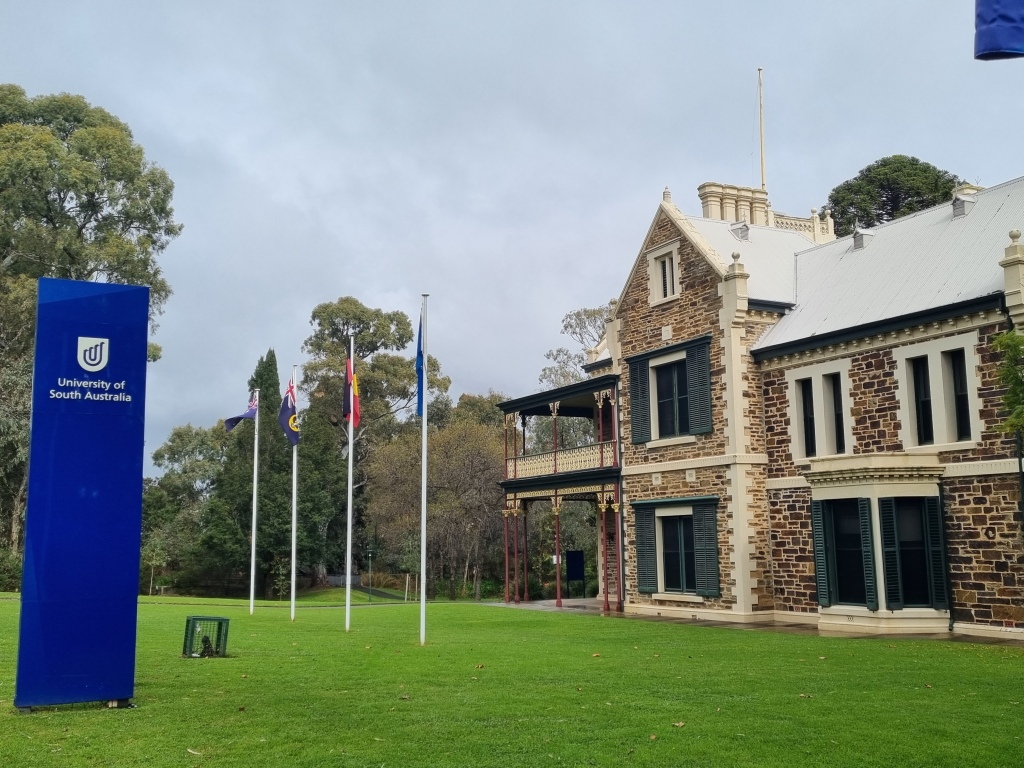
Critics have raised concerns over the potential for a clash of cultures between the University of South Australia and University of Adelaide following the historic merger announcement on July 2. OTR journalist Jacob Stevens explains. (Image: Jacob Stevens)
By Jacob Stevens | @jacobstevens__
Following separate meetings, the councils of the University of South Australia (UniSA) and the University of Adelaide (UoA) announced that the institutions would enter into an official agreement with the State Government to create the new Adelaide University.
The idea of a merger between both universities was tabled last December, when a deal was struck with the Malinauskas Government to explore the plan’s feasibility and agree on key terms including no net job losses, a co-leadership model and the institution’s name.
Despite approval from the councils of both universities and the State Government, the plan has been criticised by faculty and students, with worries that a larger, merged institution will lead to culture clashes.
This issue was raised in a petition opposing the merger launched by Neil Weste, a prominent engineer and adjunct professor at UoA, which predicts a loss of the unique character, traditions and identity of each institution.
In a speech given in support of the petition, Professor Geoff Hanmer, also from the University of Adelaide, highlighted these differences.
“UniSA is outstandingly good in graduate outcomes,” Professor Hanmer said, contrasting this to UoA’s focus on research and ranking.
“The University of Adelaide is an outstanding research university in context,” he said.
“Its Academic Ranking of Word Universities rank is equal or better than universities of equivalent population, and those ranked higher are typically national universities or those with a specific draw.”
The difference in each institution’s culture is also evident in the opinions expressed by the petition’s signatories.
“Both are fine institutions, but they serve fundamentally different purposes. Merging will result in a loss of identity for both,” wrote Tracey Steedman, a supporter of the petition.
Meanwhile, another signatory, Simon Edhouse, wrote that the merger will “weaken and downgrade the status of the University of Adelaide”.
However, UniSA Student Association (USASA) President Isaac Solomon said that while both universities target different demographics, status and ranking is not as important to providing quality education as research and graduate outcomes.
“The potential opportunities for both contribution through research and for students to gain meaningful and fulfilling employment is not to be understated, though this means taking a student-centric approach to designing the new institution,” Mr Solomon said.
Mr Solomon also said this student-centric approach will require collaboration between student bodies at both universities, providing a chance for negotiations between the different student demographics.
“We are going to be working collaboratively with both universities and the government to ensure that Adelaide University offers the best possible student experience and highest quality education,” Mr Solomon said.
“The people who live and breathe university life every day are best placed to create something newer and better, and the institutions would benefit greatly from recognising this.”
In response, UniSA’s Vice Chancellor, Professor David Lloyd, said transparency and communication will be pivotal in progressing towards the new university.
“Both universities acknowledge the critical role culture plays in defining the success of any organisation or organisational change,” Prof Lloyd said.
“Much thought has gone into considering the values of the new institution, with some important aspects agreed by both universities — including putting people first, support for wellbeing, and transparent two-way communication,” he said.
“However, the culture of the new university will be defined by our key stakeholder groups, including students and staff.
“Defining this culture and how it will be established will be a key outcome of the strategic planning to be undertaken over the next six months, which will be collaborative and involve both students and staff.
“There will be many opportunities for co-creation as we develop the strategy for the new Adelaide University.
“The areas that we collectively choose to focus on will help build the culture of the new Adelaide University.”
Mr Solomon said the merger process will be “an anxious and confusing time for students and staff” and this should also be considered throughout the transition.
As On The Record reported earlier this year, noticeable changes are not expected until 2026, when students will begin graduating under the Adelaide University name.
“While this new institution presents the potential for a vast number of improvements to the education sector in SA, these are not taken for granted. There is still a lot of work ahead,” Mr Solomon said.
Following opposition to the deal from within State Parliament, the merger is on hold while a government-sponsored committee further scrutinises the feasibility and business case.
 ontherecordunisa.com