
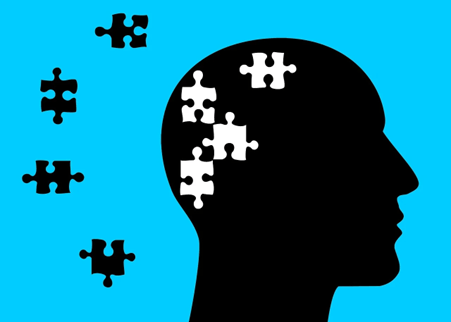
There has been a rise in panic attacks and mental health problems in Australia, warranting attention at the highest levels. OTR journalist Jack Trehearne reports. (Image: Tumisu)
By Jack Trehearne | @JackTrehearne
Greg Roberts* was at work on an autumn day in 2010 when he began to feel like something was off in his body. His heart rate increased, and his vison blurred as he struggled to accurately depict the features on the computer screen in front of him. Roberts got up and left the office to get some fresh air, but then became abnormally worried about the passing traffic on the road, as if he might walk right into an oncoming vehicle.
“The very first time it happened I had no idea what was going on. I thought I was having a heart attack or something … I literally couldn’t function. I thought I was having a medical episode,” Roberts says.
“It was as if I was actually standing outside of my body and observing from a few feet away, which was a really weird experience.
“I was struggling to feel like anything was normal and I was very much an observer of the whole thing rather than experiencing the whole thing … I had no perspective on distance or anything, which is why I felt a bit unsafe.”
Roberts did not know it at the time, but he was experiencing a panic attack. The first of many that would follow over the next six months.
Dr Matthew Smout, a Senior Clinic Supervisor at the UniSA Psychology Clinic and a registered psychologist, says panic attacks come from the body’s natural fear response, also known as the “fight or flight” response. This occurs when the body encounters something it perceives to be terrifying, which triggers a release of hormones to help the body either attack the threat or flee to safety.

“Fight or flight causes blood to shift to the muscles and away from the centre of the body in preparation to fight, which can cause light-headedness and those types of reactions,” Dr Smout says.
“It is triggered either by partial or full reminders of past traumatic events or by noticing a change in physical sensations, which could be because of anything — natural variations in the body’s rhythms, stress, environmental allergens — and then worrying about them, in turn, [triggers] more anxiety or fear in a vicious cycle.”
Roberts says raising a young family, building a new house, and overworking himself were likely the main causes behind the six-month period in 2010 where he experienced consistent panic attacks.
“There was a long period of stress at that time, which probably was the trigger for it,” he says. “There was a lot going on in lots of areas.”
After seeking advice from a general practitioner to sleep better, eat better, and become more aware of the patterns that would lead to his panic attacks, Roberts says he largely conquered the issue.
“It took a while … It wasn’t something I just did in a few days or a few weeks,” Roberts says.
“I started to recognise when I was unsettled about things or bothered for long periods of time … recognise the fact that I was probably going to have a panic attack and [then] I could control it and avoid it.”
Dr Smout says that, more broadly, people with high levels of neuroticism, a personality trait associated with poor emotional stability, are generally more likely to experience panic attacks.
“People high in neuroticism are prone to having fear triggered, having a more intense nervous system response … and thus having more difficulty or taking longer to calm after becoming worried or anxious,” he says.
Dr Smout says that people who experience panic attacks can generally be split into two groups. The first group includes people who may only experience a small number of attacks in their life and, although these attacks may be scary or unpleasant, they will not have any effect on their lifestyle. The second group includes those who experience attacks often, developing what is known as “panic disorder”, where they avoid people, places and activities out of fear an attack will occur.
With that said, Dr Smout says patients can be treated by undertaking exercises where they encounter anxiety-inducing triggers in a controlled environment, therefore learning to defeat them over time.
“For the former group, we might teach simple stress management strategies such as breathing and grounding exercises,” Dr Smout says.
“For the group with panic disorder, it’s more important to teach them not to be afraid of the sensations and not to avoid them, so treatment focuses on having them practise bringing on the sensations through exercises, learning that the sensations are controllable, predictable and harmless.”
The Australian Bureau of Statistics (ABS) uses the term “mental disorder” to define a range of mental health conditions such as panic disorder, social phobia, and obsessive-compulsive disorder. The ABS released a 2021 National Study of Mental Health and Wellbeing concluding mental health issues are becoming increasingly prevalent in Australia, and included three key facts:
- Over two in five Australians aged 16-85 years had experienced a mental disorder at some time in their life
- One in five had a 12-month mental disorder
- Anxiety was the most common group of 12-month mental disorders
The next ABS study on this issue is due to be released next month.
Sherry Baxter, a high school counsellor, says panic disorders is part of a larger spike in anxiety more broadly.

“In the work that I do, I’ve seen an increase over the different places I’ve worked at. But I would have to say that [when] working with youth, I’ve really seen that becoming quite a big thing, just general anxiety,” Baxter says.
Baxter cites the COVID-19 pandemic as a key reason for the rise in anxiety levels across the country.
“COVID changed people’s lives completely,” she says. “We were fairly lucky in South Australia, but in places like Victoria and New South Wales they were housebound, and kids didn’t go to school … they lost all of those social skills.”
Additionally, Baxter says the expansion of social media has been a key factor in causing mental health problems for people, leading to issues such as body dysmorphia, eating disorders and self-harm.
“It’s so easy now to have access to watching other people on social media,” she says.
“Social media just sets such high expectations for young people and adults on how they should look or how they should behave, and life’s just not like that.
“It really creates a lot of anxiety for people who think their life’s not good enough or they’re not good enough.”
Other areas impacting mental health are the economy and cost-of-living stresses, Baxter says.
“We are all so busy … People have to work and interest rates are going up. There’s a lot of stress on people,” she says.
“Buying a house for young people, moving out of home … I really feel for the younger generation because, unless you get help from parents, it’s really hard to ever get into the market or to rent.”
Statistics from Beyond Blue show an average of 6.4 men died daily by suicide in 2021, and that approximately three times as many men as women took their lives in that year alone.
In her own experience counselling with youth, Baxter says males are much less likely to seek counselling than females.
“I think it’s definitely [gotten] better, and I always get surprised in the school how open people are to get counselling … there is still a difference between males and females — it’s just fact,” Baxter says.
“Females are more likely to access help … they’re more forthcoming saying they need help.
“Males wait until it’s past the point they can cope with and they’re so low, that’s when they seek help. If I was to see 10 students, probably on average eight of those would be female and two would be male.”
Baxter says there is no reason for anyone to avoid seeking help when they need it, and that dealing with mental health issues is very common.
“The thing that I say to most people is [having mental health issues] is normal. People don’t seek help because they feel alone in it. But it is normal, and when you validate that with someone you can kind of see their shoulders drop, like ‘Okay, I’m normal.’”
Finally, Baxter highlights a key hurdle society must deal with: the want for instantaneous relief. People assume taking medication for their mental health problems will fix them altogether, without addressing the issue with a more comprehensive view.
“I think people rely on medication as being the source [to fix their issues], but there are so many other things you should also be doing … the counselling, the meditation, or the yoga to go with it, to give you the strategies to deal with those things when they come along,” Baxter says.
“I still believe early intervention is key … we see a lot of people that start off with small anxieties that become phobias … people not being able to leave the house or not being able to get into school.
“If we get to those a bit earlier and provide people with the strategies for how to deal with those things, then it may prevent it from developing to full-blown panic attacks or phobias.
“When you have the opportunity to gently be exposed to things that scare you, they become easier.”
If you or someone you know is experiencing mental health issues, you can call Lifeline Australia at 13 11 14.
* Name changed for anonymity
 ontherecordunisa.com