
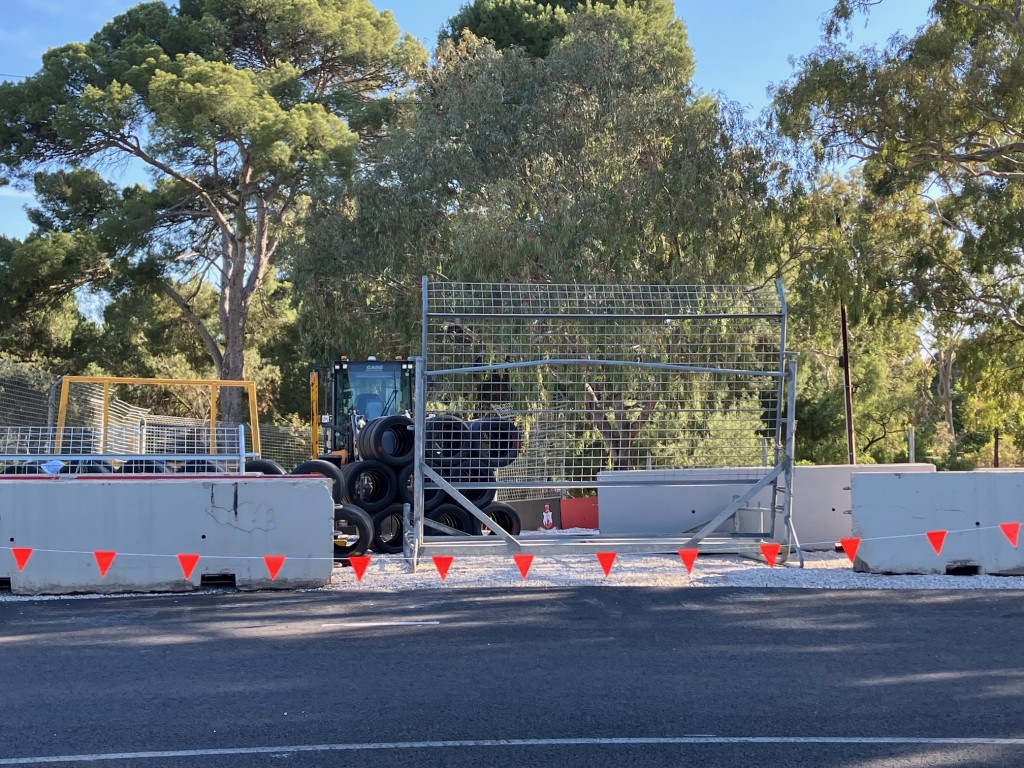
With Adelaide’s motorsport peak just around the corner, OTR columnist Sarah Herrmann walks us through questions about the sports’ effect on climate change and why such events are championed by SA’s “future generations” premier, while a city is cut off from its green space in Victoria Park/Pakapakanthi. (Images: Chrisanthi Giotis (above) & Sarah Herrmann (story images))
By Sarah Herrmann | @sarahherrmann_
Victoria Park/Pakapakanthi gives me four seasons in a morning.
Through a cool breeze, I walk from Wakefield Road onto gravel that feels like sinking sand, before stepping onto a track smelling of asphalt and petroleum.
The metaphors arrive thick and fast. I’m almost sure my imagination’s to blame. The chirping birds begin to sound like a countdown and I’m surely crazy.
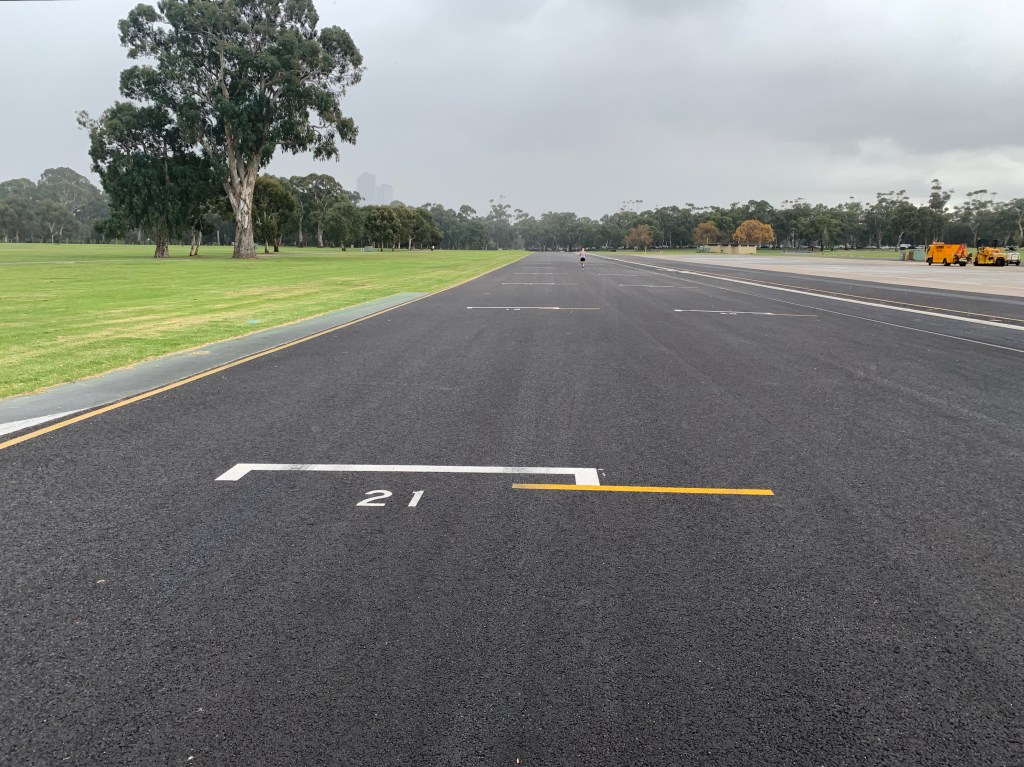
My shoes skim the painted tarmac, which has cut and grazed and marred more than primary school knees. “258,000 people”. The letters spell the name of our city, but chunks are missing. “$51.85 million”. Deep gashes reveal charcoal under white and charcoal over red… “net zero by 2050… 2050”. A charcoal river runs through the green.

The Malinauskas Government responds to my climate change questions with economic statistics.
A spokesperson maintains: “The success of the 2022 VAILO Adelaide 500 was highlighted by the attendance of more than 258,000 people, with the economic activity valued at $51.85m.”
“Motorsport significantly benefits our economy, and historically we are known as having one of the best street circuits in the world”.
So, back in June, I went to see it, in all its glory. Turns out, during the wintry off season, it’s just one more road in the grid.
It was laid down less than 40 years ago in Pakapakanthi (meaning “to trot”), site of horse racing for over a century and where the grandstand remains. Shoes turned to tyres in 1985 after the South Australian Motor Sport Act was passed the year prior, permitting the track’s construction.
Formula One Grand Prix called Adelaide home from then until 1996, when it moved to Melbourne, and the V8 Supercars Championship took its place from 1999 to 2019. The Marshall Government cancelled the 2020 season due to the COVID-19 pandemic and chose not to renew racing in the park.
A proposal was made to the Adelaide City Council in 2021 to uproot the track, seeing a new one had been established in Tailem Bend five years earlier, but was met with an opposing motion suggesting heritage listing the black carpet.
As he had promised while in opposition, now-premier Peter Malinauskas reinstated the Adelaide 500 in December 2022, just nine months after election, and the Adelaide Motorsport Festival in March 2023.
The government’s agreement with Supercars is locked in until 2027, just three years before their 50 per cent net emissions reduction target.
In June 2022, the Malinauskas Government announced a climate emergency, and yet were simultaneously promoting a sport that six months later would return environmental impacts — including earth erosion; soil, water, air, light and noise pollution; natural and non-renewable resource consumption; and greenhouse gas creation — to a park in a city that has the lowest percentage of parkland across this country’s capitals: 10 per cent.
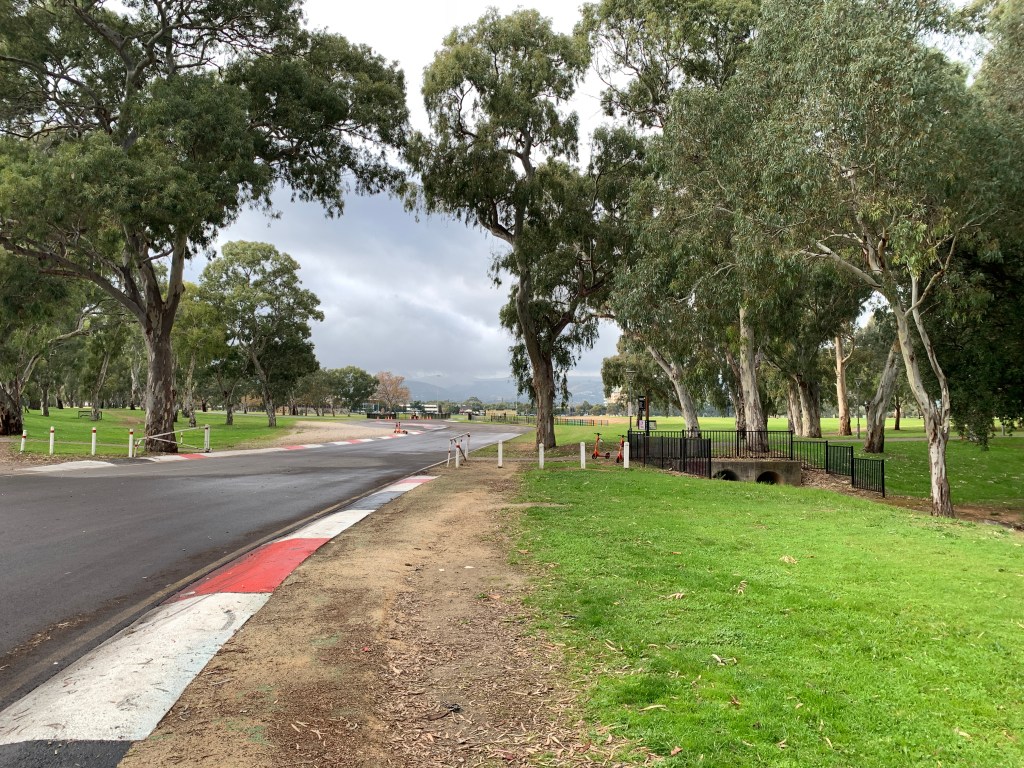
Strollers walk their dogs, black labradoodles and tiny cream chihuahuas, free of leashes. Some jog — do people know it’s bad to run on asphalt? — over the hills and far away.
Minimal tree coverage doesn’t seem troublesome until the sun parts the clouds, shining onto a pool of concrete. I sit at a table under a stray gum, the skin of my jacketless arms beginning to prickle.
Genuinely worried about Adelaide becoming a 50-degree city, affecting areas with a lack of trees first, is University of Adelaide Environment Institute director Professor Robert Hill.
Professor Hill says planting trees in urban areas is one immediate action to take to protect “extremely vulnerable” Adelaide from dangerous heat and climate change.
“It takes decades for trees to reach their full potential; we can’t afford to wait to do this, and we need every piece of land we can get to make this work well,” he says.
When it comes to motorsport on the grounds, Professor Hill says it’s time to re-prioritise.
“We are competitive animals and no doubt we need highly competitive spectator sports as part of what makes us what we are, but it is time to take climate change and the associated environmental changes that accompany it much more seriously,” he says.
“We can’t switch in and out of our concerns about climate change and our rapidly deteriorating environment.
“This should be our main concern and it should dictate all that we do.”

As my eyes scan the horizon, they’re interrupted by crimson safety cones and mustard-coloured machinery. The sun hides and the temperature settles.
Two elderly women wobble down one path, while a man with a pram strides across the track. Trios of teenagers wander, and toddlers pump their legs on their tiny bicycles.
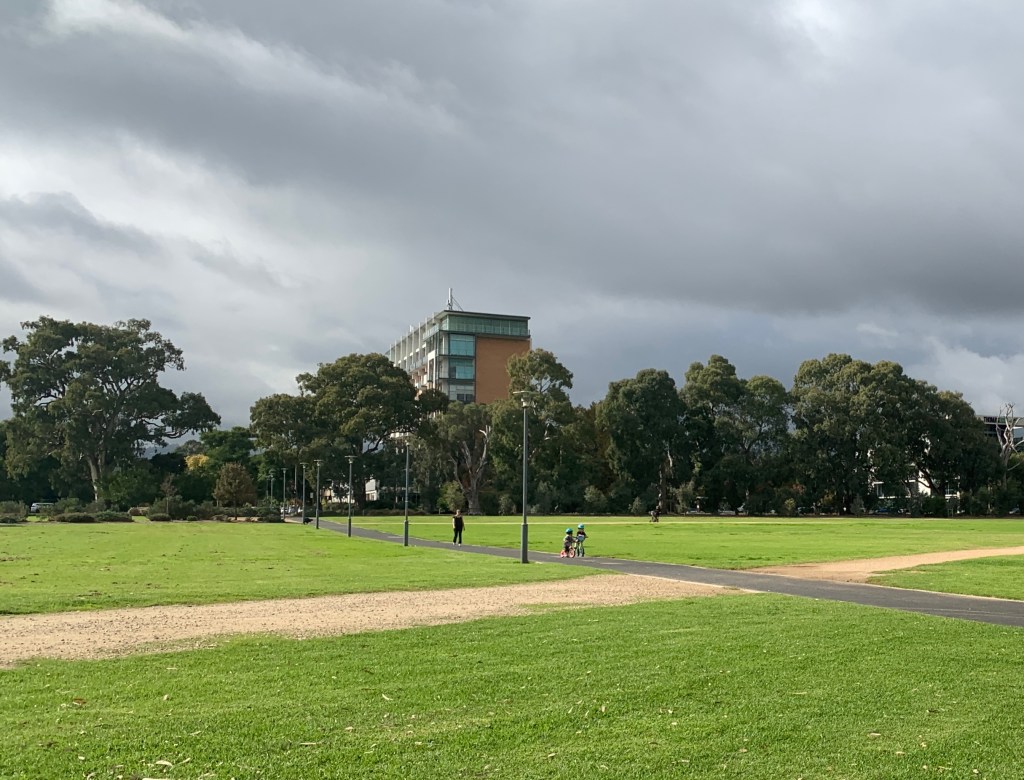
Victoria Park, to the Adelaide Park Lands Association (APA), should be “open, green and public”.
“The longer the public is excluded from an area, the less it is a public park,” APA president Shane Sody says.
But he is quick to point out the difference between temporary events, like the Adelaide Fringe Festival in Rundle and Rymill Parks and Tasting Australia in Victoria Square, that consist of a month of marquees, compared to motor racing’s presence in Victoria Park.
“It takes five months of fencing, putting up all of the detritus and the infrastructure that’s required for the event, holding the event, and then tearing it down sometime afterwards.
“[In 2022] they left it all up because there was going to be [the Adelaide Motorsport Festival in March 2023] … so it ended up being something like eight months where there was motorsport stuff restricting access to at least some parts of Victoria Park.”
And of course, the asphalt track itself never goes away.
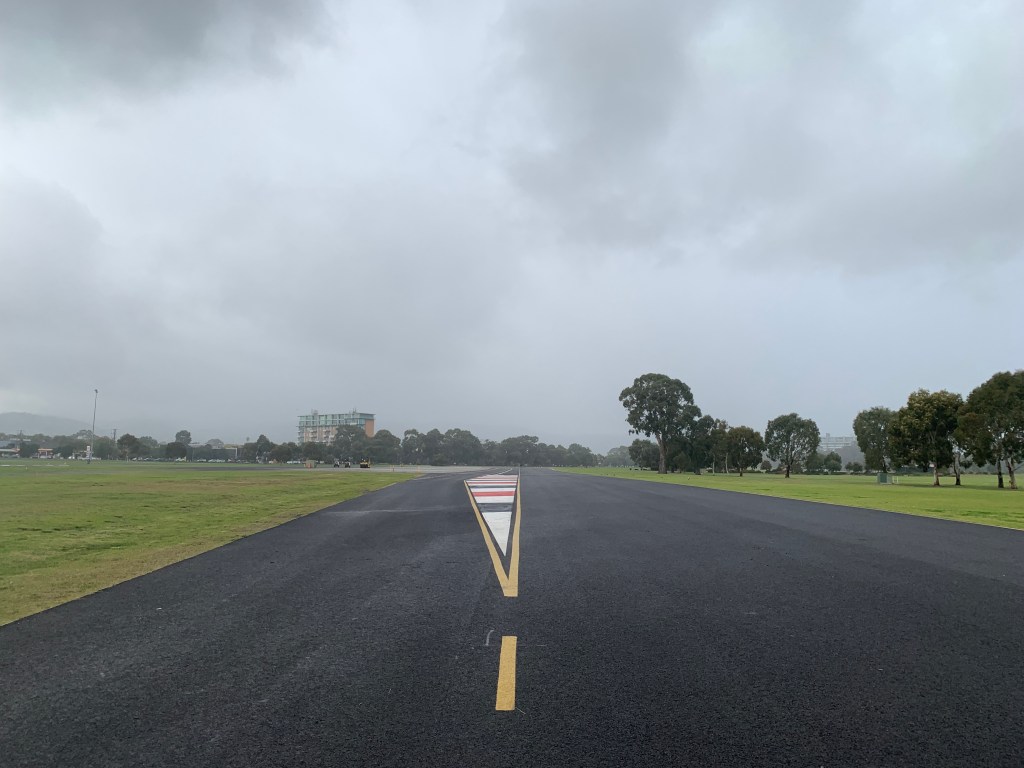
“Areas that are open and public and yet have bitumen on them are roads.
“The Malinauskas Government has not only maintained the bitumen that was already there but within the last 12 months [as of June 2023] has laid a lot more bitumen [in both Victoria and King Rodney Parks] purely to assist the operators of the Adelaide 500.”
Reaching for his climate activist hat, Sody is also concerned about the effect of the sport on Community initiative Green Pakapakanthi which is working towards creating shade, as well as increasing biodiversity, in Victoria Park by revegetating.
Sody says Green Pakapakanthi’s efforts are hindered in the northern part of Victoria Park “because the trees would get in the way of lines of sight for the motor racing” — which will only appear for mere weeks over the remaining four contracted years.
“Temperatures near the bitumen — near the middle of the park, a long way from any tree canopy — have been measured at … 60 or 70 degrees in the middle of summer, and it’s absolutely ridiculous,” Sody adds.
Even the city council has no control over motorsport, with the South Australian Motor Sport Act 1984 giving the Minister for Motorsport, currently Peter Malinauskas, total control of the spaces and times he chooses for racing.

It begins to spit at late morning, a mist growing in the distance and the air growing cooler. It stops a short time later, providing just enough moisture to expel a eucalypt scent along the Park Lands Trail, adjacent to Victoria Park.
A jackhammer in the background, I perch on a graffitied bench. The plaque, untouched by the spray, reads:
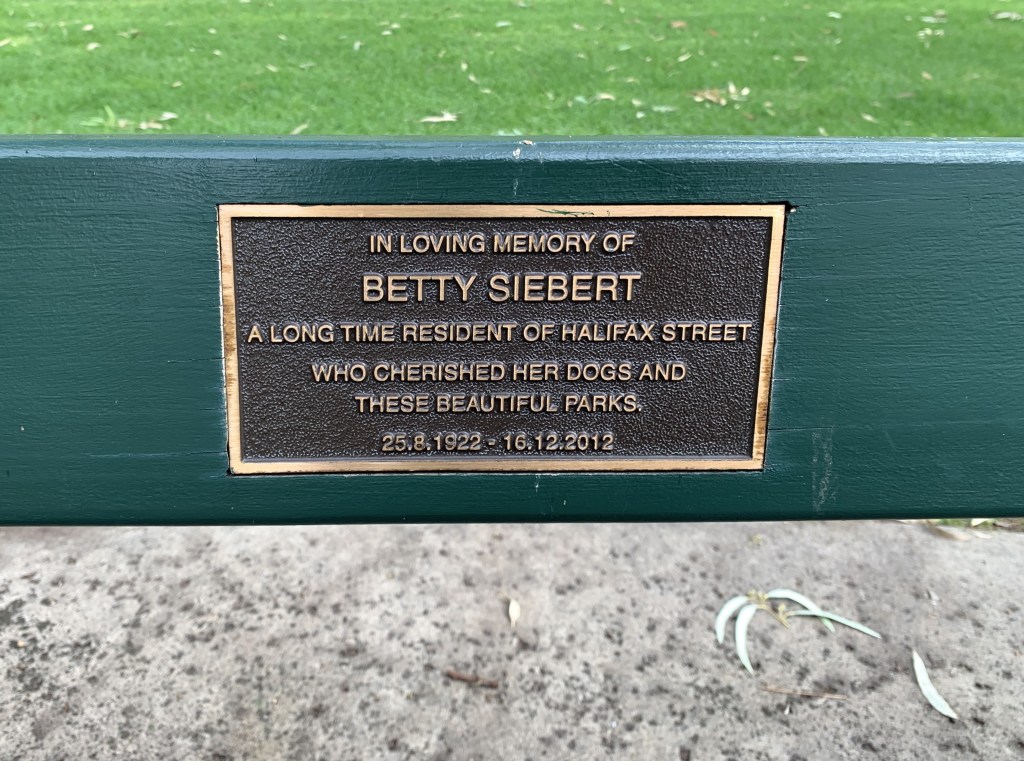
The Lord Mayor of Adelaide, Jane Lomax-Smith, says she is “disappointed” with the return of the Adelaide 500 at the hands of the Malinauskas Government.
“I think that its operations are generally too disruptive for too many months of the year — six, seven months of complete alienation,” she says.
Lomax-Smith makes a comparison with Monaco’s Grand Prix set-up, which takes six weeks to build and three to dismantle.
“I can’t believe that one man with a spanner working over seven months costs less than 50 men doing it over a week.”
Although, when it comes to the hypothetical ripping up of track itself to cool the park and add tree cover, the mayor’s not entirely convinced.
“When you’re looking at 700 hectares, 10 or so hectares of tree cover is not going to tip the pendulum … into a cooling impact.”
She does say, however, that heat maps show decreases in the city’s temperature, caused by planting canopy cover and lifting asphalt in the past.

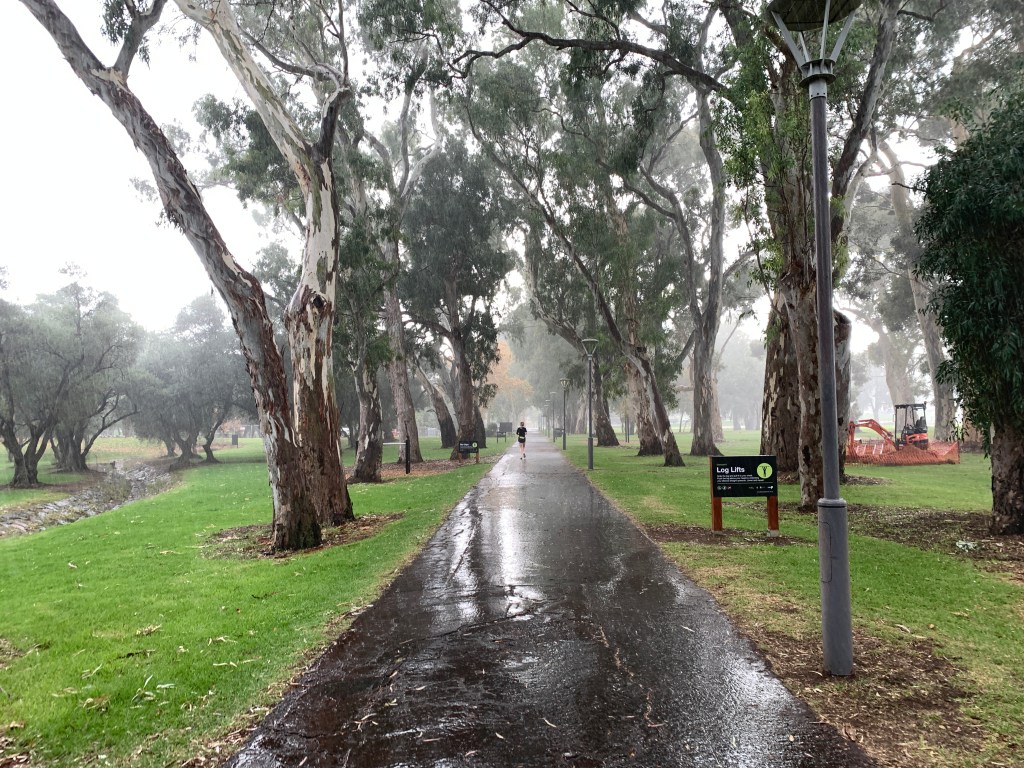
The moment is perfectly peaceful before the sky begins to pour. It falls heavily, with no warning. I stand and thank my umbrella as fellow parkgoers are drenched helplessly.
Motorsport Australia’s strategy for the next three years includes two goals.
One is to “expand and increase participation and engagement in motorsport”. The other is to “minimise [its] environmental footprint and commence work towards net-zero carbon dioxide emissions”, including by testing sustainable fuel technology, and exploring tyre reduction, recycling and sustainability.
Internationally, the SRO Motorsports Group has committed to an aim of achieving net zero carbon emissions by 2040, while Formula 1 has pledged 2030.
Formula 1 currently creates approximately 256,000 tonnes of carbon dioxide in a race season.
Greens spokesperson for environment Senator Sarah Hanson-Young says electric vehicles are the way forward.
“Transport is Australia’s third largest source of greenhouse gas emissions, which is why we urgently need to electrify our transport systems to 100 per cent renewable energy,” she says.
The Malinauskas Government has repealed the Marshall Government’s electric vehicle tax, is “developing a strategy to transition to a zero-emission bus fleet”, and budgets $593 million for hydrogen.
But they are also taking Victoria Park piece by piece.
Frome Park/Nellie Raminyemmerin Park is becoming the third wing of the Adelaide Botanic High School, Denise Norton Park/Pardipardinyilla a new aquatic centre, and — until recently revoked — Golden Wattle Park/Mirnu Wirra was going to become an eight-hectare police compound.
Rain will soon be the least of our problems.
The South Australian Motorsport Board and South Australian Leader of the Opposition did not respond to requests for comment.

 ontherecordunisa.com