
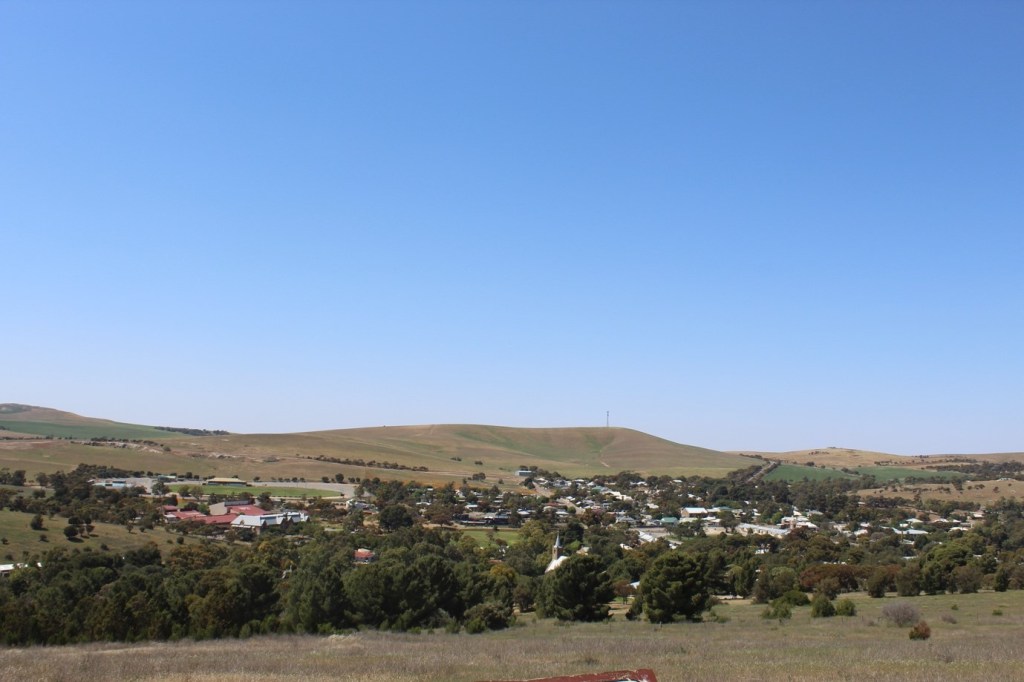
Once Australia’s largest inland town, Burra is a shrine to its English settlers and rich mining background. Located two hours north of the Adelaide CBD, this once-bustling working-class town has maintained the essence of its heyday. (Image: view of Burra from “Monster Mine” lookout. Source: Jade Woollacott)
By Jade Woollacott | @Jade.Woollacott
Burra has preserved the rich colonial history that once made it one of the largest towns in the country. Now it is a place where old meets new—something that the locals fully embrace.
But it is not just the history that wraps itself around you as you walk through Burra’s main street; it is the sense of community that can’t help but make you feel as if you belong.
Local historian Meredith Satchell, born and raised in Burra, said it is the connections that make the town so special.
“People from basically all over Australia, and sometimes the world, have got connections with this place,” she said.
With multiple historical books on Burra under her belt, Meredith said these connections are one of the things about the region that fascinate her most.
“There’s just an amazing amount of people who’ve got connections from the small beginning that Burra was,” she said.
This time capsule town offers visitors the chance to truly understand the region’s history though a self-guided tour, which provides the unique opportunity to immerse yourself in Burra’s prized historic locations.
The Burra Heritage Passport offers access to 11 locked sites that otherwise would have been lost to the centuries.
Traditionally known as Kooringa and home to the Ngadjuri People, Burra became the first company-owned mining town in Australia after colonial settlers discovered copper near Burra Creek in 1845. It was Australia’s largest inland town by 1851.
Burra’s copper mine was the largest metal-producing mine in the country until 1860 and eventually became known as the “Monster Mine”.
The self-guided tour grants access to Morphett’s Engine House, The Powder Magazine and various historical buildings, along with mining carts and other equipment at the Monster Mine Site.
It also includes the still-standing structures of Redruth Gaol, the Police Lockup and Stables, Malowen Lowarth Cottage and the Unicorn Brewery Cellars, all in stable condition—some of them could probably still be used today.
The dilapidated half walls and stone piles of Hampton Village and Smelts Paddock also feature as tour stops, alongside remnants of the town’s original Market Square.
The miner’s dugouts, which provided extra housing for the once overcrowded region, also feature in the Heritage Passport.
Each stop offers a deeper glimpse into what life may have been in Burra in the 1800s.
I collected my Heritage Passport key at the visitor centre on the corner of Market Street and Commercial Street and was surprised to receive an actual key that would physically unlock each site.
All the information about the self-guided tour referred to a “key” but I had assumed it was merely tokenistic: some sort of pass to show that I had paid and that I was, in fact, allowed to access these sites.
But as a self-guided tour, it makes sense that these sites would be barred by gates with actual locks. As a council- and national trust-owned tourist destination in a small town, continuous staffing for all 11 sites would be impractical due to funding constraints.
I didn’t feel the need for a tour guide anyway. If anything, the self-guided nature of the tour allowed me to take my time at each location and reflect on the years of history each one immortalises.
I often found my mind wandering, pausing at each site to embrace the silence and allow myself to be present. Each moment lets the imagination run wild with questions.
What did these houses look like before they were wrought with time? What would this engine house look like if it were full of miners milling about? If I were a young girl in this gaol-turned-reformatory, would I too have attempted an escape? Probably. How would I have done it?
Along with the key, I also received a map that was slightly difficult to navigate – but that could just be the Gen Z in me – as well as an informational booklet that covers not only each of the Heritage Passport sites but also other historic places in the region.
While the historic Town Hall, Railway Station and the Bon Accord Mining Museum are all integral to the town, they are not officially part of the heritage trail. Consequently, none of the money from the admittance fees contribute to their upkeep.
Instead, these sites are volunteer-run and rely on donations to keep them going. Meredith Satchell is also the President of the railway station and believes this should change. She said these institutions “are part of the tourism experience in Burra now”.
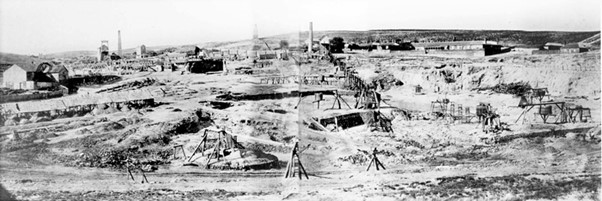
It’s hard to fathom just how vast the Monster Mine site is until you see it in person: then it becomes clear why, 150 years ago, this was the biggest mine of its kind.
While there are various lookouts across the area, none compared to the view from the third and highest level of Morphett’s Engine House.
While standing on the rickety wooden platform, I thought today might be the day the old structure finally showed its age and gave in. But any reservations I had about the precarious balcony were overshadowed by the beauty of the Monster Mine.
I’m sure in its heyday, words like “captivating” and “serene” would have never been considered when describing the copper mine. Yet, 150 years later, they are the first ones that came to mind.
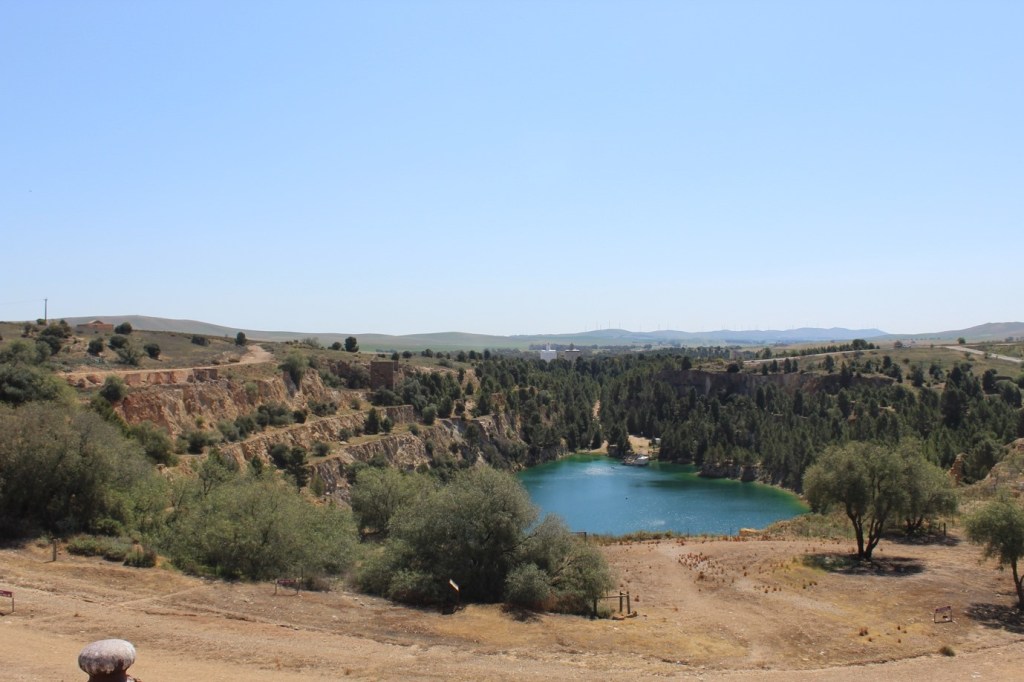
Now, nature and man-made infrastructures co-exist harmoniously here. Once harsh lines carefully cut from the earth are now softened by surrounding trees, and the rock descends to an aquamarine pool of water at its depths.
Contrary to what most assume, the aquamarine hue of the water at the base of the mine’s open cut has nothing to do with the once copper-rich soil. Instead, it can be attributed to a light scattering effect, which causes the water’s colour to change throughout the year.
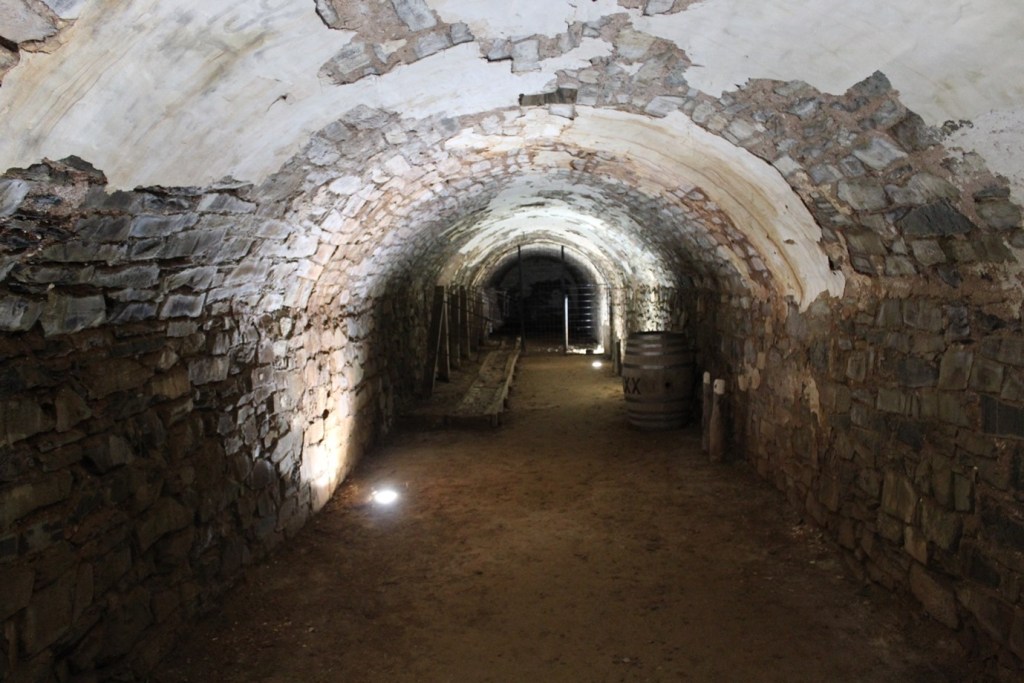
As I walked through the Unicorn Brewery Cellars that once serviced all nine hotels in the Burra region, I was surprised by how well-kept the space was—a true testament to the town’s care and pride for its historical landmarks.
I descended the stairs into the cellars and found myself in an underground tunnel system. A slight wave of dread washed over me as I cautiously navigated the low stone passageways.
Although the tunnels were well-lit with artificial lighting, I found myself tempted to turn back—this feeling was spurred on by the increasing hum of what I assumed was some sort of generator.
Though I knew I was alone, the eerie feeling that I was not persisted. Perhaps it was how deeply I had been absorbing myself in the history of these sites that made my mind run a little too wild.
Eventually, I saw the light at the end of the tunnel—literally. I located the secondary exit and soon found myself above ground once again.
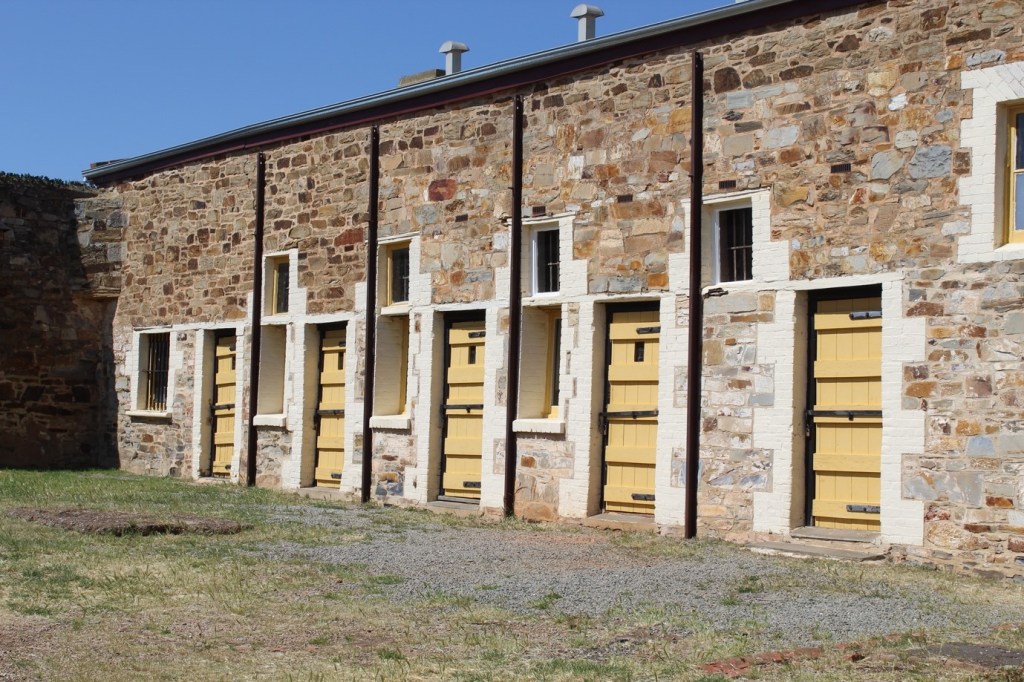
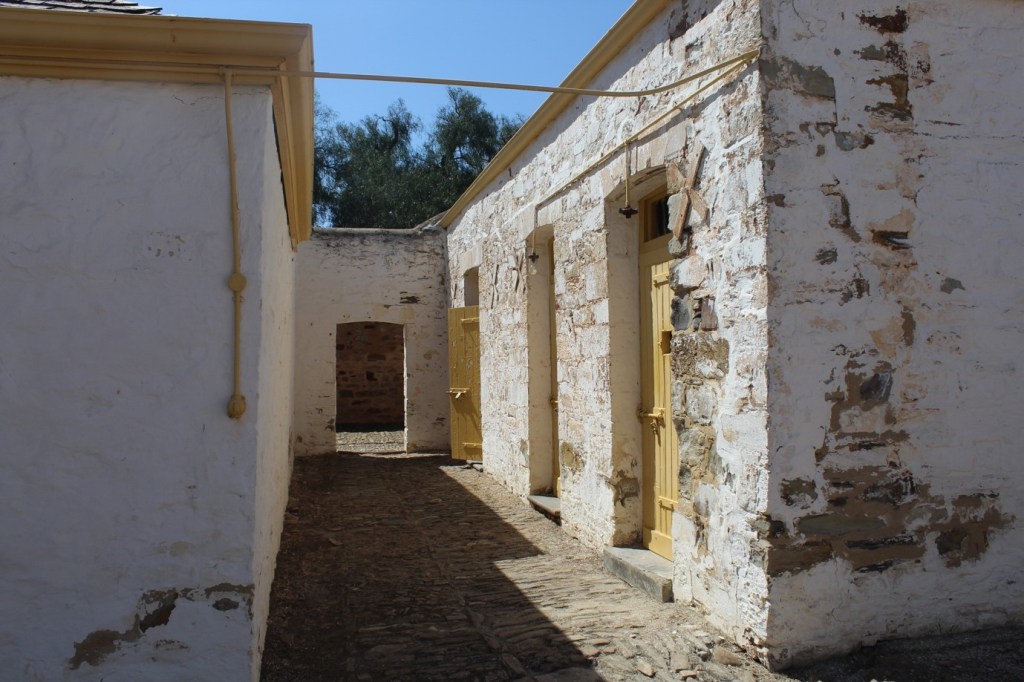
As I walked across the jagged cobblestone floor of the police stables and lockup, I fed the curiosity that pulled me into one of the holding cells.
Unexpectedly, I was confronted with a jarring, unexpected discomfort. Again, I pondered what it might have been like to be truly locked in here.
The door was ajar and, although it was a perfectly sunny day, barely any light penetrated the space.
I am not claustrophobic or afraid of the dark, but I could not stay in the cell for long. I thought of the prisoners who had spent time there and wondered what they might have done to earn themselves a ticket to those tiny cells.
Could it have been mere petty theft? Or perhaps something far more sinister?
Burra was added to the national heritage list in 2017.
“It’s the only town in Australia that’s National Heritage listed so something needs to be made of that,” Meredith said.
While Broken Hill also holds a spot on the list, it is classified as a city which leaves the old Monster Mine site as the only town listed.
Burra prides itself on its national heritage status and is hoping to take it a step further with its recent bid to be added to the World Heritage List.
Anthea, one of the friendly faces behind the desk at the Burra visitor centre, said she sees anywhere from 20 to 100 people come through to do the Heritage Passport in a single day.
While they experience busy and slow periods, Burra’s proximity to one of the major highways between Western Australia, South Australia and Victoria means they are no strangers to interstate travellers.
Anthea said word of mouth has kept the passport system running since the “Burra Passport” agreement was signed between the council and the National Trust in 1992.
As a historian, Meredith Satchell is a stickler for facts and while she described the heritage passport system as “wonderful” and “diverse” she said, like everything, there is room for improvement.
The informative signage at each site was erected a long time ago and its age is starting to show.
To bring the whole passport experience “up to [the] standard” of world heritage status, Meredith said: “Things need to be improved. Museums need to be improved. Tourist attractions need to be improved.”
But it is clear Burra is making the most of what it has and perhaps attaining the status of “World Heritage listed” will bring with it the funding that the town needs to make such upgrades.
This is not to say that the need for improvement puts any kind of damper on the overall Heritage Passport experience. It is just to “make it the best we possibly can,” Meredith said. “That’s the challenge for Burra, to be an exemplary place.”
Nonetheless, each stop on the Burra Heritage Passport has a story to tell, and the day that I spent there was nowhere near enough time to truly grasp and understand them all.
To contemplate every story of every person who has passed through this town would be to never leave.
Each of these tales make up Burra’s rich history, which the Heritage Passport offers a mere glimpse into.
You can book your Heritage Passport here.
 ontherecordunisa.com