
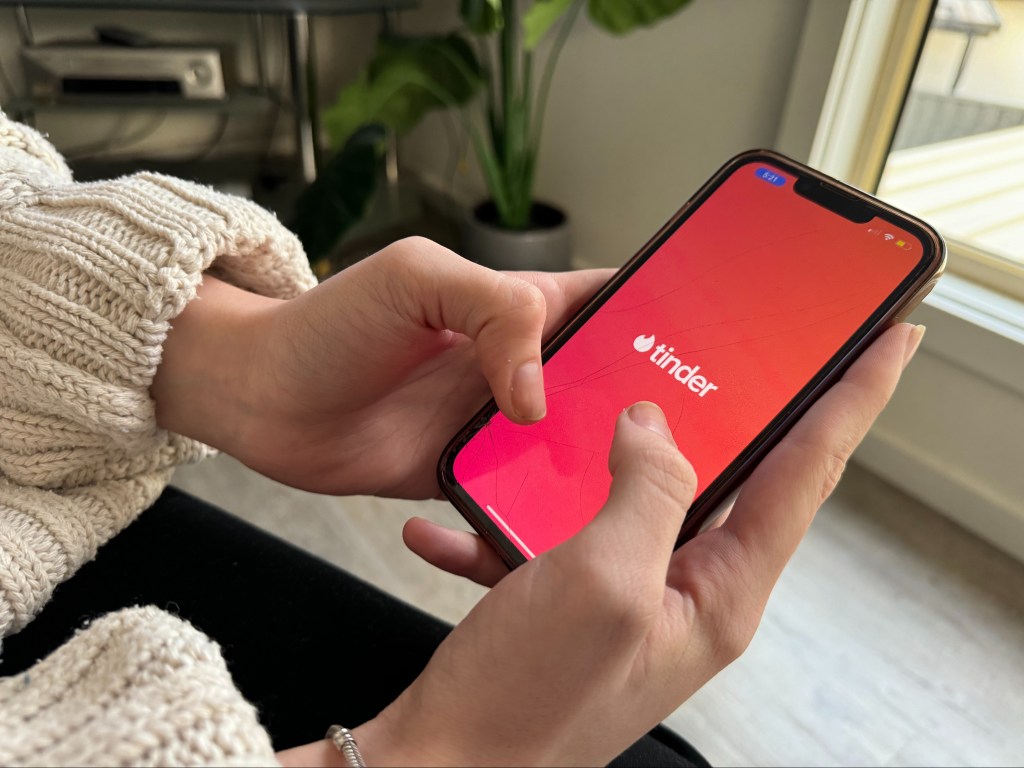
Dating apps are on the out. Sexologist Jamie Bucirde says the superficial and disposable nature of dating apps is leaving Adelaide singles unlucky in love and ready to move on. (Image: Jade Woollacott).
By Amelia Hegarty | @amelia_heg
As *Lucy Stanford watches the pink-flamed logo of the Tinder app download onto her phone screen, she is filled with anxious excitement.
This is not the 21-year-old university student’s first rodeo with dating apps; she downloaded Tinder at 18, wanting to experience the popular alternative to dating in person.
Swiping on the first few faces, Stanford peruses Adelaide’s choice of men, deciding who would be worthy of a swipe right — a like for the profile, or a swipe left — a rejection of the profile.
It only took a few days before Stanford says she found herself drained by the dating app as the “vibe completely shifted”.
“I would open messages and just roll my eyes and be like I don’t want to deal with you right now,” she says.
Stanford is looking for someone driven, full of ambition, funny and who “[she] can actually have a friendship with,” she says.
It only takes a few swipes for Stanford to remember why she deleted Tinder in the first place.
She says ghosting, the superficiality of the app and hook-ups lead only to disappointment.
“I hate this app,” Stanford says.
“I just hope that I’m going to meet someone naturally.”
Stanford believes she is not the only one experiencing these issues with dating apps.
“I feel like a lot of people just settle because they don’t want to get back into the dating scene,” she says.
Stanford says one of her friends even decided to “go celibate” to avoid the online dating process.
Adelaide’s resident Sexologist and CityMag columnist Jamie Bucirde explores the growing frustration and fatigue with apps and the dating scene.
Bucirde says apps have created a “superficial” and “disposable” environment for singles.
“Dating apps have kind of been the predominant form of meeting people, especially since COVID,” she says.
COVID catapulted online dating apps to a popular way of meeting and connecting with people, Bucirde says.
Tinder Pressroom’s Australia never stopped dating in 2020 report found that during lockdowns, the use of the app was “up double digits”.
Tinder Pressroom found users had adapted to physical distancing and isolation and continued to express themselves through bios and profiles.
Despite the isolation of a lot of young adults during this time, Tinder says its users still managed to connect and “unapologetically be themselves”.
However, Bucirde says in the last year she has seen “a really big shift in how people are using dating apps but also the fatigue of using dating apps”.
At a recent speed dating event Bucirde says she discovered this renewed mindset amongst young adults.
“[People] were getting ghosted a lot, conversations were dropping off; like you’re investing all of this time and energy… where it doesn’t seem to be leading anywhere,” Bucirde says.
“I think [with] the superficiality of the way the dating apps have been going you’re kind of presenting your best self but people are really going off looks and looks alone.”
Tinder’s algorithm matches individuals based on photos from previously liked profiles as well as who the user swipes right or left.
Tinder says its algorithm will “suggest profiles with similar photos … and show their profiles to more people who have liked members with photos similar to their own”.
Bucirde says that this becomes detrimental to users and their dating experiences as it fosters skewed incentives and motives for joining the apps in the first place.
“A lot of the time [men are] just purely going off the looks of women and women are going for other qualities,” Bucirde says.
Tyler Ninnes is a single 19-year-old apprentice electrician who values family and says he wants to meet someone naturally but dating apps have taken away the “realness” of an in-person interaction.
Ninnes says his experiences on dating apps have been few and far between and a general fatigue and dislike of Tinder leaves him “bored of it”.
“[I] don’t even use the app anymore, you know, it just sits there,” he says.
Ninnes finds, when using apps, that he is choosing a potential match based only on a photo.
“They try and put the information on there… [but] like you don’t truly know them,” he says.
Ninnes says his friends take a different approach of swiping on everyone “to see what happens”.
This way Ninnes’ friends have a greater opportunity to find a potential match — if they like everyone, eventually they will find the one.
Even though it can feel like dating apps are the only way to connect and meet a match, Bucirde advises young Adelaideans to delete the apps and move “back to the OG, traditional, meeting someone in person scene”.
Bucirde believes that COVID and the lockdowns restricted gen Z’s ability to flourish and socialise at an essential time of their lives.
“They [gen Z] didn’t have that learn-as-you-go mentality of being 18 and being able to go out and actually learn the social etiquettes [of dating],” Bucirde says.
But she says now is the time to start “giving it a go”.
“It’s always awkward the first couple times… but you gain more confidence by doing,” Bucirde says.
Bucirde praises Adelaide’s dating scene as being an open and inclusive place, “less heteronormative,” more pansexual and ultimately eager to have in-person interactions.
Other avenues of dating have started popping up as young adults move away from dating apps; Bucirde even says speed dating is becoming popular again.
“People do want more authentic ways of meeting people,” she says.
“They want to be able to connect.
“I think it’s going to get easier as we’re out now in the real world, socialising and talking with people in real-time.”
*Name changed for anonymity
 ontherecordunisa.com