
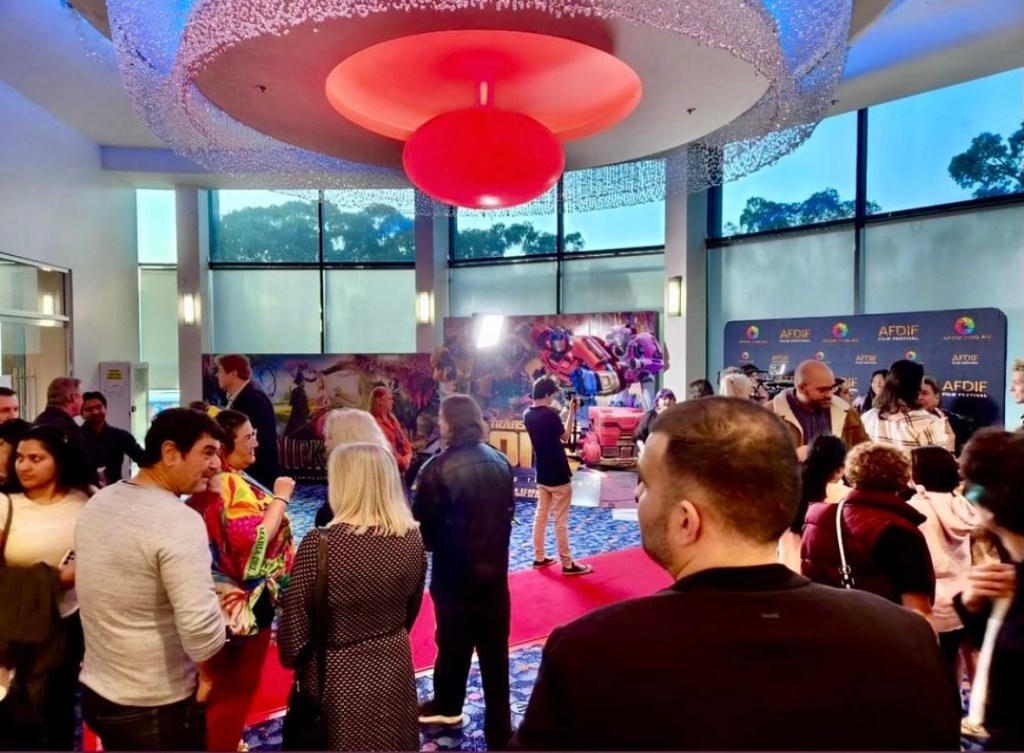
Local filmmaker Yogi Devgan continues to advocate for representation in all aspects of the filmmaking process with the Australian Film Diversity and Inclusion Festival. (Image: Sue Hedley)
By Jade Woollacott | @jade.woollacott
Inclusion has always been important to Yogi Devgan, a South Australian filmmaker who strives to provide local creatives as many opportunities as he can while representing diverse groups on screen.
Devgan’s passion for diverse representation in the film industry extends beyond the stories being told to all facets of the filmmaking process.
“You turn on the TV and see some [diverse] stories about people … but when you look at the credits you don’t see diversity in there,” he says.
“I’m talking about department heads, I’m talking about directors, I’m talking about producers.
“That’s where I think [diversity] is lacking at the moment.
“You can’t tell my cultural story and in a similar way on the other side I can’t tell your cultural story.”
A report released last year by Screen Australia revealed that while diversity on screen had increased since the previous benchmark report released in 2016, it still does not accurately represent how diverse Australia is.
According to the 2021 Australian Census almost 30 percent of people in Australia were born elsewhere.
In 2022 The Everyone Project released a report that found while minority groups were generally well represented on screen in Australia — in relation to their population benchmark — this was not the case for what goes on behind the camera.
Notably, people of Asian heritage, as well as people living with disability, were underrepresented both on and off screen.
Meanwhile, The Guardian reported earlier this year that despite the recent success of female-directed films, representation behind the camera had declined since the year before.
Devgan agrees that Australia needs more diversity on and off screen, and says he thinks that the Australian film industry “is very much in the box”.
“It’s always ticking the boxes to say, ‘we are diverse’,” he says.
“There’s always tick, tick, tick, ticking boxes rather than telling a story for the people about the people.”
In his efforts to promote diversity and inclusion in filmmaking Devgan founded the Port Adelaide Diversity and Inclusion Film Festival (PADIFF) in 2022.
The festival ran successfully in Port Adelaide for its first two years before moving into the inner-southern suburb of Mitcham, where Wallis Cinemas played host last week for the first time under Devgan’s new not-for-profit organisation the Australian Film Diversity and Inclusion Foundation (AFDIF) festival.
Having previously worked in real estate, Devgan says he has always had a passion for filmmaking and storytelling and decided to “follow his heart” and enrol in a Bachelor of Film and Television at the University of South Australia just before the COVID-19 pandemic.
He graduated in 2022 — the same year he founded PADIFF — and filmmaking is now his full-time job. With 14 completed short films in his portfolio, and numerous in the works, Yogi wishes to step into the feature film space.
Of the more than 20 films submitted to the festival this year, 12 were shortlisted, four received awards and the rest had special mentions — all carefully selected by a diverse judging panel of five.
Devgan says this is perhaps one of the only facets of the festival he is not involved in — his Bachelor of Film and Television having equipped him with the skills to oversee the festivals entirety.
“Running a festival is a huge thing … a lot of hard work, a lot of sleepless nights,” he says.
“As a director it’s hard to give control.”
Devgan says he is always looking for local creatives — not just filmmakers, but anyone interested in diversity and inclusion in storytelling to become involves in AFDIF in any way.
Of the shortlisted films, only three were South Australian and Devgan says there were not many local entries at all.
His own short documentary film Smile It’s Free — which tells the story of South Australian Stephen Coad, a previously homeless man struggling with mental health, who seeks to brighten faces around Adelaide with his sign that says “smile… it’s free” — won the Local Hero award as well as the People’s Choice award.
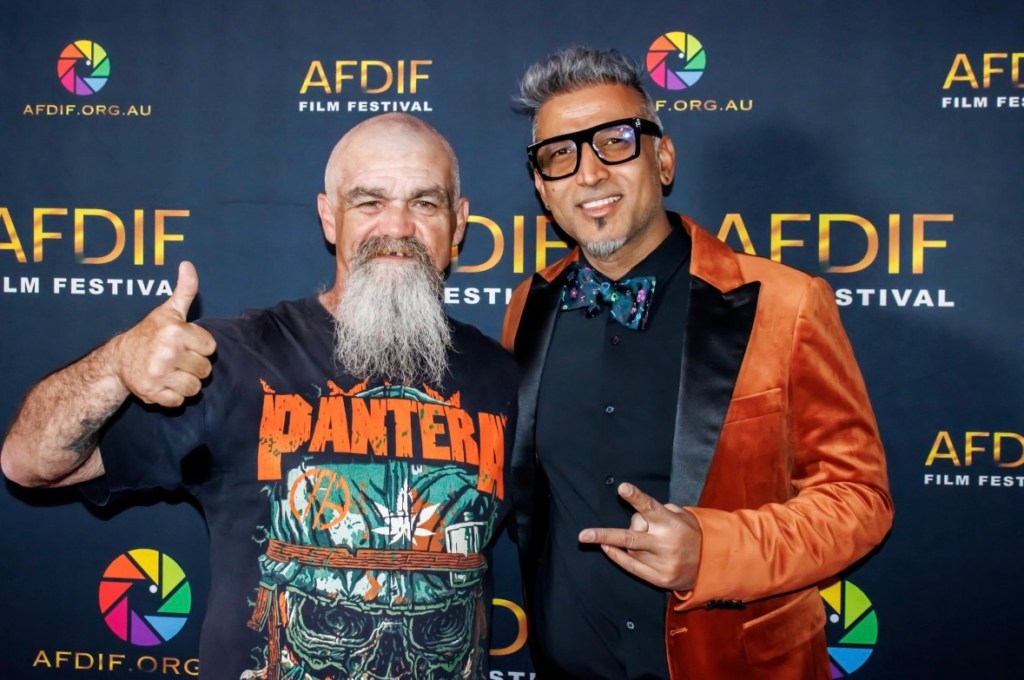
Yogi Devgan (right) with Stephan Coad (left). (Image: Sue Hedley)
“Think outside the box, don’t stay in the box,” Devgan says.
“A story doesn’t have to be crafted within the rules.
“We don’t live within the rules.
“Otherwise, everything would be so peaceful and so structured.
“By holding these kinds of events [like the AFDIF festival] it is telling filmmakers what the audience likes is something different — something they have never seen.”
With a range of connections, a wealth of knowledge, a passion for storytelling, and a drive for diversity and inclusivity, Devgan wants to make himself available to anyone looking to kickstart their career or get involved in the festival in anyway.
You can get in contact with Yogi Devgan on Facebook, Instagram, or through the AFDIF website.
 ontherecordunisa.com