
Explore the living history and heritage of South Australia’s Cornish hotspot of Moonta, a place where you’ll strike it rich mining for the experiences of a lifetime. (image: supplied)
By Joshua Owen-Thomas
When most people imagine a holiday on the Copper Coast, a region near the top of South Australia’s Yorke Peninsula, they typically think of swimming, snorkelling, water sports, and fishing from either the jetty or over the side of a boat.
Who can blame them?
The region is home to pristine beaches like North Beach in Wallaroo, the Moonta Bay and Port Hughes foreshores, and multiple jetties and boat ramps from which to launch fishing adventures.
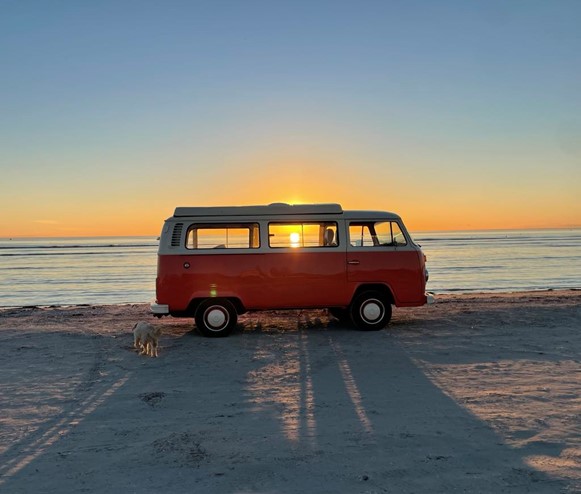
Wallaroo’s North Beach is perfect for driving your car onto the sand and setting up for the day, and the clear waters are ideal for paddleboarding or kayaking. (image: Joshua Owen-Thomas)
But there is more to the Copper Coast.
In the 19th century, Kadina, Wallaroo, and Moonta — the three main townships that together form the ‘Copper Triangle’ — were copper mining hotspots. Copper was found in Kapunda and Burra in the 1840s, and then later at Wallaroo in 1859 and Moonta in 1861.
Skilled miners from Cornwall flocked to South Australia to work in the mines established at these sites, leaving behind difficult living conditions in England. They brought with them not only their game-changing hard-rock mining expertise, technology, and methodology, but also their culture.
The town of Moonta itself was established to support the Moonta Mines, which was, at one stage, one of Australia’s largest and most lucrative and was home to many of these miners. In fact, Moonta’s Cornish heritage is so strong that it is often referred to as ‘Australia’s Little Cornwall’ — a sign saying as much greets visitors driving into town.
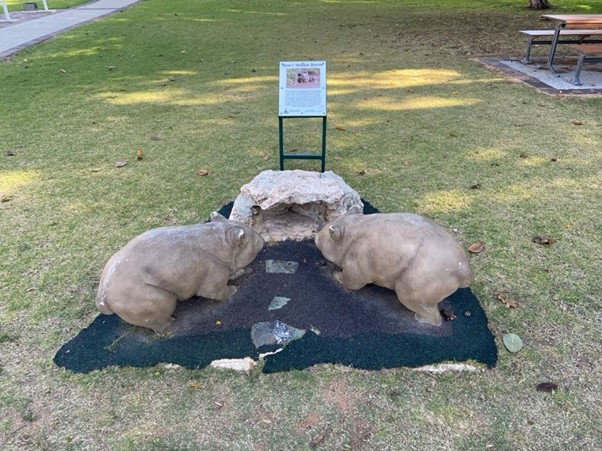
These wombat statues in Moonta’s Queen Square tell the story of how copper was first discovered in Moonta by Paddy Ryan in 1861. Ryan was working as a shepherd when he noticed what appeared to be traces of copper near a wombat burrow. (image: Joshua Owen-Thomas)
Today, this Cornish heritage is very much still alive and celebrated by its residents and plays a big role in tourism in the region. With some exciting developments recently occurring in this space — and more to come — there’s no better time than now to visit Moonta, Australia’s Little Cornwall, whether you’re a history buff or not.
If you’re looking to immerse yourself in the Cornish heritage in Moonta, the best place to start is the Moonta Mines. Situated just outside the town proper, the mines, which ceased operations in 1923, achieved National Heritage status in 2017 and occupy a 320 hectare stretch of land.
Now, the site is managed by the Moonta Branch of the National Trust of South Australia and is a tourist destination. Many buildings and structures like the Richmans and Hughes engine houses and the miners’ cottages have been preserved and offer an authentic glimpse into the operations of the mines and the lives of the Cornish miners that worked there.
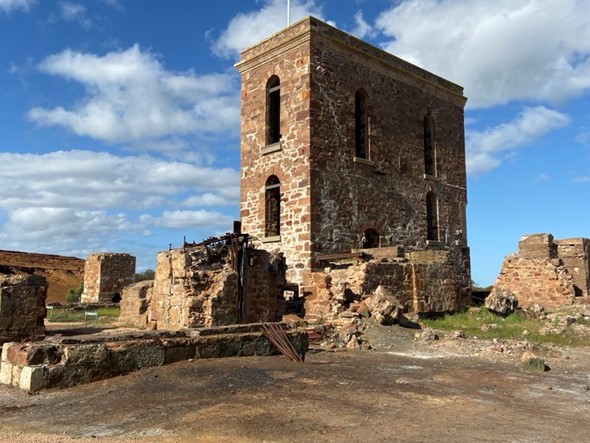
The Richmans Engine House is one of two at the Moonta Mines and can be visited via the Richmans Walk walking trail. (image: Joshua Owen-Thomas)
Other, more modern, attractions including the railway and sweet shop — once a post office — have been added later to keep visitors engaged and coming back for more.
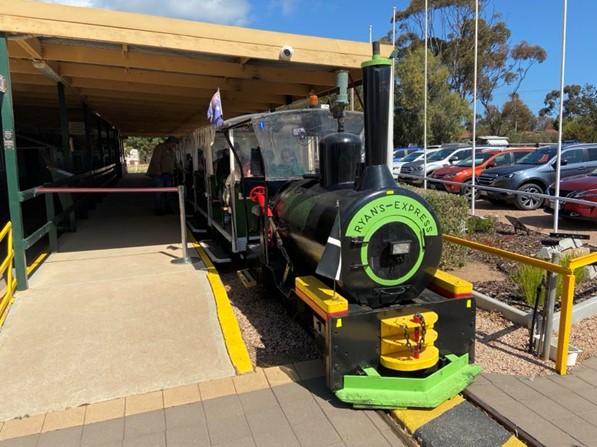
A ride on the Ryan’s Express takes about 45 minutes and makes a loop throughout the Moonta Mines site, allowing passengers to see many of the ruins and heritage structures up close. (image: Joshua Owen-Thomas)
The Moonta Mines Museum serves as a central hub for the site and contains 14 thematic rooms that together tell the story of the Cornish miners’ lifestyles.
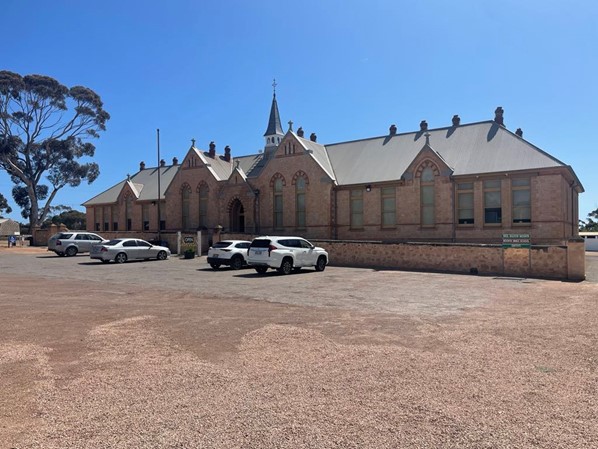
The Moonta Mines Museum has 14 thematic rooms and occupies what was once a school erected in 1878. (image: Joshua Owen-Thomas)
Team Leader at the museum Belinda Krollig says the various attractions keep people coming through the doors.
“The two most popular attractions are the railway and the sweet shop,” she says.
“Over the [October 2024] school holidays and the long weekend, it was extremely busy. I think over that long weekend we had over 300 people in the museum.”
Chairman of the Moonta Branch of the National Trust of South Australia Graham Hancock says the mines should resonate with visitors for many reasons.
“It’s really about their significance,” he says.
“Significance is a key word in all of this. And we’re also conscious of the fact of authenticity, and why we’re preparing our sites and enhancing them is all about keeping the site authentic.
“[Visitors] are seeing something that they’re not going to see anywhere else. They’re seeing a method of mining which financially put South Australia on the map.
“It’s a key part of South Australia’s early development.”
Multiple walking trails have recently been upgraded and are now open for public use.
And that’s not the only new development at the mines.
On September 6 last year, after years of collaborative work from the National Trust and the Goyder and Copper Coast councils, the Moonta Mines and its sister mine at Burra — together dubbed the Australian Cornish Mining Sites — achieved a tentative listing on Australia’s UNESCO World Heritage List.
Hancock says the impact of the listing on tourism in the region and Moonta is already being felt.
“To be at that level is a great help in terms of putting our name up there,” he says.
“Already our visitation is improving as a result of that … [from] general tourists but people who are asking more questions, they want to look more in depth at what we have.
“It also places us on the world stage. It’s not called world heritage listing for nothing. The Cornish mining diaspora, if you like, it covers the world and we’re just one small part of that. Although we’re probably the most significant in Australia and we were the earliest in Australia.”
Mayor of the Copper Coast Council Roslyn Talbot says the listing opens up opportunities for improvement of the Moonta Mines site.
“There’s a lot of work currently being undertaken to improve the visitor experience,” Talbot says.
“We’re hoping now that we’ve got that tentative listing, we will be able to generate some funds from both state and federal governments to assist us driving that forward.”
Hancock says that one federal grant worth $4.2 million is currently being used for conservation work, but additional grants will be used for other projects.
“The other side of it is that we’re going to improve our museum to the point where it’s more modern in terms of how it shows objects, and is going to be more particular about what the subjects are within the museum so that it supports the mining era,” he says.
Updates on museum displays are currently underway.
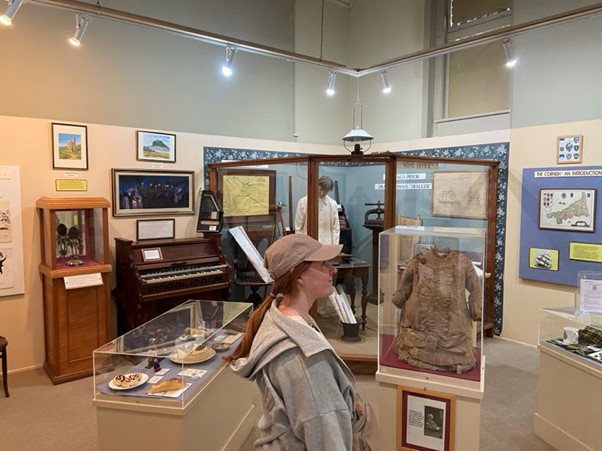
Visitors have a wealth of information at their fingertips at the Moonta Mines, especially in the various rooms at the museum which display different aspects of the lives of the Cornish miners. (image: Joshua Owen-Thomas)
Krollig is excited for the museum’s future following the listing — and for telling stories from the era that haven’t yet been told.
“We’re talking about what’s missing and what we still need to be developing for people to learn from,” she says.
The mining sites at Burra and Moonta are located on the traditional lands of the Ngadjuri and Narungga people, respectively. The two councils and the National Trust, working under the banner of the Australian Cornish Mining Sites World Heritage Consortium, worked with the Ngadjuri Nation Aboriginal Corporation, the Narungga Nation Aboriginal Corporation Board, and the Nharangga Aboriginal Progress Association to develop the bid, and, in April, received endorsements from the Indigenous groups for submission to the World Heritage list.
Talbot says the bid and its implications present opportunities for the Narungga people and the Copper Coast Council to continue to work together.
“Here on the Copper Coast, we recognize that the copper mines had significant impact on the Narungga, not all positive, and that story needs to be told,” she says.
“We are hoping that the increase in tourism will create opportunities around bush tucker and cultural activities for the Narungga people, and we will continue to work with them to help develop these opportunities.
“It has been a good process and has strengthened our relationships.”
While the tentative listing is a big step forward for the bid, there is a lot more work to be done before it’s officially approved as a World Heritage site, including putting together a 300-page supporting statement for submission to UNESCO by August this year, after which the final decision will be made.
In the interim, tourists looking for their Cornish heritage fix will soon have another reason to get down to Moonta and the Copper Coast.
In May, Kernewek Lowender, the Copper Coast Cornish festival, is coming to the region. In Cornish, Kernewek Lowender means ‘Cornish happiness’ and the festival is celebrated every second year in Moonta and the Copper Triangle.
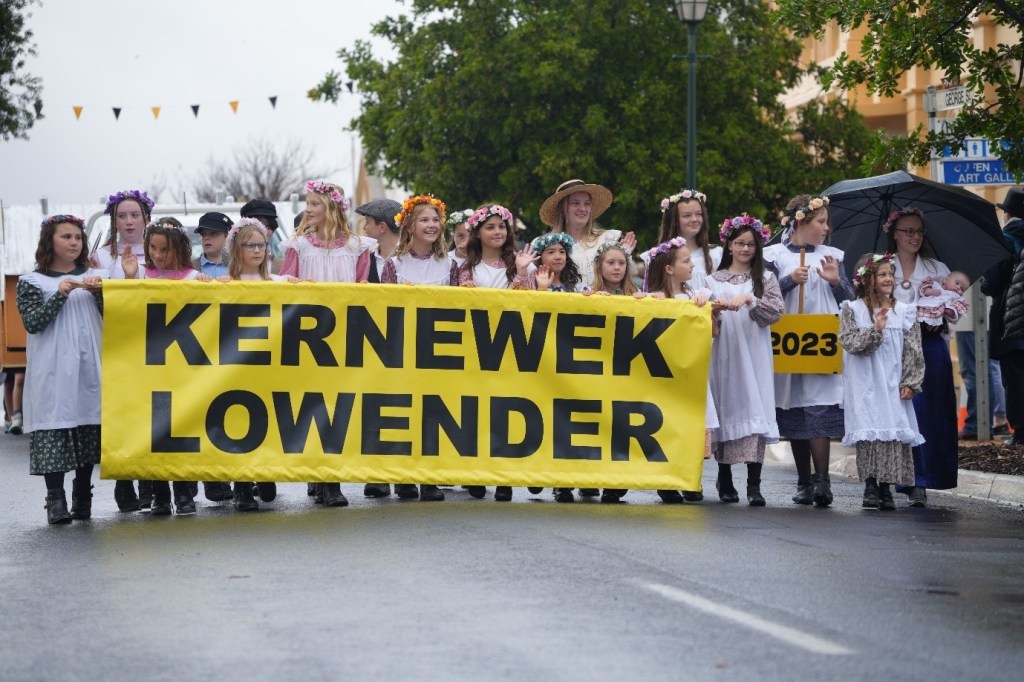
Photo: supplied (Kernewek Lowender Committee).
The festival began in 1973 and celebrated its 50th anniversary in 2023. Lynn Spurling has been President of the Kernewek Lowender Committee since 2015 and has been involved in the festival since 1987 when she was chosen as the May queen.
“The purpose of the festival is to celebrate our unique Cornish heritage and history and culture,” Spurling says.
“So, it’s very much celebrating the lifestyle of our forebears who moved to this area from Cornwall and made Moonta Australia’s Little Cornwall.
“For us locally, it’s so that our community are aware of where we’ve come from and what we owe our history to.
“For our young people, it’s also an opportunity for them to appreciate how the area was established, but also to bring visitors to the area to really just embrace why our towns look the way they do, and the architecture, and the community spirit and the lifestyle that we have.”
While Spurling and the committee are still planning the week-long festival, visitors and locals can safely expect a variety of events to keep them entertained.
“The heritage events occur every festival,” Spurling says, “so those include street parades, the furry dance, the maypole, [Cornish] pasty making, concerts, things like that.
“But on top of that … celebrating our ancestors through dressing the graves, cemetery walks, historical walks, just to give people the knowledge and information about the area.”
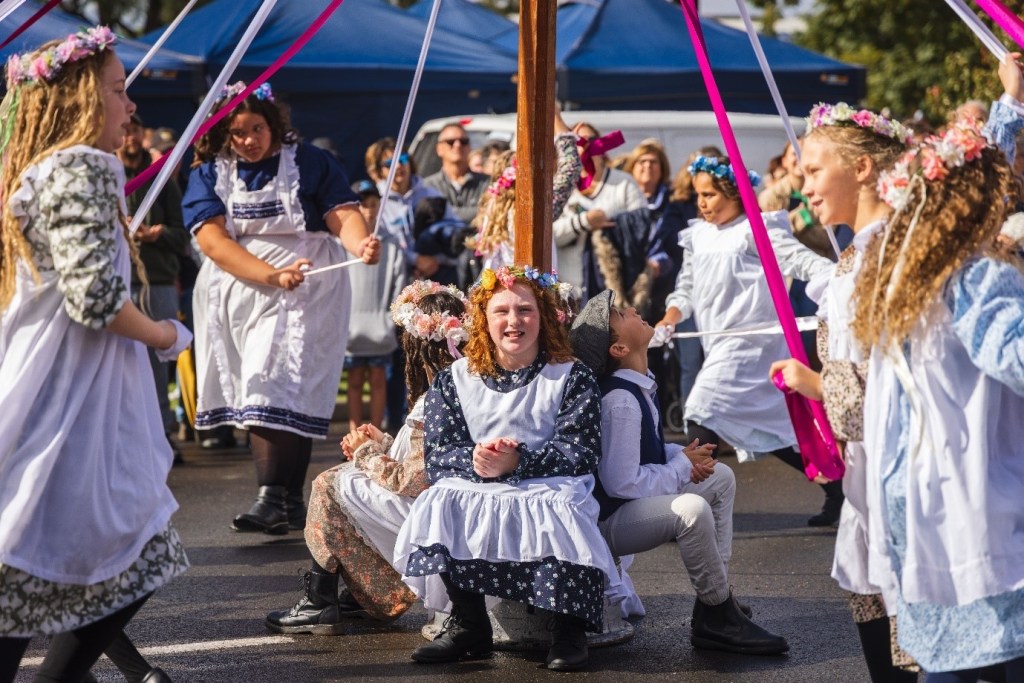
Photo: supplied (Kernewek Lowender Committee).
Before the COVID-19 pandemic, the festival had attracted over 40,000 visitors to the Copper Coast. During the pandemic, attendance dropped to about 20,000.
“We clawed back from that last festival, so we’re now sitting around the 30,000 mark over that week-long event,” Spurling says.
“That’s what we’re hopeful we’ll be able to maintain if not increase.”
Spurling hopes those that do come to visit for the festival leave having had more than just a good time.
“Hopefully they’ve had some experiences that they’ve really enjoyed and that have imprinted themselves on the value of Australia’s Little Cornwall, and encourage them to come back and visit us again.”
Whether people come down now or later for the festival, Talbot encourages visitors to extend their trip and make the most of what the region has to offer.
“If you were a tourist really interested in heritage,” she says, “and particularly Cornish heritage, you would come to Moonta, you would travel through the beautiful Clare Valley to taste the wine, and then on to Burra. There’s a really good tourist leg between the two Cornish sites.
“And then there’s also the opportunity to travel further down the peninsula to the Innes-Guuranda National Park.”
With the tentative listing and its implications for the future of the Moonta Mines and the township more generally, plus the region abuzz with excitement in the lead up to the festival, there are more reasons than ever before to get down to the Copper Coast and Moonta, Australia’s Little Cornwall, for a visit.
“There’s no better time than now,” Hancock says.
 ontherecordunisa.com