
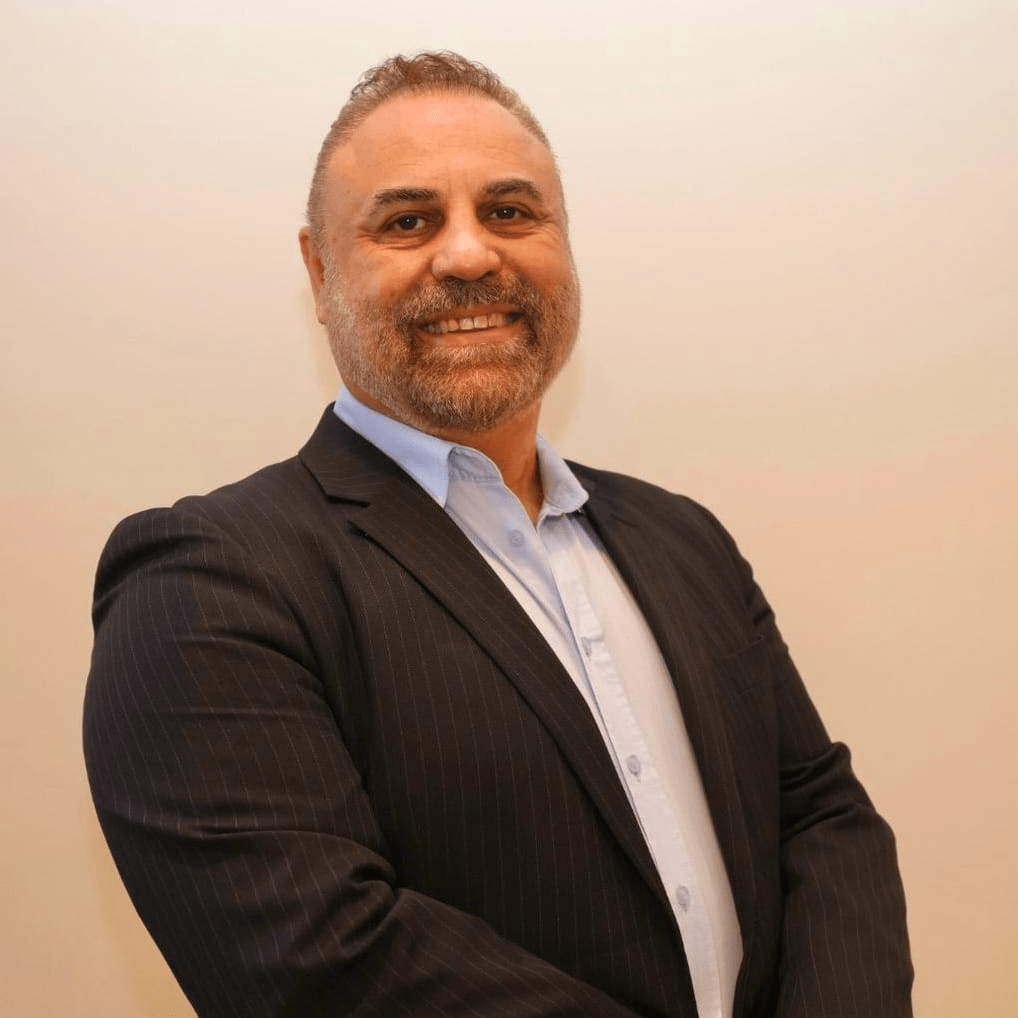
Small business owners are disconnected from politics, but it’s not entirely their fault. (Image: supplied).
By Rocco Ventra | @rocco.ventra
Small businesses are feeling the pressure from carrying our economy, and they are unsure of how to deal with it.
According to the Australian Small Business and Family Enterprise Ombudsman (ASBFEO), as of June 2024 just over 97 per cent of all Australian businesses are considered small businesses.
These small businesses employed over 5 million people from 2022 to 2023, accounting for 42 per cent of the private sector workforce.
The ABSFEO also says that in South Australia alone there were 155,221 small businesses as of June 30, 2023, representing six per cent of all Australian small businesses.
A press release regarding South Australia’s Small Business Strategy (SASBS) plan says small businesses contributed $49 billion to the economy from 2021 to 2022, equating to 38 per cent of Gross State Product (GSP).
Even while being a backbone of the Australian economy, many small business owners feel the squeeze of cost-of-living pressures.
A study by OnDeck Australia found that 85 per cent of small business owners cited cost-of-living pressures as the “key issue” that would shape their voting preference in the 2025 federal election.
The owner of the Rocco’s Pizza restaurant chain Rocco DeAngelis is one of the many small business owners worried about what the cost-of-living means for the future of businesses across Australia.
As well as knowing how to cook a mean sourdough, DeAngelis has made a name for himself in South Australia’s political scene.
He ran for the seat of Hindmarsh in Adelaide’s west for Pauline Hanson’s One Nation.
“What I’m seeing though is people are going out of business every day,” DeAngelis says.
“One business is getting squeezed with cost of goods, so whatever ingredients we’re buying, for example. Utilities bill is going through the roof. Our suppliers… we sit there and say: are they going to increase their prices again? Do they have a fuel levy?”
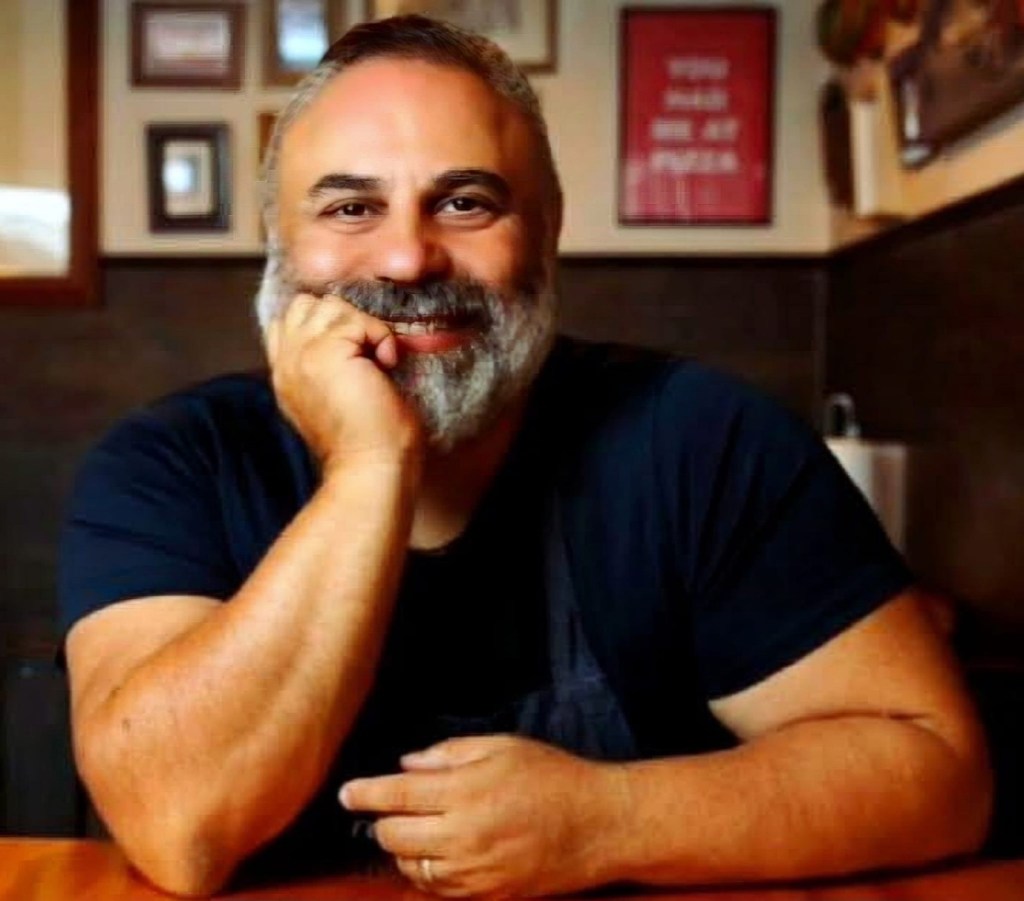
Rocco’s Pizza owner, Rocco DeAngelis. (Image: supplied)
Renew Adelaide CEO and business owner Gianna Murphy is also concerned about what the increasing cost-of-living means not only for her business, but the small start-up businesses Renew seeks to help.
“Certainly, the cost of business going up but not being able to increase your product prices accordingly to kind of match that cost of business inflation,” she says.
“If you are a café owner, there is already sort of an unspoken rule of what a coffee costs … you know that if you’ve got 20 other cafés on the street and everyone’s charging six bucks for a cup of coffee, you probably aren’t going to try and charge seven even if the price of business is increasing, you know, 10 per cent year on year.”
The Australian Government has tried to provide some financial relief to small businesses by offering $150 energy bill rebates, provided in the $1.8 billion extension of the Energy Bill Relief Fund.
“I wasn’t even aware of it, but I can tell you that the $150 is about as important as the $5 tax cuts the governments promised should they be elected,” DeAngelis says.
Among these problems, there is an underlying disconnect between small business owners and politics.
“I can tell you this: if I ran the businesses that I ran, not just my small family business now, but the major businesses… if I ran [them] the way Mr Albanese and the government run our current budget, I wouldn’t have lasted three seconds in the job,” DeAngelis says.
Murphy also said there is an existing disconnect between business owners and politics.
“The reality is that there absolutely is impasse, disconnect between upper levels of government. That’s from local, state, and federally,” she says.
The disconnect
A study by software company Xero in 2019 backs this idea of a disconnect between small business owners and Australian politics.
The study found 75 per cent of all small business owners surveyed could not name the minister for small business at the time.
Fifteen per cent could not name the Prime Minister.
Adelaide City Councillor and business owner Henry Davis says “employers don’t see the bureaucratic shit that the government actually imposes on them”.
“A lot of the time government just puts a whole bunch of regulation on small business and then small business owners don’t have any real voice, because they’re too busy, to push back on that regulation,” he says.
DeAngelis says as a “small businessman, and as a citizen”, what he wants to see is “more representation”.
“A small businessperson can only be informed as the material that’s presented … it enrages me even tonight there’s another debate and again it will be Labor vs Liberal. Why? Why can’t everybody be heard?” he says.
“Let’s get all the people talking who represent a big enough percentage of Australian people’s thoughts or votes, you know?”
Small business owners may not be entirely to blame for this disconnect.
“The higher the requirement or need for them to get into politics because it’s going the wrong way and the government’s doing the wrong thing, the less they’re able to do it,” Davis says.
“A café owner here needs to manage all their rosters, needs to manage their pay, needs to calculate how much income. Every single day, the decision-making requirement of a small business owner is just huge, so they’re not fully immersed in their business.”
Murphy says that despite being “quite aware of legislation changes” she also faces challenges.
“The biggest challenge that even I experience with that knowledge is still access to [government] funding, but probably more so understanding the policies that exist and how to talk to those policies in order to access that funding,” she says.
Opportunities for small business owners to get involved in politics, as DeAngelis has, are not necessarily accessible or effective.
Davis would not encourage other business owners to follow this path.
“Not friendly, like, don’t do it,” he says.
“Local government is an extremely dangerous environment for anyone who’s not politically savvy because there are people in there who have nothing better to do, so there are some people in there who’s only job is to do politics.”
Davis says the biggest issue is that not enough business owners are members of political parties.
“The small business owners used to do this, they used to turn up, they all used to be members. The membership of the Liberal party when it was founded was 50,000, now in SA it’s like, what? 2000, maybe less. It’s such a small number of people now that control the party, all those voices are lost.”
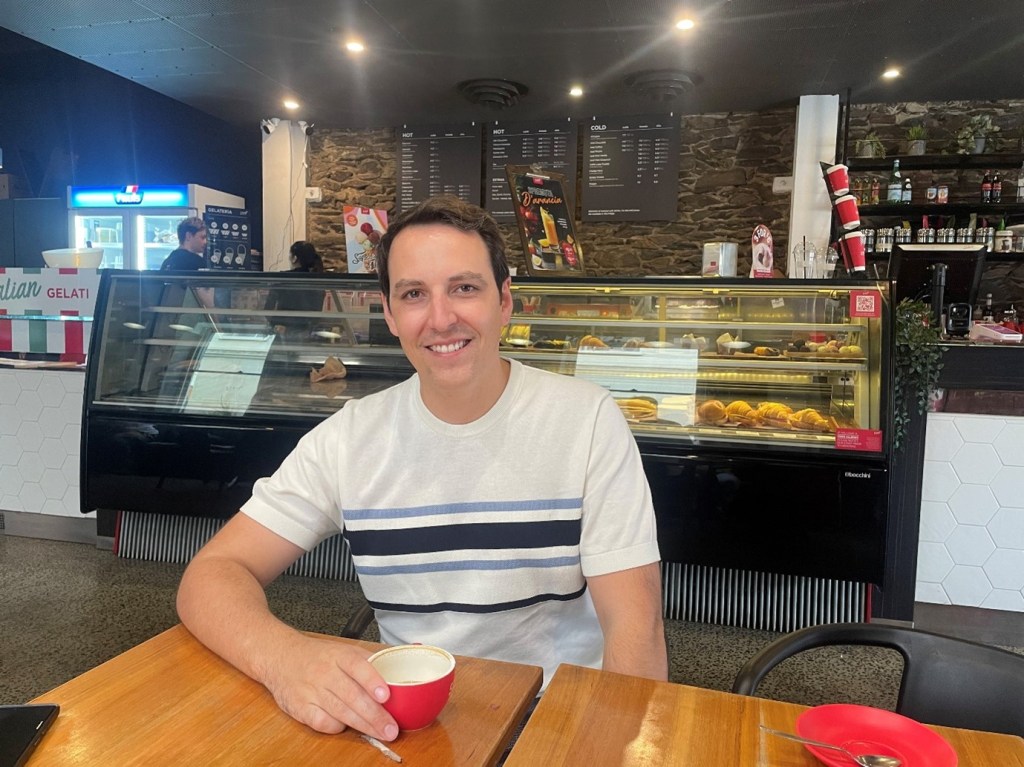
Adelaide City Councillor Henry Davis. (Image: Rocco Ventra)
Murphy says she has “never considered” becoming a member of a political party.
“I think for me, I don’t understand the political landscape enough … a lot of it is … who you know and that’s just the reality of the way that politics works,” she says.
“It’s more about the social politics than it is about the policy politics, so I think I just don’t understand enough.”
The press release regarding the SASBS acknowledges the issue, saying that “accessing government support can be time consuming and confusing”.
It also states that feedback gathered in the creation of the strategy called for “face-to-face support which can be tailored for the specific needs of each business is the preferred approach”.
“I think really better public consultation with people in all different industries, particularly those non-traditional economically viable industries [will help] to have them really understand how do they access, or how do they better understand how policies work, and government strategies,” Murphy says.
This face-to-face support will come in the form of dedicated business support officers (BSOs) who will be able to support business owners with any enquiries or issues related to government policy, regulations, and politics in general.
SA Minister for Small and Family Business Andrea Michaels says BSOs can support small business owners with questions about government policy, regulations, and politics in general.
“The roles have been designed to provide tailored advice to small business owners based on their location and to help them access supports including grants and programs,” Michaels says.
The strategy will equally benefit businesses in the creative industry which Murphy says the government may not look at as being “economically viable”.
“The creative industries are full of small businesses including those within the festival, design, music and screen sectors and they are crucial to our state’s economy,” Michaels says.
“As part of the strategy, we also delivered ARTSELERATE, which supports creative practitioners and arts professionals to develop professional growth strategies, devise practical business plans, and engage in networking and collaboration opportunities through a guided peer-coaching program.”
The federal government also released a National Small Business Strategy earlier this year, which described the “Digital Solutions Program”.
Under this program, four hours of one-on-one digital advice from a qualified and experienced business advisor will be provided to small businesses for a small fee.
The strategy says that “easing the pressure on small businesses” and “building business-specific skills and capability” are two of its focus areas.
 ontherecordunisa.com