
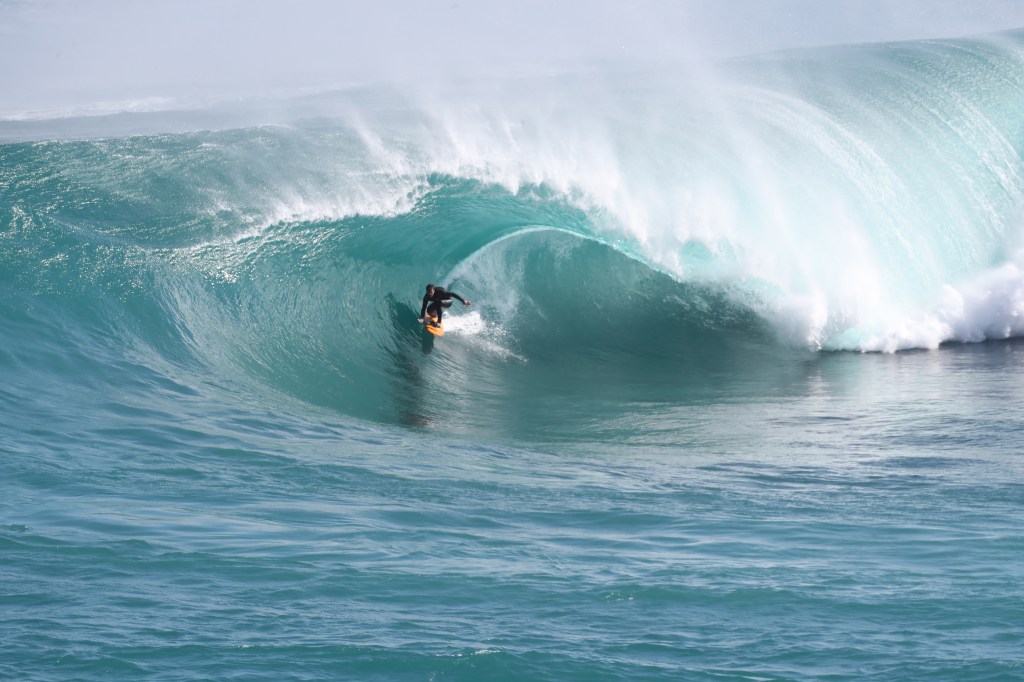
Streaky Bay surfer Danny Lee is demanding the South Australian government adopt a Shark Deterrent Rebate after losing his friend to a shark attack earlier this year. (Image: supplied).
By Rachel Forbes | @rachel.eleanor
On January 2 2025, surfer Danny Lee pulled in at the Granites, a beach south-west of Streaky Bay, to undertake the overwhelming task of retrieving “whatever was left” of his friend, Lance Appleby.
“I pulled in at Granites to check the surf and that’s kind of when it all happened,” Lee says.
“I went out to retrieve whatever was left of him at the time and his surfboard that night.”
The ABC reported Appleby’s body could not be recovered but witnesses saw a shark attack the 28-year-old surfer before he disappeared.
Lee says that he and his partner experienced second-hand trauma while watching witnesses process the loss of Appleby’s life from the shore.
“Before I went out and after I went out I could just see how tormented and shocked and distraught everybody was,” Lee says.
“ … it has a domino effect, seeing somebody go through that you experience the trauma with them as well.”
Following a series of shark-related tragedies in 2023, the South Australian government announced that a $500,000 package, “aimed at reducing the risk and impact of shark interactions”, would be distributed along the state’s coastline.
Unfortunately, when Appleby was taken, the $450,000 included for regional areas like Streaky Bay had not yet been spent on implementing key recommendations from a Coastal Risk Assessment for the Granites.
After sightings of great white sharks within metres of South Australian shores, the Malinauskas government extended weekend aerial shark patrols to June 9 for a record-breaking patrol season.
As questions emerge surrounding unusual sightings of sharks across the state, some regional surfers are proposing SA should adopt a program like Western Australia’s Shark Deterrent Rebate to make independent safety more accessible.
Following the death of his friend Appleby in January, alongside other shark-related deaths in SA, Lee was inspired to create a five-part petition to champion his community’s demands for further action from the state government.
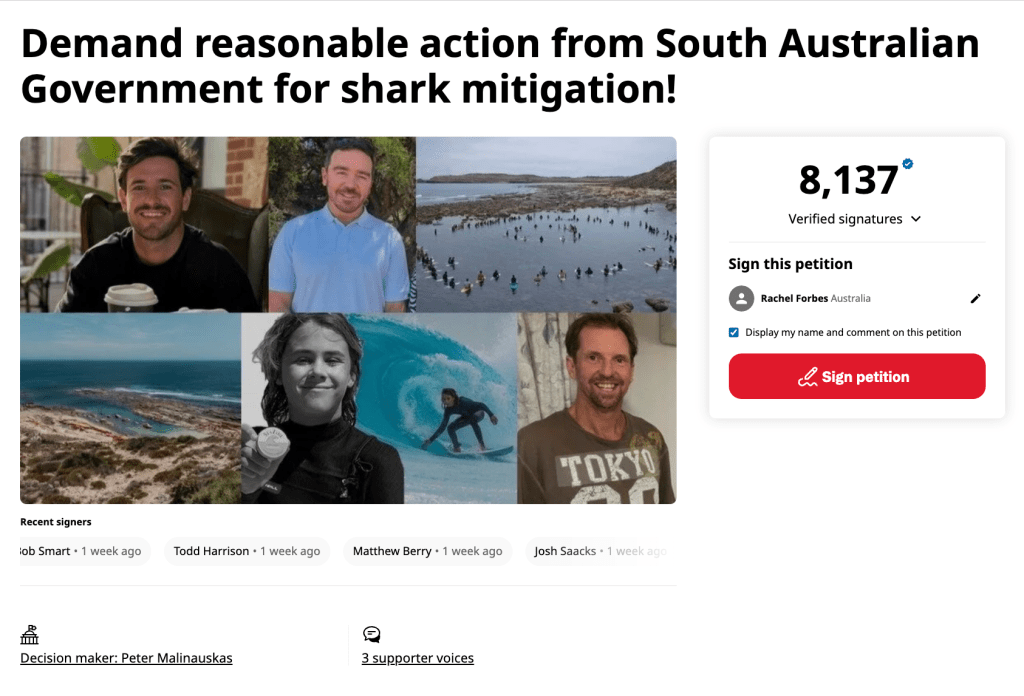
Lee’s petition has more than 8000 online signatures. (Change.org)
“After a few sleepless nights, I kind of just decided that enough is enough,” he says.
“We’ve seen the same situation happen multiple times over the past two years and nothing’s been done about it and it’s time for change.
“Other states are spending up to $22 million … and we’ve been granted $450,000 and we’ve been given no promise that there’s going to be further funding given in the future.”
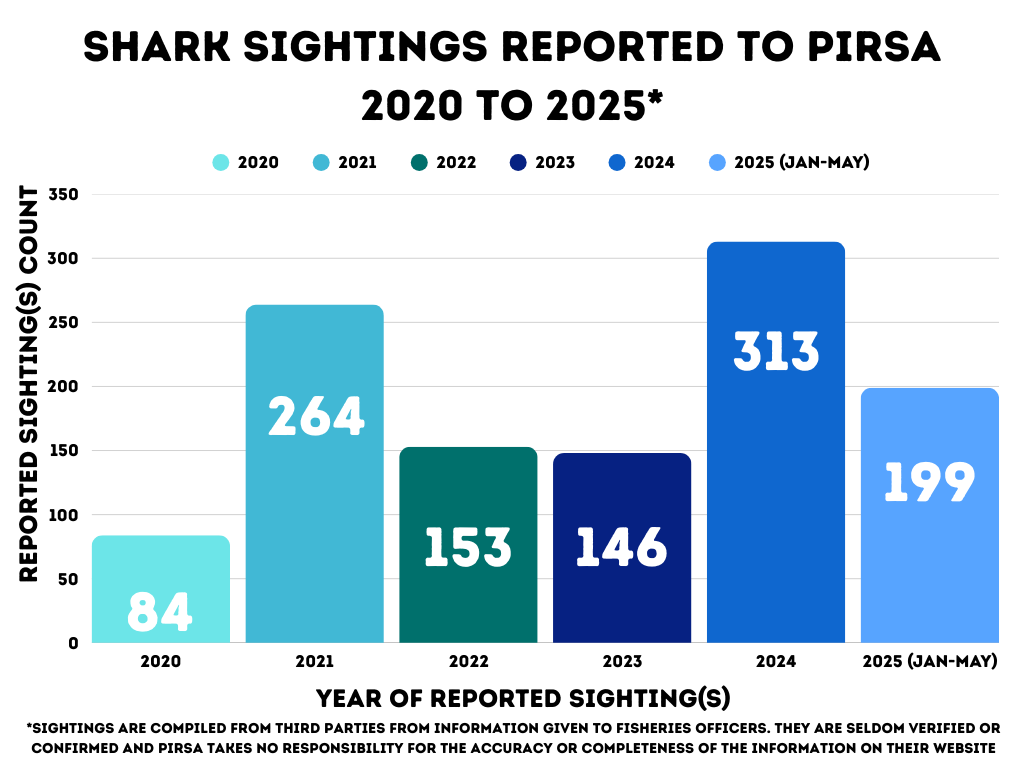
More shark sightings were reported in the first five months of 2025 than 2022 and 2023, respectively (Data source: Department of Primary Industries and Regions, South Australia (PIRSA))
Between the 2024 announcement of a $500,000 shark hazard mitigation package and the Malinauskas government’s May extension of aerial shark patrols there has been an influx of shark sighting reports to the Department of Primary Industries and Regions, South Australia (PIRSA).
In May, the ABC and 7 News reported that a man swimming 150 metres offshore from Port Noarlunga beach was bitten by a shark. But some great white sharks, like one spotted near Henley Beach, were reported as close as one metre offshore.
The frequency of great white shark sightings this year has some South Australian surfers wanting further shark hazard mitigation action. Since witnessing the aftermath of a fatal shark attack firsthand, Lee has been petitioning this very cause.
Lee’s petition demands that the South Australian government:
- Establishes more shark tagging, research programs and acoustic monitoring at high-risk locations
- Stops the use of berley and teaser bait in shark cage diving practices until its safety is further proven
- Creates special purpose zones to limit attractants like cray pots where people enter the water
- Increases funding for ongoing shark mitigation like drone surveillance and other safety measures
- and, approves a personal shark deterrent rebate for South Australians.
One of Lee’s demands is for a personal shark deterrent rebate for South Australians, “modelled after the successful Western Australian program”. For regions like the Yorke and Eyre Peninsula, that rely largely on community engagement due to a lack of Surf Life Saving SA (SLSSA) club infrastructure, support for independent shark hazard mitigation is important.
“It gives us something that we can kind of take the situation into our own hands and depend upon while we’re waiting for the government to implement something that’s going to take millions of dollars,” Lee says.
Lee says the rebate does not need infrastructure like shark tagging or his other proposals would, it only requires the SA government to endorse effective shark deterrent devices and find funding to reimburse consumers.
Where this funding comes from is up to state government but, thanks to WA, finding the right devices to back is a bit easier.
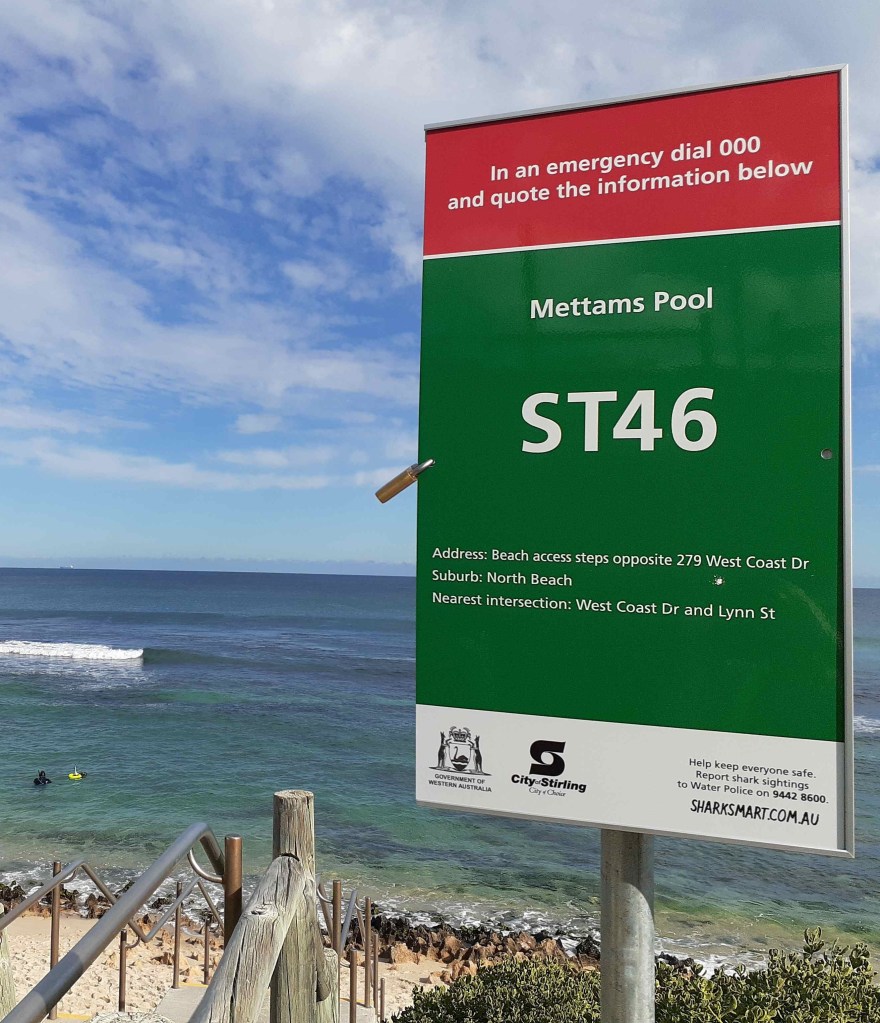
The WA government has spent over $17 million on hazard mitigation including the Shark Deterrent Rebate, shark tagging and signage with unique Beach Emergency Numbers (BEN) to easily identify incident locations (Supplied: DPIRD)
Manager of the Shark Response Unit at WA’s Department of Primary Industries and Regional Development (DPIRD) Michael Burke says over 9520 rebates have been claimed with almost $2 million committed to the scheme by the WA government.
The original WA rebate trial only promised $200,000 for 1,000 devices but was expanded once it became popular.
Burke says the WA government started offering businesses subsidies for purchases of the Ocean Guardian Shark Shield Freedom7 in 2017. Participating retailers would simply deduct $200 from the eligible products at the point of sale and submit an online application to receive the rebate back. In 2018 the Ocean Guardian freedom+ surf bundle became eligible for rebate followed by the Rpela V2 in March 2022.
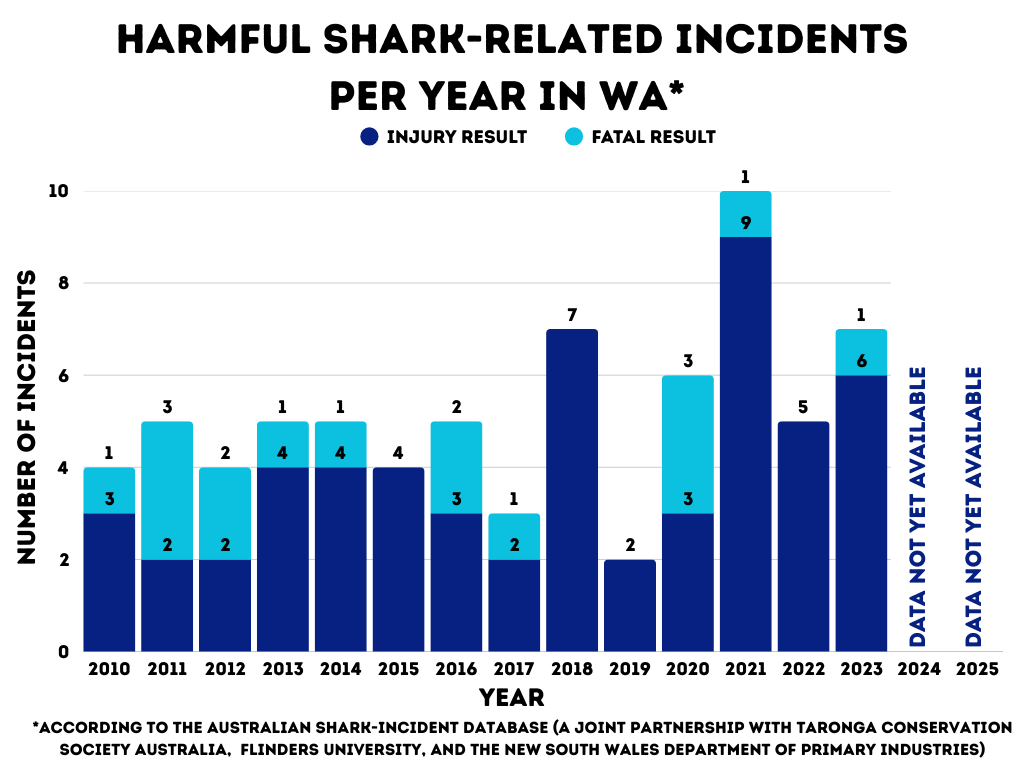
Shark-related injuries in WA have increased since 2017 but fatalities have decreased (Data source: Australian Shark-Incident Database)
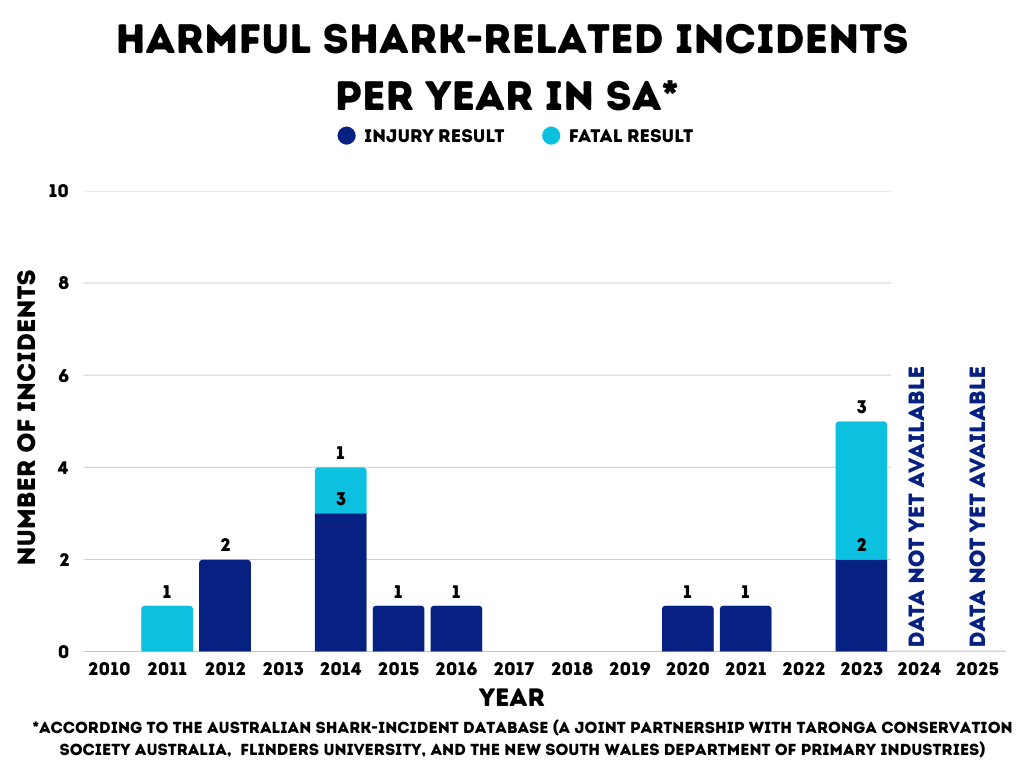
WA typically experienced more shark-related fatalities than SA until 2021 (Data source: Australian Shark-Incident Database)
The devices currently backed by the WA government work by generating electric currents or fields to affect the electroreceptors found in the nose area of sharks to drive them away. These devices were all independently scientifically tested to prove their effectiveness.
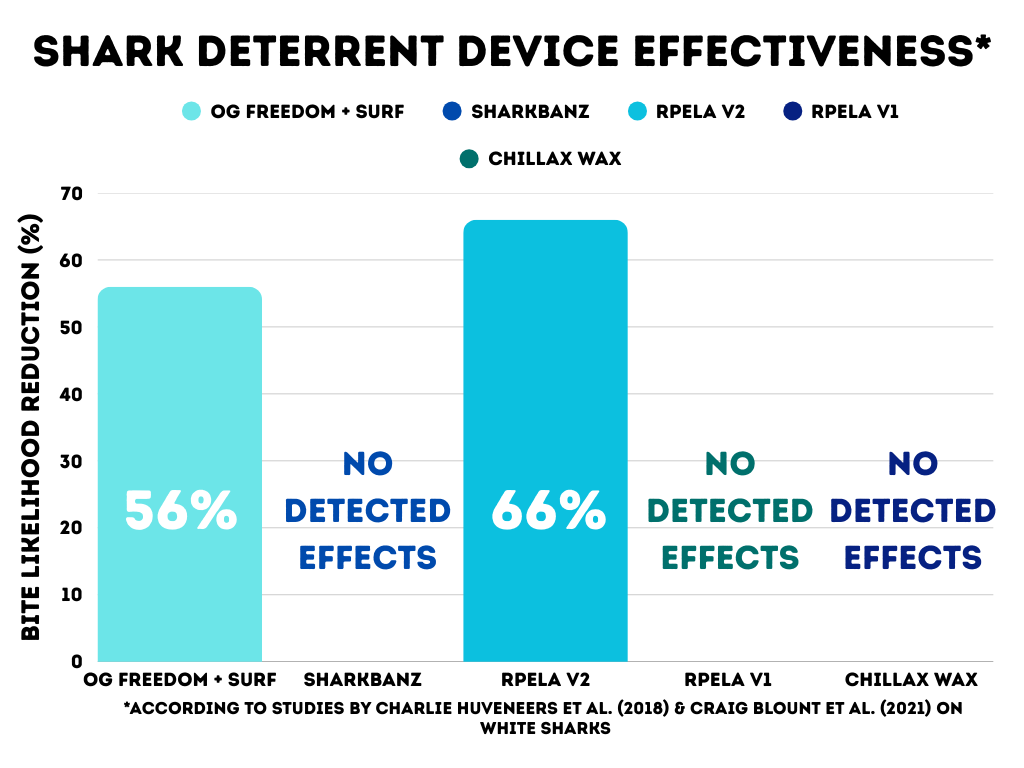
Independent testing shows only some shark deterrents reduce harmful interactions (Data source: Charlie Huveneers et al. 2018 & Craig Blount et al. 2021)
However, in May 2024, Ocean Guardian went into voluntary administration which halted the sale of 2 out of 3 products available for rebate. In October 2024, Insolvency Insider reported Ocean Guardian was sold to a group of US-based investors led by Ed Martin of Killshot Spearguns.
“We have reached out to the new owners of Ocean Guardian and we would hope to continue a conversation with them about their intention to provide the same product or new products,” Burke says.
Burke says the number of rebates claimed has declined since Ocean Guardian went into administration and they have not heard back from the new owners.
Owner and Founder of Rpela Shark Deterrents Dave Smith could fill the gap. He says they could produce 5000 Rpela V2 devices per year to accommodate a rebate in SA.
However, the V2 device is only available online and requires special fitting by a select list of installers. This list includes only one business in SA.
To combat this inconvenience, Smith has spent the last two years designing the V2 Pro to be installed by any retailer. He says simplified installation could save consumers $120 and, if the deterrent is eligible, the rebate would cut the product cost from $439 to $239.
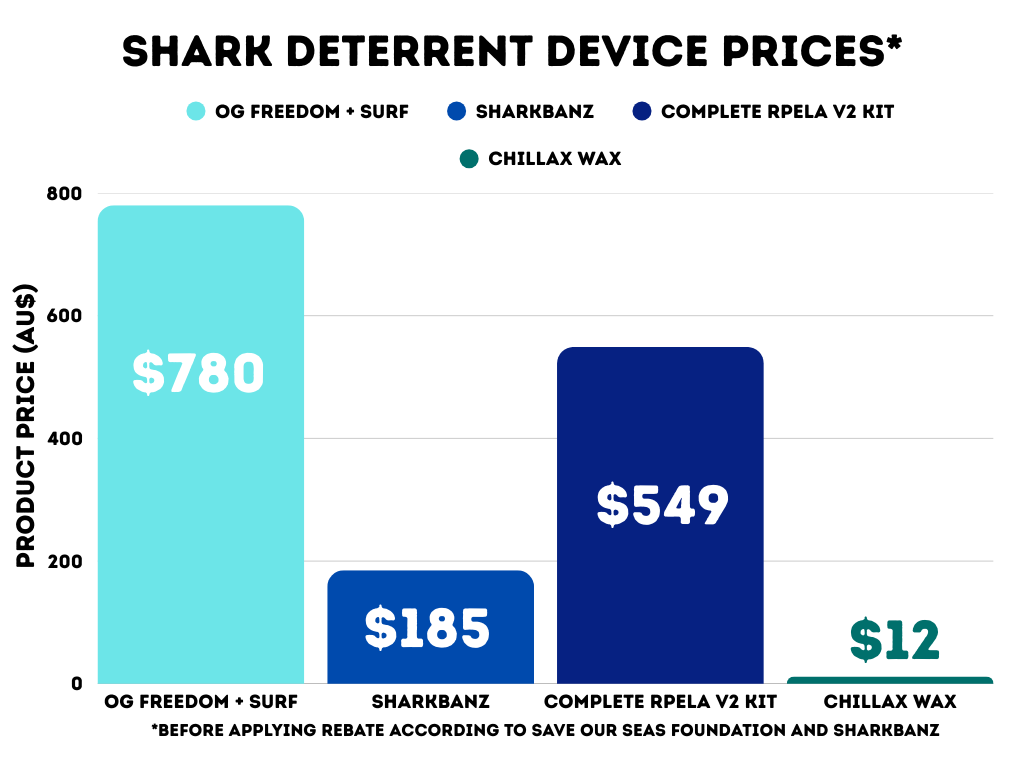
The Rpela V2 is the cheapest and most effective deterrent available for rebate (Data source: Save our Seas Foundation and Sharkbanz)
Smith says the Rpela products have a less than 5 percent return rate but any shark deterrent — whether its purchase is subsidised or not — inevitably needs to be replaced or updated at the cost of the customer due to the highly corrosive environment they are subjected to.
“You’re asking it to do a whole lot of things that are not normal; putting high energy into a highly corrosive environment and make it last which is really tough,” Smith says.
“Financially it’s just been crippling and the lack of government support has been also very hard to deal with.”
Lee says government endorsement in SA of effective shark deterrents could dispel speculation about their effectiveness and encourage people to support companies like Rpela to further develop better and more accessible products over time.
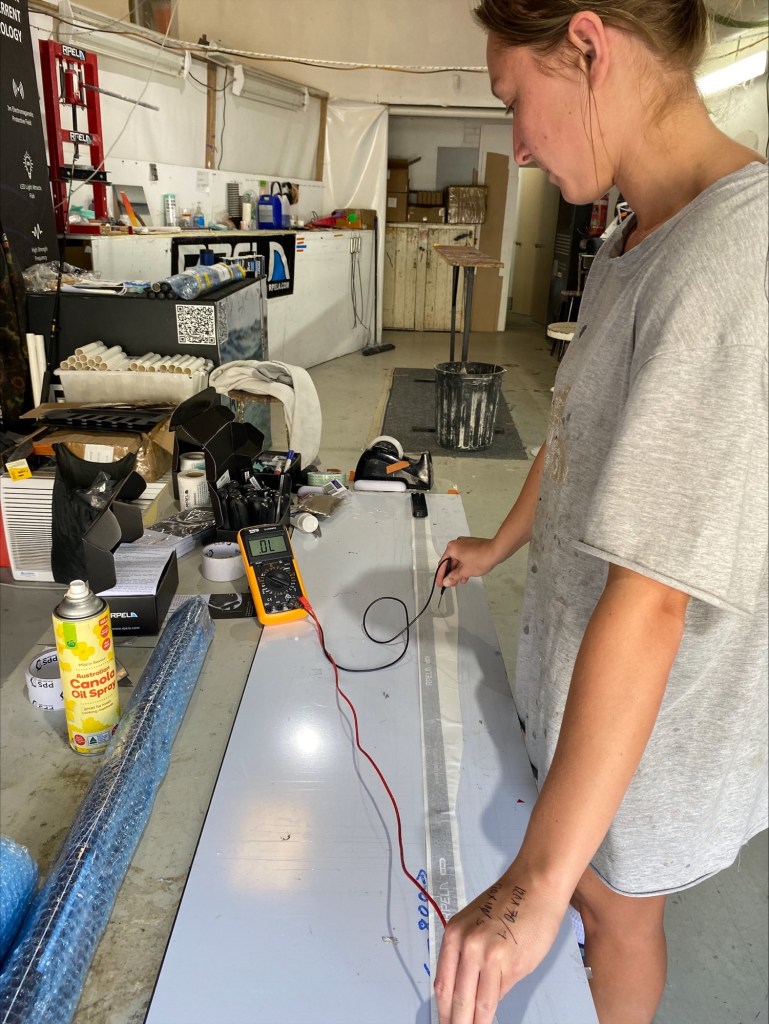
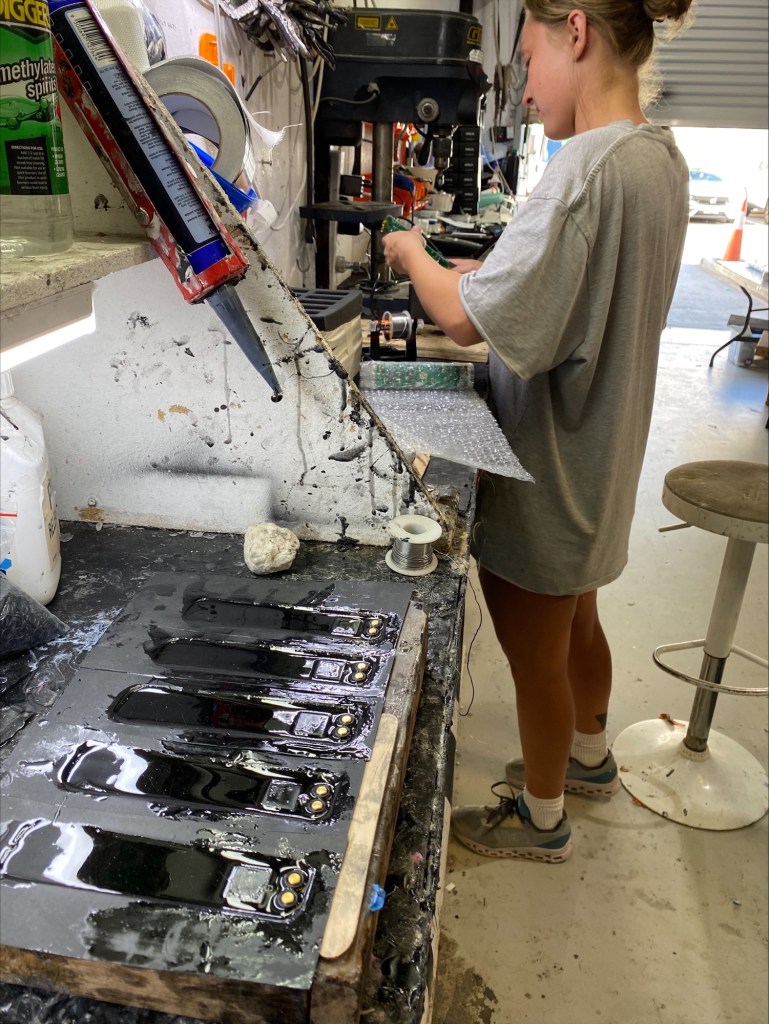
Rpela manufactures their products in WA but international buyers account for 95 percent of their sales (Image: supplied)
Accessibility has also been a major concern for SLSSA Head of Life Saving and Emergency Operations Sean Faulkner when speaking with remote coastal communities following the state government’s $500,000 shark mitigation package announcement in 2024.
He says SLSSA, in conjunction with the South Australian government, hopes to spend the package over a two-year period with $50,000 towards metro locations and $450,000 being invested in the Regional Coastal Shark Mitigation Project.
“We’ve got a very metro-centric point of view, which is one of the reasons why Minister Scrivens has found this additional [$450,000] funding to give some attention out there to the regions like Yorke and Eyre Peninsula, because … we’re very [city] centric in our thinking and therefore also in our funding,” Faulkner says.
The regional project will aim to supply trauma kits, drones, signage and education where needed once Coastal Risk Assessments have been completed by Faulkner and his team. SLSSA has already begun travelling across SA to assess each of the state’s unique coastal regions.
Faulkner says: “When we do a Coastal Risk Assessment, we sit down with the community, we listen to them and for some locations it’s a bit cathartic.”
“Four hundred and fifty [thousand] is not much. So, to make the most of it, we’ve got to make sure we’re using it wisely to have the most impact.”
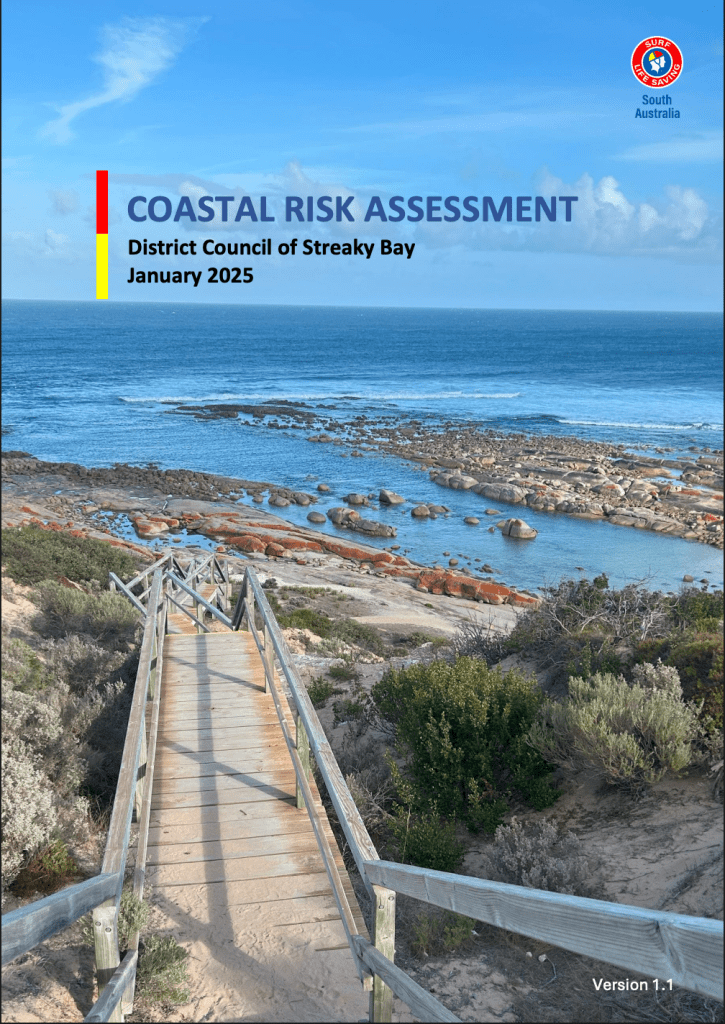
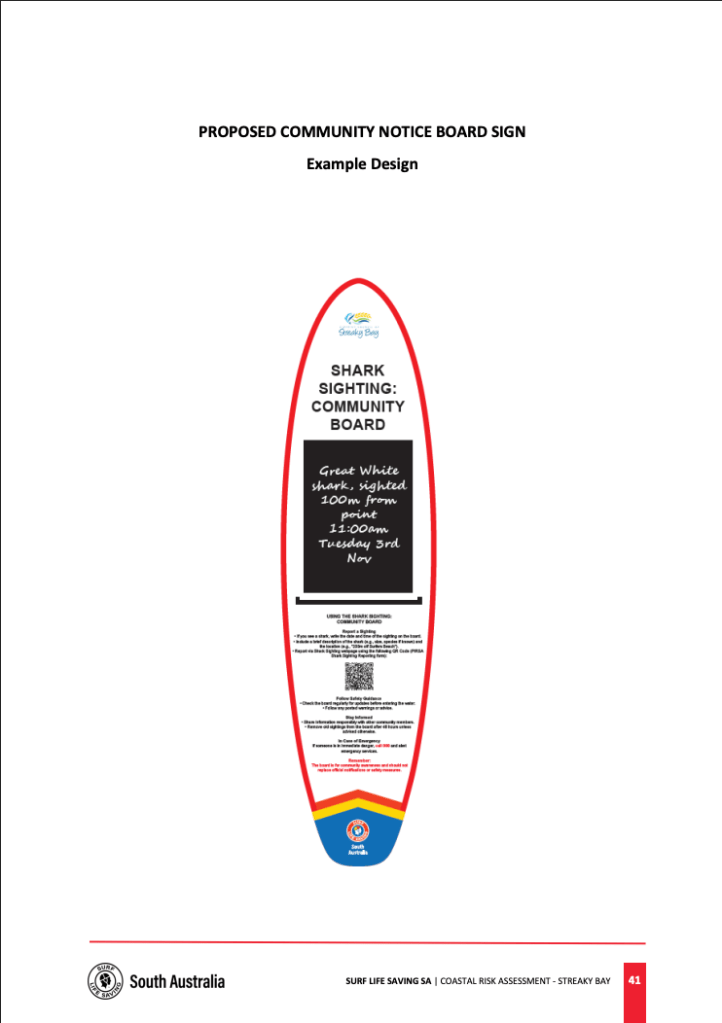
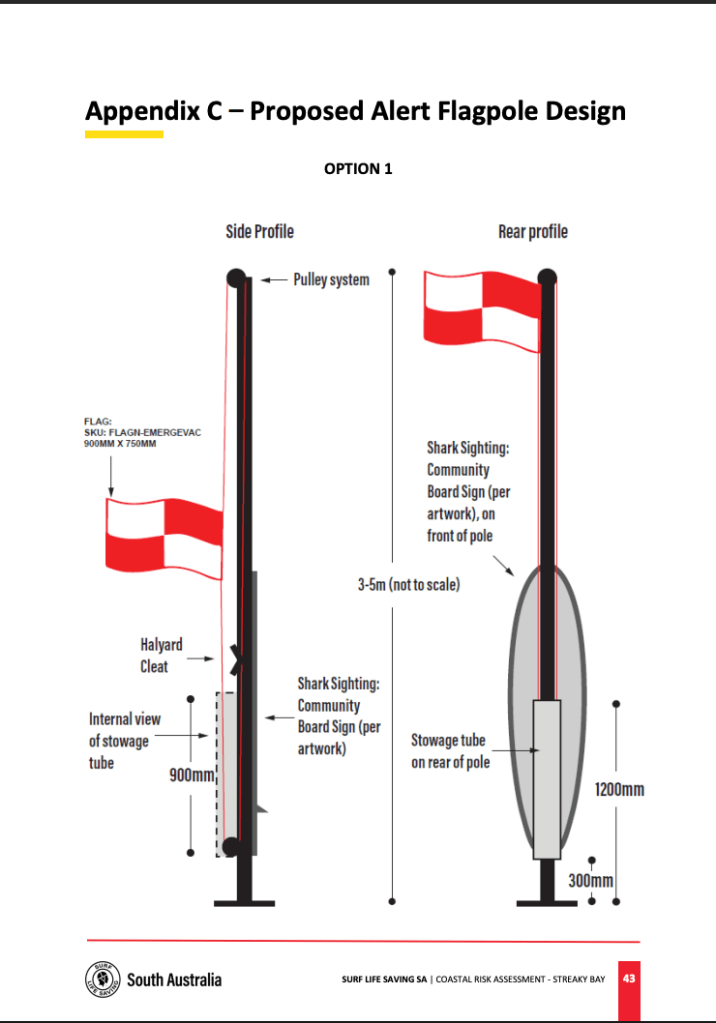
SLSSA’s District Council of Streaky Bay Coastal Risk Assessment (Source: SLLSA)
A 2025 SLSSA Coastal Risk Assessment prioritising Streaky Bay and the District Council of Elliston determined 28 key recommendations for the areas including flagpole alert systems, shark sighting notice boards, educational signage at high-risk locations and trauma kits for emergency response.
A May 18 media release from the state government details the installation of a new shark sighting community board at the Granites that raises awareness of potential risks and enables the public to report a shark sighting via a QR code. Images from 7 News show off the installation; a surfboard shaped chalkboard next to a flag to raise when a shark is spotted at the “notorious beach”.
Faulkner says solutions like noticeboards are being considered since high-tech solutions are not feasible in certain isolated regions of SA.
“If you did have an app or something like that, the mobile phone reception is non-present on the Eyre Peninsula and big chunks of the Yorke Peninsula,” he says.
Faulkner says the project aims to create bespoke solutions for each coastal region that will mitigate shark risk but also achieve the SLSSA vision of zero preventable deaths by increasing confidence in our oceans.
“If people are scared of the water, people will stop swimming and that’s when — we’ve got a country surrounded by water — that’s when our drowning deaths will go back up again,” he says.
“We’re not saying we’re going to stop shark attacks. What we’re trying to do is build a more resilient community that’s better able to respond in that tragic event that there is another incident, but also remain confident and capable in and around the water.”
Recent changes in marine wildlife behaviours are deterring some people from South Australian oceans.
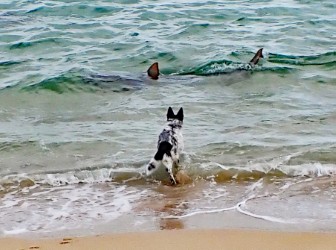
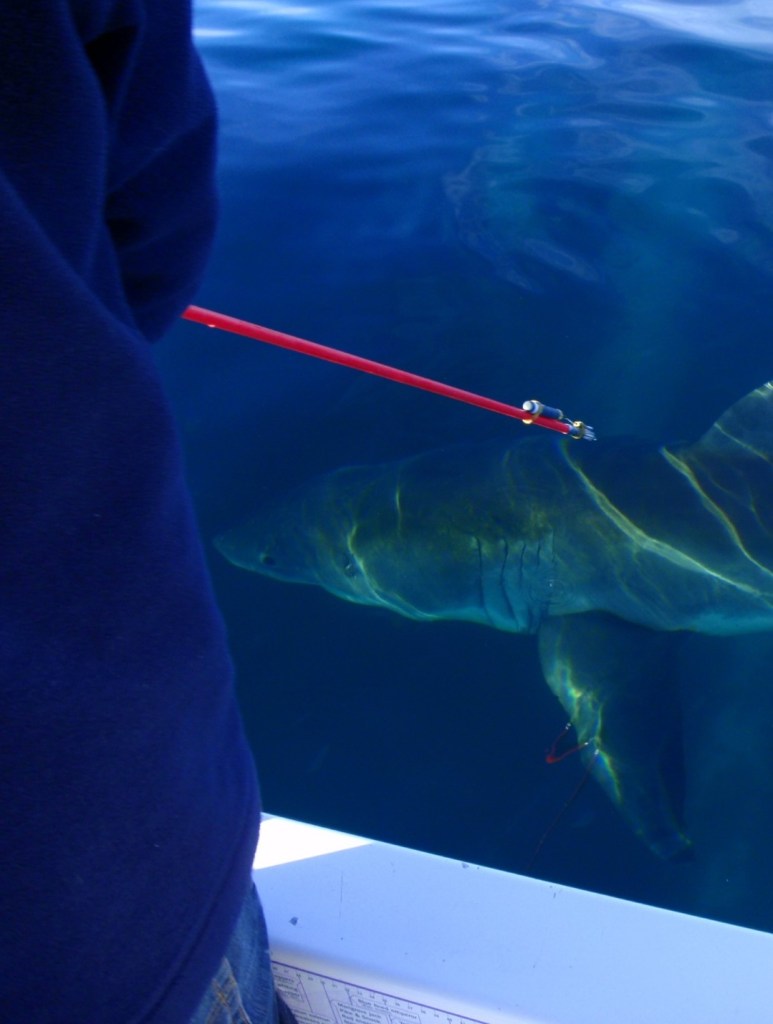
A shark just metres from the shore of Butler’s Beach on the Yorke Peninsula (Image: supplied)
Marine biologist Mike Bossley says SA’s Karenia Mikimotoi algal bloom can cause a change in the behaviour of sharks and rays. In May, Bossley was surveying a marine sanctuary on the Yorke Peninsula with a small group when one of them was speared by a ray.
“It has caused a number of sharks to swim in very, very, shallow water within a metre of the beach — which is unusual — some of which have become stranded and died,” he says.
Bossley says the bloom is almost certainly a result of climate change as SA experiences a marine heatwave.
In May, Bossley and other South Australians hoped large storms across the coast would move the algae but, as of June 19, the Department for Environment and Water (DEW) says the algae is still present in the Coorong and cloud cover is limiting the satellite detection of algae concentration indicators.
DEW says statewide observations show sea surface temperatures are now decreasing in shallow coastal and gulf waters but some deeper areas remain between 0.5C to 1C above average for this time of year.
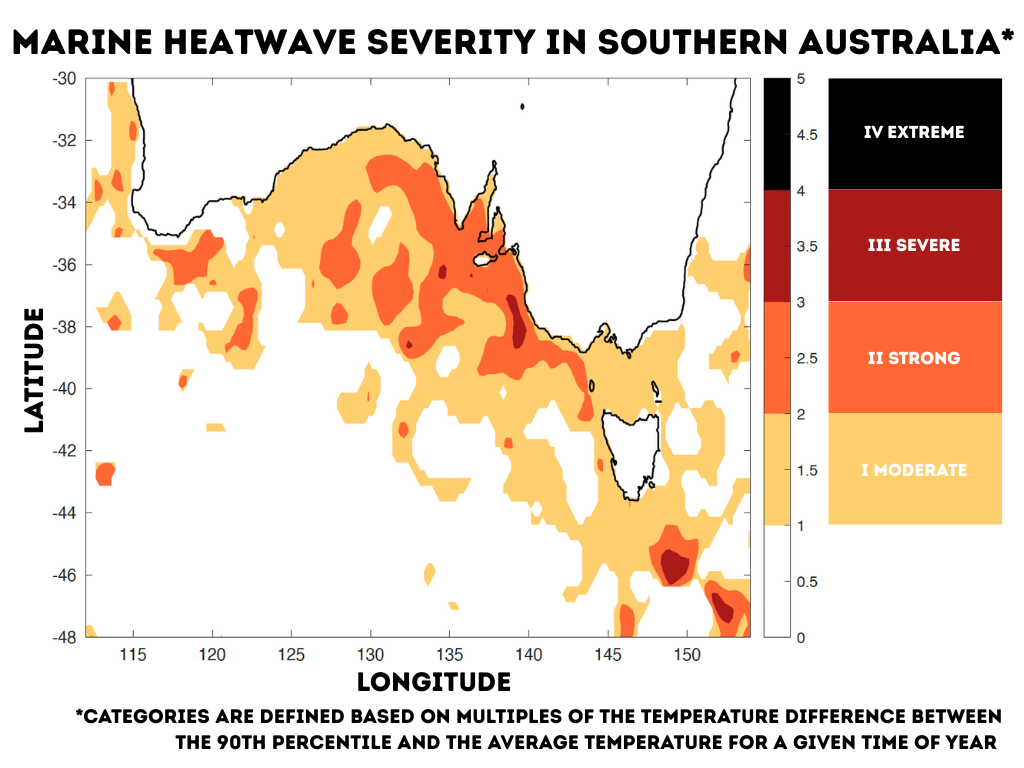
May 17 Marine Heatwave map created by Alex Sen Gupta of the Marine Heatwaves International Working Group (Data Source: MHIWG)
Yorke Peninsula local Shane Bishop has been surfing for 26 years and says he has noticed a change in great white shark behaviour and an increased sighting frequency.
Bishop used to head to the west coast of SA annually but has been opting to head overseas for the last few years. He says most of his knowledge comes from his own observational experience and social media.
“I’m definitely surfing less in SA,” Bishop says.
“I’m hesitant to surf at all during the warmer summer months when the sharks are inshore and more active.”
Bishop is not alone. Narungga (Yorke Peninsula) MP Fraser Ellis says that there’s a reasonable level of community concern about the current shark mitigation plan and “a will to change it”.
He says that a significant number of businesses across the Eyre Peninsula and the Yorke Peninsula are now carrying Lee’s petition which has over 8000 online signatures.
To get to this point, Lee has spoken to marine biologists, shark researcher Andrew Fox, abalone divers, cray fishermen, South Australian surfers and the Streaky Bay and Eyre Peninsula community.
“I’ve taken these five points to everyone before publishing to see if it’s something that we can all agree upon and everyone that I’ve consulted with has agreed that these are five reasonable points,” he says.
When Lee’s petition heads to Parliament, however, the online signatures won’t matter.
He says: “We need to get 10,000 signatures on paper to even have this considered.”
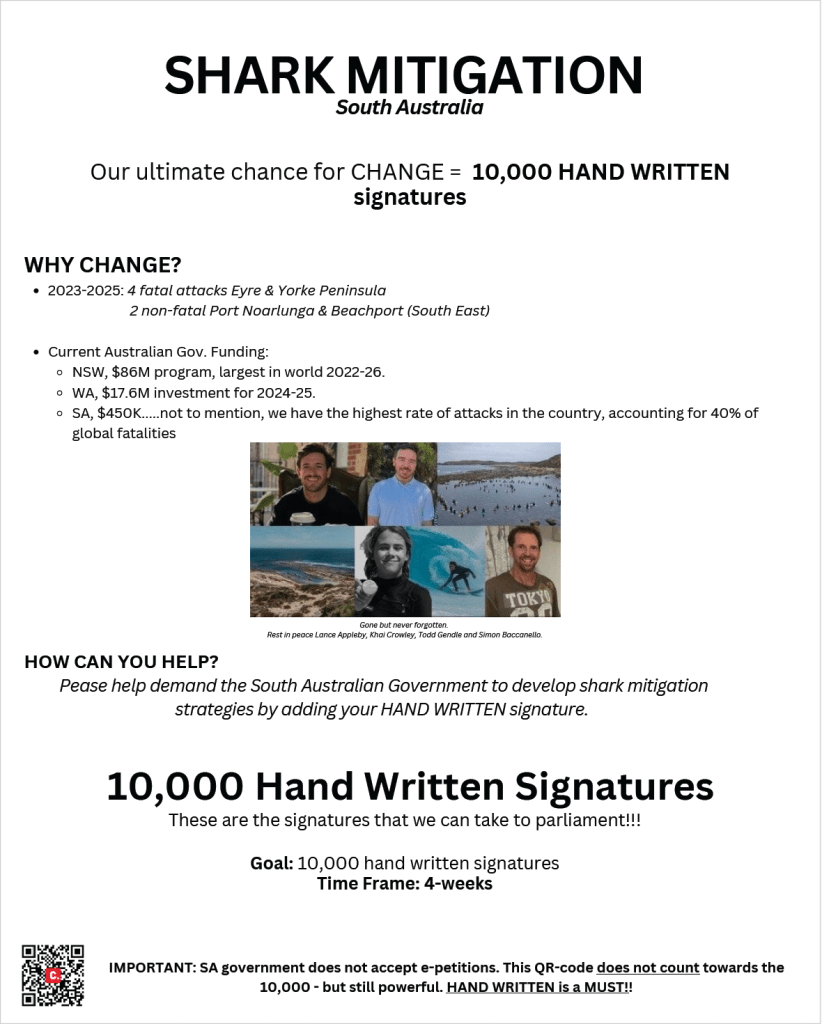
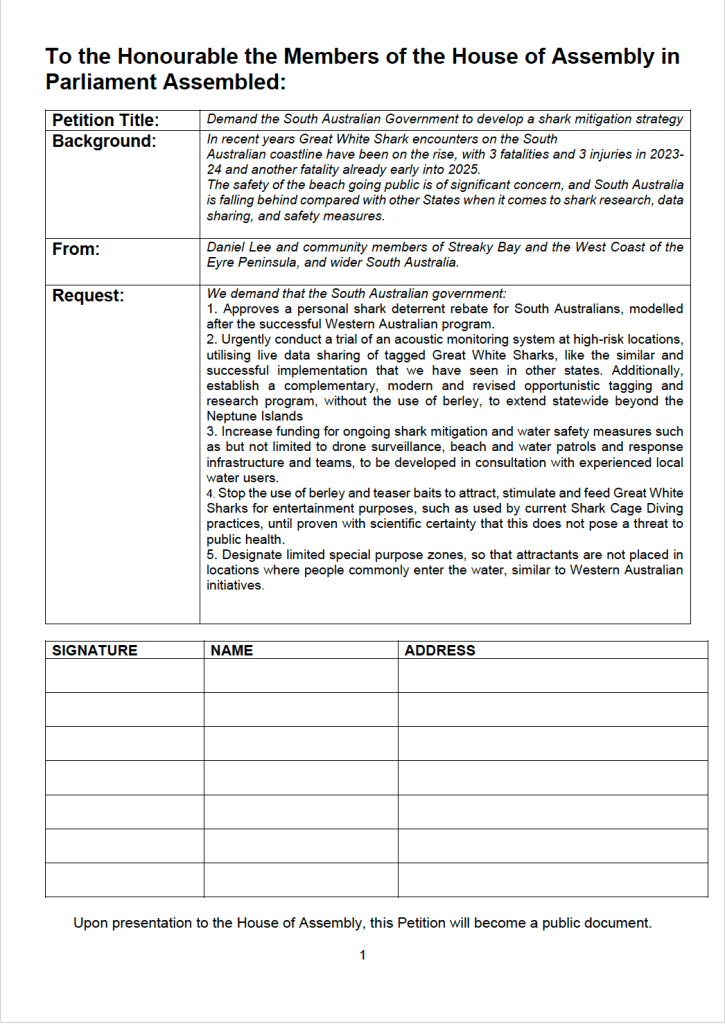
The physical copy of Lee’s petition (Supplied: Narungga MP Fraser Ellis & Danny Lee)
The paper copies are available in 50 coastal businesses and Lee says community support has been great but there isn’t an expected deadline for the proposals to be taken to Parliament.
In the meantime, Lee gives credit to SLSSA’s efforts in rolling out trauma kits, noticeboards and signage but will not stop pursuing further action like a shark deterrent rebate.
“It’s not going to happen overnight, it’s probably not even going to happen this year,” he says.
“However long it takes is however long I’m going to have to continue to fight for this.”
 ontherecordunisa.com