
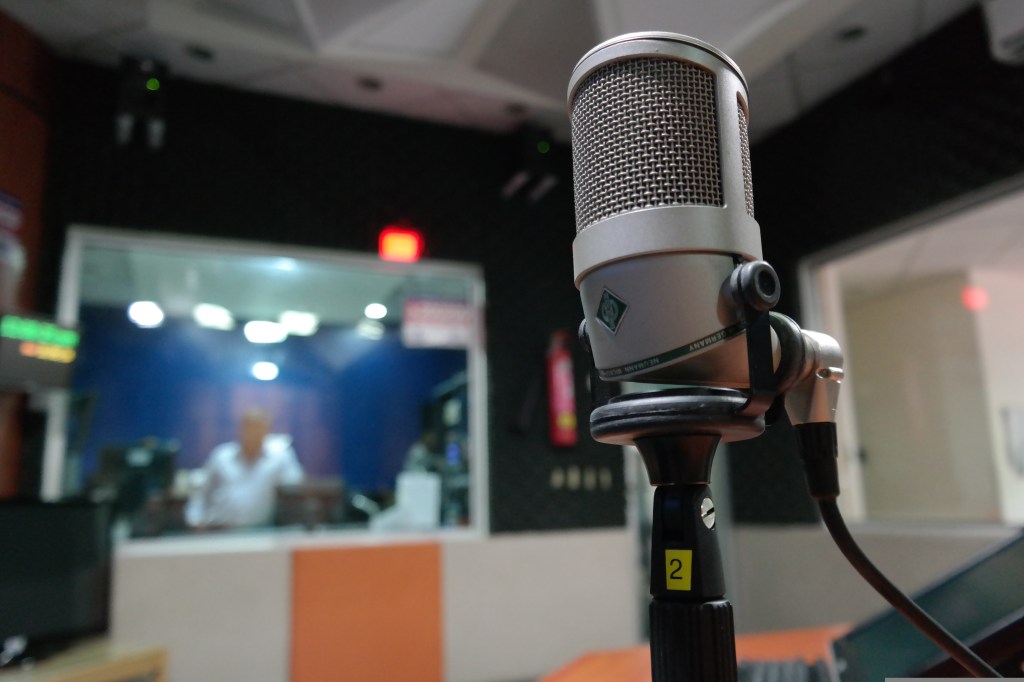
The world is more connected than ever by national and international radio, podcasts and social media platforms — but they’re no replacement for the local connections community radio provides. (Image: smorazanm).
By Oliver Riddle | @ollie_riddle32
In a world of streaming giants, commercial radio, and ever-scrolling social feeds, one might think community radio is yesterday’s news. Yet in studios right around South Australia the spirit of local broadcasting is not only alive but thriving.
Community radio has quietly been serving South Australians for over 50 years. It’s where footy fanatics, retired music teachers, and curious teenagers find common ground through a shared frequency.
And it all began with one pioneering signal.
In 1972, the University of Adelaide launched 5UV, now Radio Adelaide, the first licensed community radio station in Australia. It was a revolutionary idea at the time, giving everyday people access to the airwaves. This opened the door to a national movement. Today, community radio is an important part of the broadcasting landscape.
Take Tribe FM in Willunga. Known for its grassroots energy and Southern Football League coverage, the station plays a key role in local sport. Program Manager Charlie Ellis says live commentary is just part of what makes the station special.
“We’re the only station that does Southern Football League’s match of the day, and I think that’s unbelievably important. There’s still a lot of people who live in this area who used to play for a particular team and they wanna hear what’s happening,” he says.
In Adelaide’s south-west suburbs, Coast FM in Plympton caters to a different demographic, one that skews older and more isolated.
“Radio gives people company, especially those who live alone,” presenter Russell Gallman says.
“We love to play older music, which brings in a lot of older listeners, and we’re glad to help remind people they’re part of a very special local community.”
At Fleurieu FM in Victor Harbor that sense of connection plays out in unique and personal ways. Presenter Sue Lake, who hosts an all-female music program, says her playlist choices often strike unexpected chords.
“Most of the people that listen and text me are men,” she laughs.
“They’ll send me music suggestions, tell me which female artists they’re loving, there’s this really strong back-and-forth.”
This sense of connection isn’t just sentimental, it’s practical too.
In 2015, when the Pinery bushfire tore through South Australia’s Mid North, local stations and volunteer radio operators became an emergency lifeline.
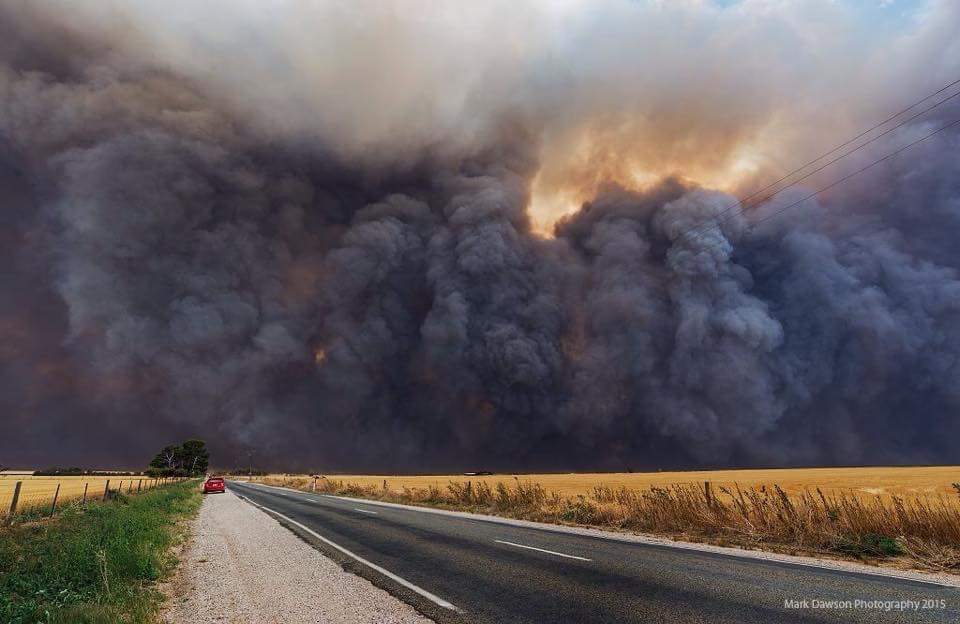
The seven-day-long Pinery bushfire blanketed the sky in smoke and ash (image: Mark Dawson)
With power lines down and phone signals jammed, small radio networks delivered evacuation orders, livestock alerts, and real-time updates, some broadcasting from makeshift setups in cars and sheds.
Disasters like the Pinery bushfire revealed the strength of South Australia’s local radio network. Keeping those vital signals alive takes more than just goodwill — it takes coordination, funding, and training.
Behind many of these stations is the Community Broadcasting Association of Australia (CBAA), a national body representing over 450 licensed community broadcasters.
“We want to be at the heart of every community, whether that’s a cultural group, a regional town, or a community of interest,” CBAA’s Communications and Advocacy Manager Reece Kinnane says.
“Our job is to help stations be strong and successful, through funding, training, technical support, and making sure their value is heard at a national level.”
And for some local radio becomes more than a passion project — it’s the start of a career. Just ask Ben and Liam, who began hosting breakfast on Adelaide’s Fresh 92.7, moving to Triple J and eventually their own commercial show on Nova.
Even university students are stepping up. UniCast Radio, run by students at the University of South Australia, gives young producers and presenters the chance to cut their teeth behind the mic.
Radio Adelaide’s Nicky Page knows how important the younger generation is. Nicky has worked in radio for over 40 years, helping teach many university students and people looking to get involved.
“I’ve loved my time teaching radio, and I’ve found that my students have helped my radio skills get better and better,” she says.
“Community radio gives you the freedom to grow without fear.”
At Fleurieu FM, nurturing talent is vital. Lake says the station is proudly multi-generational.
“We’re lucky, our youngest presenter is 16 and hosts an 80s show after school,” she explains.
“Another young woman presents an Indigenous program. Supporting them, making sure they feel confident and have what they need, that’s a big part of why I stay involved.”
And for every aspiring pro, there are countless others who show up simply for the love of it. Retirees keeping music alive, migrants sharing their language, locals spinning tracks that’ll never make a Spotify playlist.
“We have over 5 million listeners every week,” Kinnane added.
“And they’re not just tuning in, they trust and rely on their local stations. That’s the kind of impact you can’t fake.”
From technical operators adjusting antennas, to presenters prepping playlists late into the night, it’s the passion that keeps local stations alive Ellis says.
“That and a whole host of volunteers with an interest in broadcasting.”
In an age of global media, algorithms and endless content, community radio offers something refreshing: a real voice, a familiar name, and a place where the local still matters.
Whether it’s bushfire updates or local banter, it’s clear that the microphone may be small, but the message is loud.
Want to hear more about people in community radio? You can by listening to theVoices of Community Radio podcast by Oliver Riddle on Spotify.
 ontherecordunisa.com