
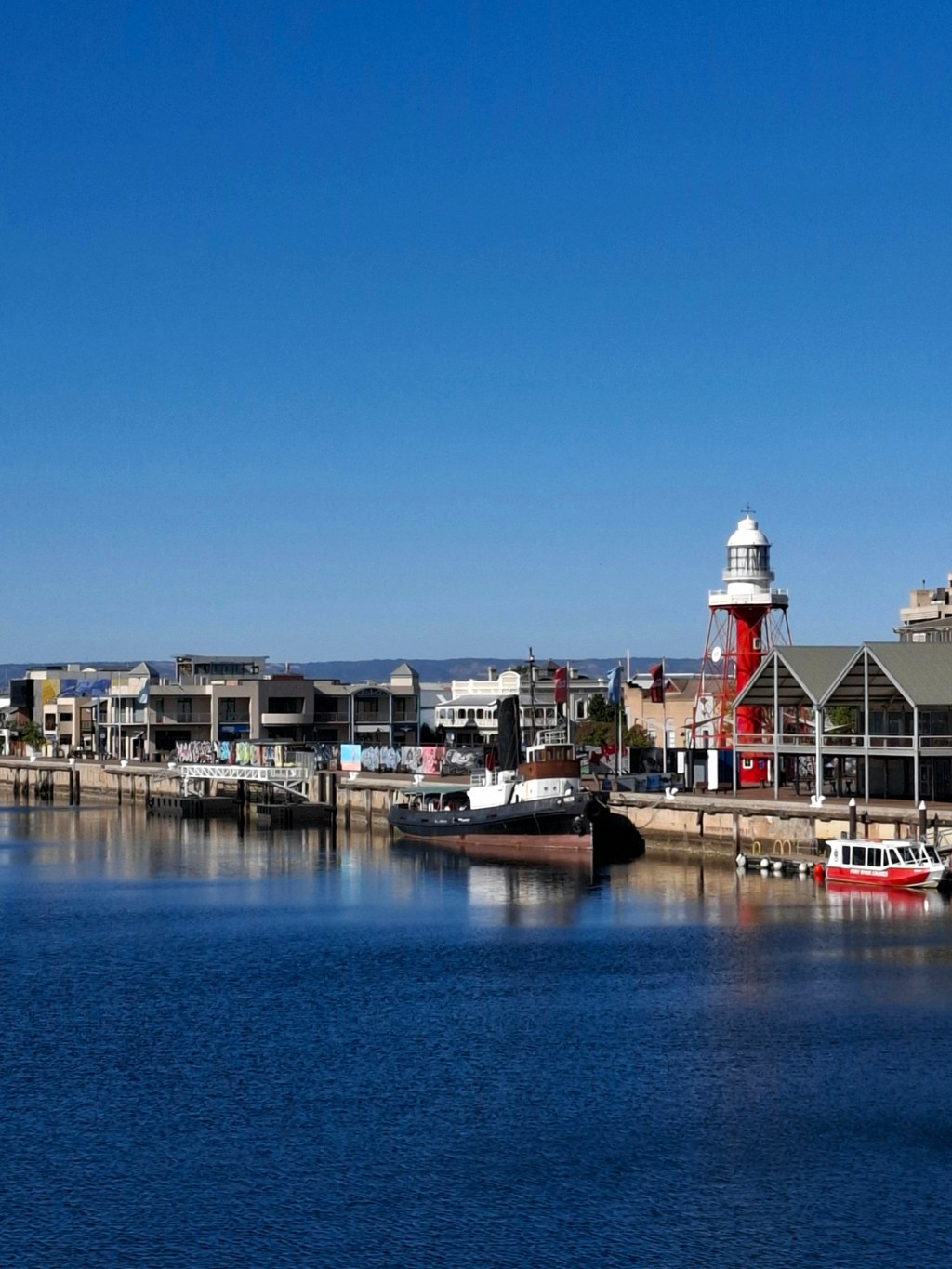
Port Adelaide, just 25 minutes from Adelaide’s CBD, is a treasure trove of history and the arts waiting to be explored. (Image: Hannah Oxford).
By Hannah Oxford | @_hannah.oxford
“What story do you think it’s trying to tell?” I turn to my dad, his brows furrowed. With curiosity in our eyes, we look up and study the mural on the wall above us.
Even with the once-stark colours fading, the image is defiant. A young man in a regal outfit, two giant, bony hands covering his eyes, a white rat with its nose in the air propped on his right shoulder. The redness of his shirt now a rusty brown, the yellow weavings like a stripped rib cage.
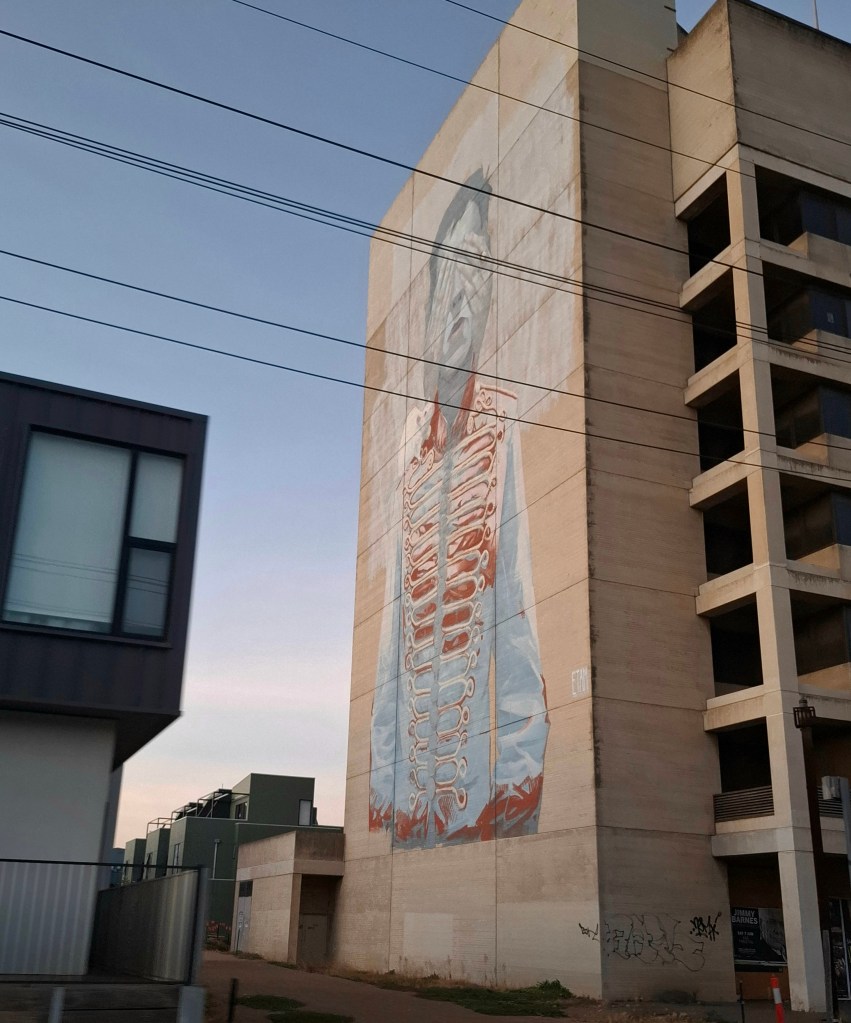
Art duo Etam Cru’s distinct “Until the Quiet Comes” mural created for the Wonderwalls Festival in 2015 is located on St Vincent Street. Image: Hannah Oxford.
“Hmm, maybe he is waiting for a better tomorrow,” my dad shrugs and begins to walk away. I pause, my eyes fixated on the two palms blocking the light from his view.
“I think he has been waiting a long time. His colours are fading… but there is a loudness to this mural,” I say, letting the breeze carry my words away.
Golden strokes of dusty pink and fiery orange dance across the distant sky in front of us as we journey through what feels like an invisible barrier transporting us back in time. A rush of exhilaration fills my veins, my soul immersed in the stories of our history — the stories of Port Adelaide. It’s hard to believe Port Adelaide is only a 25-minute drive from the Adelaide CBD. Located on Kaurna country, the place has substantial cultural meaning for the Aboriginal people that call it home. The Kaurna people gave the land situated around the Port River the name Yartapuulti, meaning a place of land and death.
Over the last few decades, the town has evolved into an eclectic mix of colour, with rustic cobblestone laneways cuddled by the river.
Being described as “where history meets hip”, there are a number of vibrant scenes including eateries, pubs and breweries, but it is the history at its core that speaks the loudest.
Operations officer at the Port Adelaide Visitor Information Centre Zoe Brotherton says the region has many heritage-listed buildings mixed with a thriving arts and culture precinct.
“There is a slow sense of reinvention happening around the place, while also a respect for the past and what makes the Port feel so real,” she reflects.
Her words encourage me to seek and immerse myself in the realness she reflects upon, running my hands along the red and brown bricks of the many heritage buildings on Lipson Street.
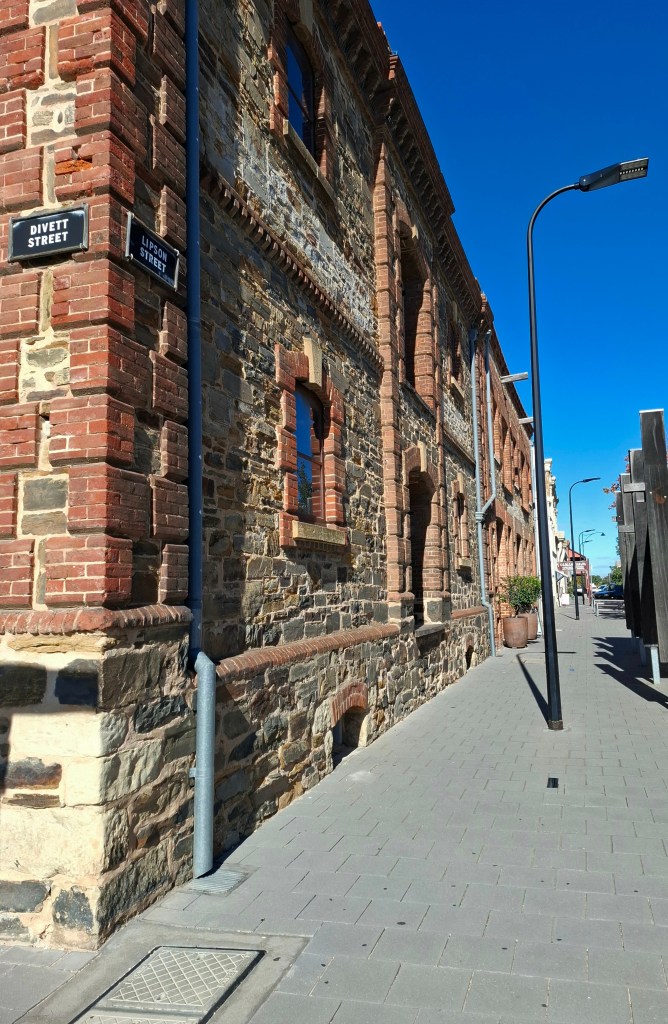
Lipson Street is home to a few heritage-listed buildings in Port Adelaide and features the Maritime Museum. Image: Hannah Oxford
Upon reaching the Maritime Museum, a postcard atop a picnic table catches my eye. I pick it up and my fingers trace the outline of a group of sailors standing on a windjammer. Their smiling faces strike against the greyscale exterior.
I close my eyes; the sounds of the Old Port are deafening, playing out right in front of me. Echoes of sailors on a grand voyage — the liveliness of the old docks, the chatter of workers swiftly moving to complete their jobs create a symphony of sounds. As if nothing has changed and everything remains the same.
For the longest time I have been venturing to Port Adelaide, both as an excited child squealing to see the dolphins and a hopeless romantic dining at the Birkenhead Tavern. Yet, I have never fully appreciated how Port Adelaide is a landmine of fascinating, historical treasure troves:, a gateway to South Australia at its core.
With several ideas bouncing around in my head, I decide to venture forth and delve into what exactly makes Port Adelaide a place that connects our past, present and future. Gripping the postcard once more, I let my instincts guide me into the Maritime Museum.
Since Colonel William Light sailed up the Port River back in 1836, Port Adelaide has been identified as a significant part of colonisation and South Australian history. Initially called “Port Misery” due to extremely muddy conditions, a “New Port” was eventually opened in 1840 to distinguish it from the original landing place — the “Old Port”.
In its early days, the Port was an industrial hub, shipping and transporting goods such as copper and wool. It will forever be a maritime town, forging a deep connection with the water. The stories of sailors, ship workers and entrepreneurs all contribute to its historic identity.
The Maritime Museum is a spectacle, displaying the stories of both sea and land since 1986, with the nautical collection itself dating back to 1872, making it the oldest in Australia. There is an emphasis on descriptively showcasing the many journeys of sailors who navigated unexplored waters, trading between ports, and helping those seeking a new place to call home.
From small objects to audio diaries of voyagers from Plymouth in England to Adelaide, nothing can take away from the giant replica ketch that sits in the middle of the ground floor. Surrounded by dim lights, the ketch looks mighty in its stance.
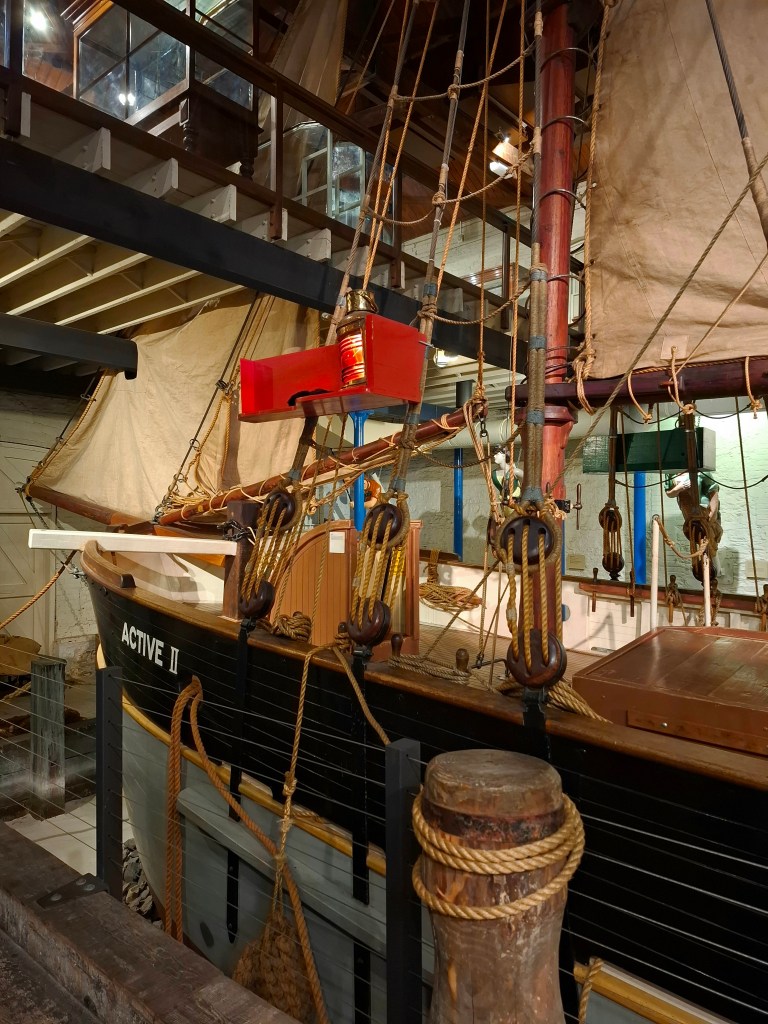
Visitors to the Maritime Museum are greeted by the giant replica ketch. Image: Hannah Oxford.
Manager Curatorial at the History Trust of South Australia Dr Adam Patterson guides me and a group of about 14 others through the Maritime Museum as part of the 2025 Adelaide Fringe season.
Dr Patterson tells me that Port Adelaide is very different from most other places in South Australia.
“You got your Bowden and Brompton where there’s, like, urban infill, like they’re doing in the Port — reused industrial buildings, but you don’t have the waterfront,” he says.
“You’ve got Port Noarlunga where there’s a bit of heritage, amazing waterfront, but you don’t have the industrial stuff.
“So, yeah, the Port has this really unique mix of all of those things.”
The Maritime Museum clearly highlights the importance that the very thing that makes Port Adelaide what it is, has never changed — that being its strong connection between the people and land.
Aboriginal traditions are an integral part of cultivation of the Port. Lartelare Reserve in the New Port signifies the provenance of Kaurna woman Lartelare and aims to regain Aboriginal history through stories that have been told across generations.
Recently, the Maritime Museum has worked closely with Aboriginal people to develop exhibitions that tell stories from their culture, with a focus on the Port Adelaide area. Collaborating with Ngarrindjeri people near the Coorong, there is a display that illustrates the art of weaving and making a Yuki (canoe). Through these projects, they aim to share knowledge that underpins core cultural practices with the wider community.
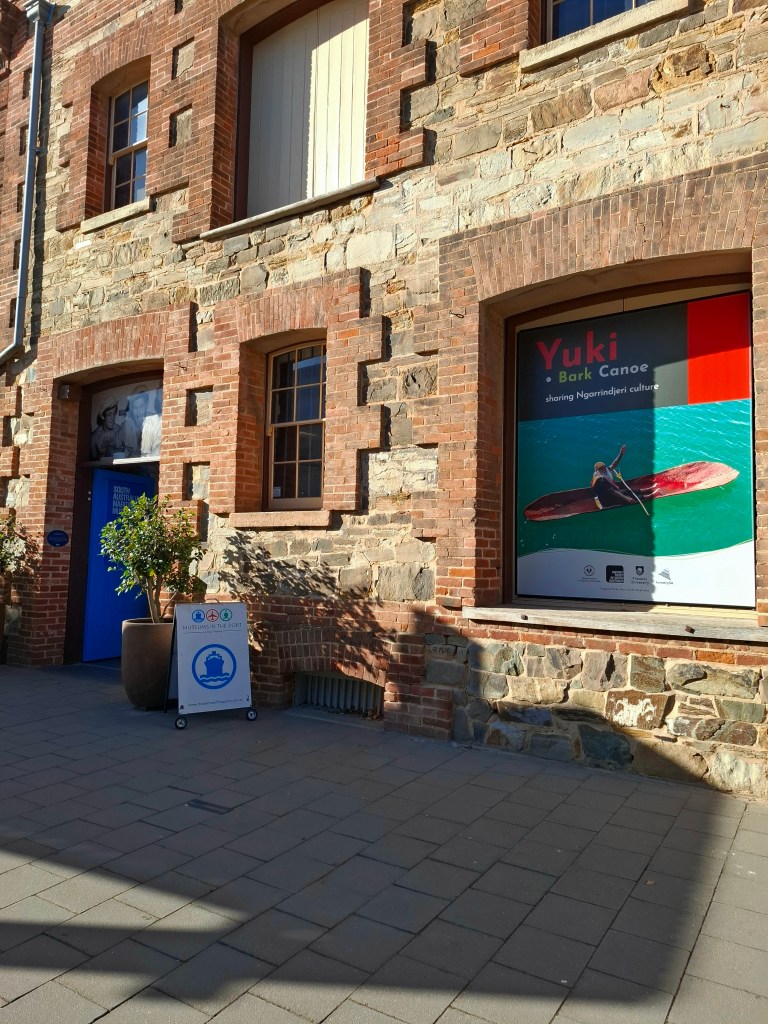
The Maritime Museum is working towards visually telling Aboriginal stories, collaborating with Ngarrindjeri communities including school students to bring these to life. Image: Hannah Oxford.
“Until about 2014, Aboriginal stories weren’t told very much at all in the Maritime Museum. Ever since then, when we did this first interview project about Port Adelaide and Aboriginal experiences in the Port, we’ve tried to kind of build on that and continue,” Dr Patterson explains.
“It’s really important that the Maritime Museum tells those stories.”
To truly capture the vividness of Port Adelaide’s history, it must be seen in person, walking around the streets, and physically interacting with its timeless inner workings.
An eruption of distant laughter pulls me back into the present on Lipson Street. I let my feet take me towards the river, greeted by more colourful explosions of artistic storytelling at every corner; painted faces hiding behind the trees lining the streets create a spellbinding voice. A voice that demands to be heard.
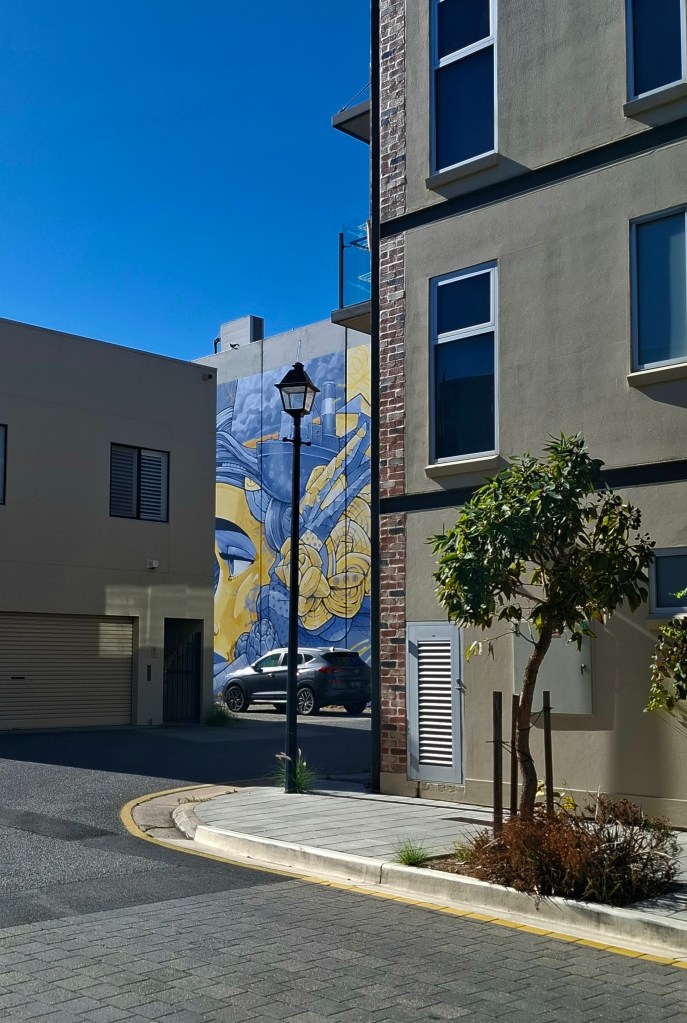
There’s art to be found at every corner or down each alleyway in Port Adelaide. Image: Hannah Oxford.
Port Adelaide has a strong sense of identity, but it is ever-changing. A growing arts scene is driving that change, with many musical and visual artists from and around the Port Adelaide area being inspired by the Port’s deep-rooted heritage. The spirit of the past has evoked dynamic, imaginative pieces unlike anything else — creating a multi-layered sensory experience.
One of those artists is Ngarrindjeri man Thomas Readett, who delivered his first street mural through Wonderwalls Festival in 2017. The initiative gives artists the chance to create grand scale murals on the walls of Port Adelaide, with no restrictions or design brief. There is a sense of creative freedom, enabling them to put their work out there for the public to see.
Readett has worked closely with several artistic initiatives including establishing his own art studio, Ripple Art Supplies. He was able to run workshops and connect with people beyond the local community.
Readett says Port Adelaide feels like one of the strongest cultural hubs in South Australia. Home to almost 300 artists, it has become an important place that inspires artists of all domains to expand their craft.
“If you’re visiting and it’s like a tourism thing, I feel like you have to go to Port Adelaide to, you know, get a sense of what Adelaide is about,” he says.
“I feel like it’s a beautiful and strong community.
“You know, you’ve got everything from people starting out to established people, companies, coffee shops, everything. All the arts. All the festivals. It’s just a great place to be.”
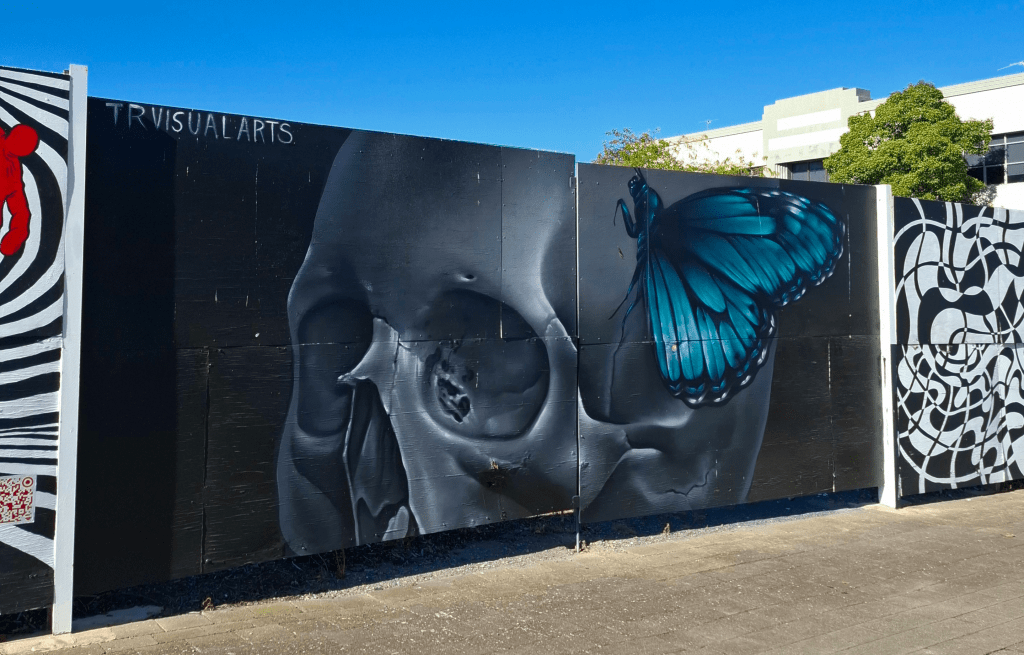
Readett’s second street mural in Port Adelaide which is located near the Lighthouse on North Parade. Image: Hannah Oxford.
With many precisely crafted “Wonderwalls” colouring different spaces around, Port Adelaide offers one of the largest outdoor galleries that allows visitors to venture into the unknown, leaving a lasting footprint.
Similarly, Vitalstatistix (Vitals) on Nile Street is strengthening core creative initiatives around the Port. Established in 1984 by three female artists, Vitals is a space for contemporary art and community performance that strives to foster innovative experiences between the artist and audience.
Through different projects, Vitals works and consults with the local Kaurna community, strengthening the relationship between the people and land.
Artistic director and CEO of Vitalstatistix Jennifer Greer Holmes says art is about relationships and creating a moment in time where people have a connection to each other, to a thing or an idea.
A transformation of how they are feeling versus how they are left feeling.
Showing me around the grand yet worn building, I follow Greer Holmes into a space where performers are amid crafting props for an upcoming performance. The smell of freshly dried paint fills my nose.
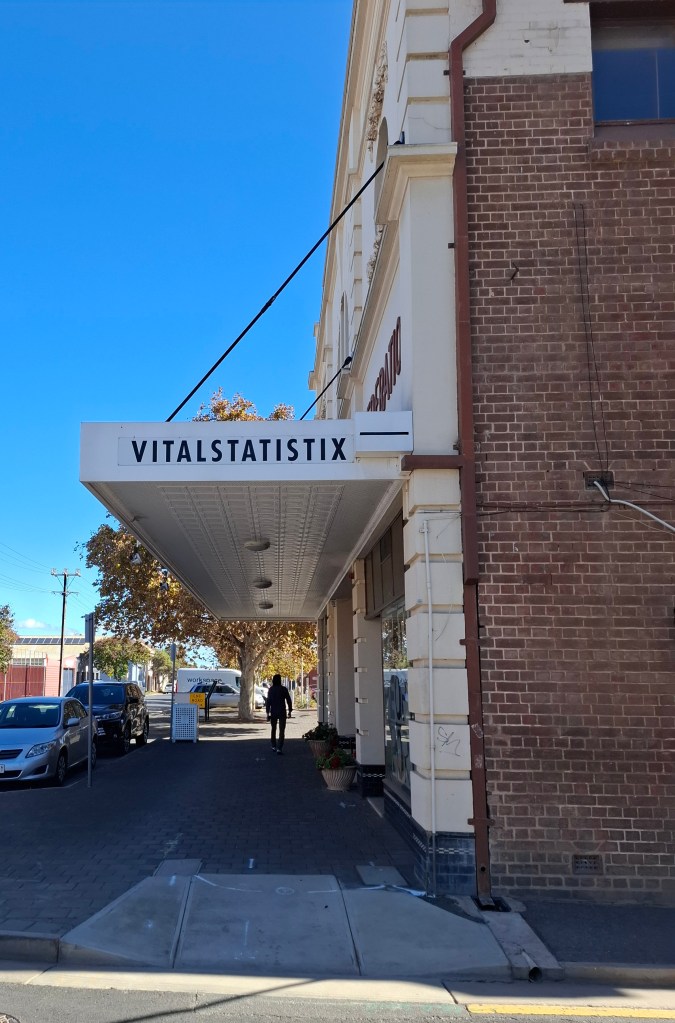
Located on Nile Street alongside the Port River, Vitalstatistix is a space for contemporary art and experimental performance. Image: Hannah Oxford
“We… in particular, are a platform for experimentation, which is rare. We provide a really important place for people to try new things,” she explains.
“So, our audiences have an understanding of the artistic process, in terms of they don’t just come and see the show that they pay for a ticket, they get invited in through the process to see works in development.”
The sounds of the Port are there every step of the way. Whether it is the bells chiming on the clock in the background or the sounds of the river at the forefront, the Port is right alongside.
Physically witnessing the change in dynamics, Greer Holmes believes it is an exciting time for Port Adelaide because of the growing number of small businesses that are attracting new audiences and clientele.
“I’ve worked down here for 20 years and there’s always been this taste of ‘Ah, something might happen’, and it’s never happened. This time it feels like it’s actually in the process,” she reflects.
“There seems to be an understanding of the need for people to collaborate.”
Despite a new ecology, changing landscapes and emerging voices, at its core Port Adelaide remains the same. Its historical spark will never disappear.
Whether you decide to take a rich path into the past, stand still among all of the art in the present, or search for tomorrow where the river meets the Port, there is an adventure for everyone.
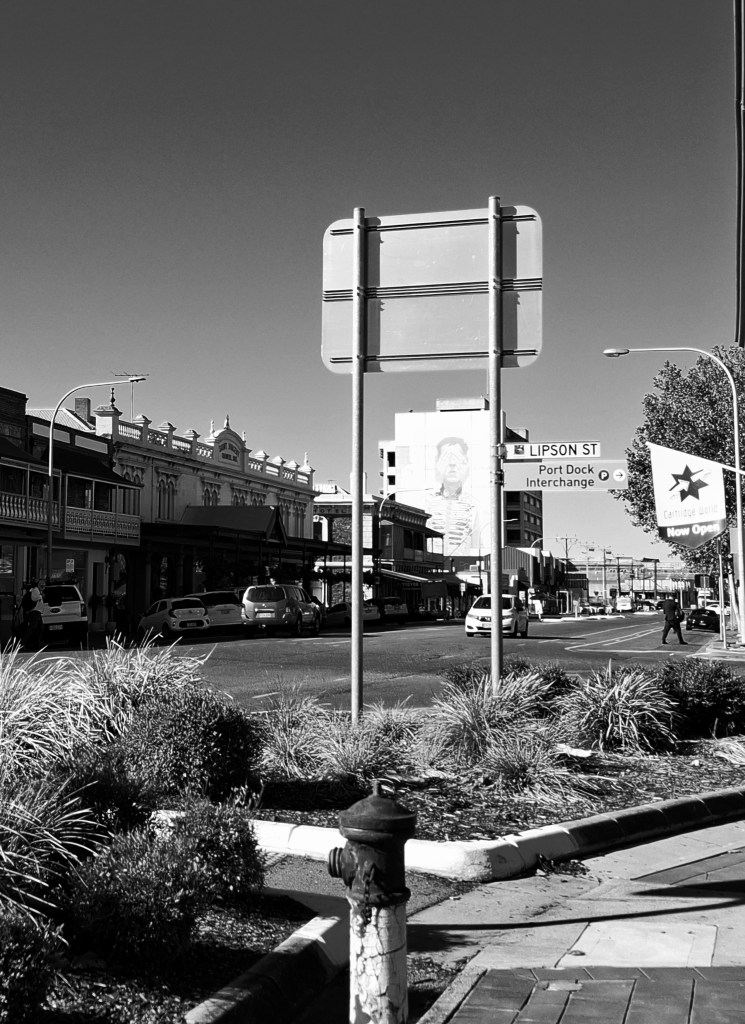
Cars travel up and down St Vincent Street ready to explore a treasure trove of history and immersive experiences. Photograph: Hannah Oxford.
As I continue to venture through the winding cobblestone laneways, the impact of my voyage washes over me. The sound of Bob Marley’s soulful voice fills my ear, and after what feels like an infinite journey, I find myself standing on the docks – where the land meets the water.
I think back to the mural of the man who is unable to see, the imagery lingering in my mind. I look over at the distant traffic, moving across the Birkenhead bridge. Some leave the little town, while others are moments away from stepping into the barrier of time.
“In order to find that better tomorrow, we must look back,” I say.
The loudness in the unspoken — those things unsaid that connect our past, present and future. I am not lost in time. Port Adelaide is a place to think, to reflect on who we were, a space to create —- who we will become.
There is exploration waiting to happen in Port Adelaide.
For further information and to plan a jam-packed trip to Port Adelaide, visit https://www.visitpae.com.au/
 ontherecordunisa.com