
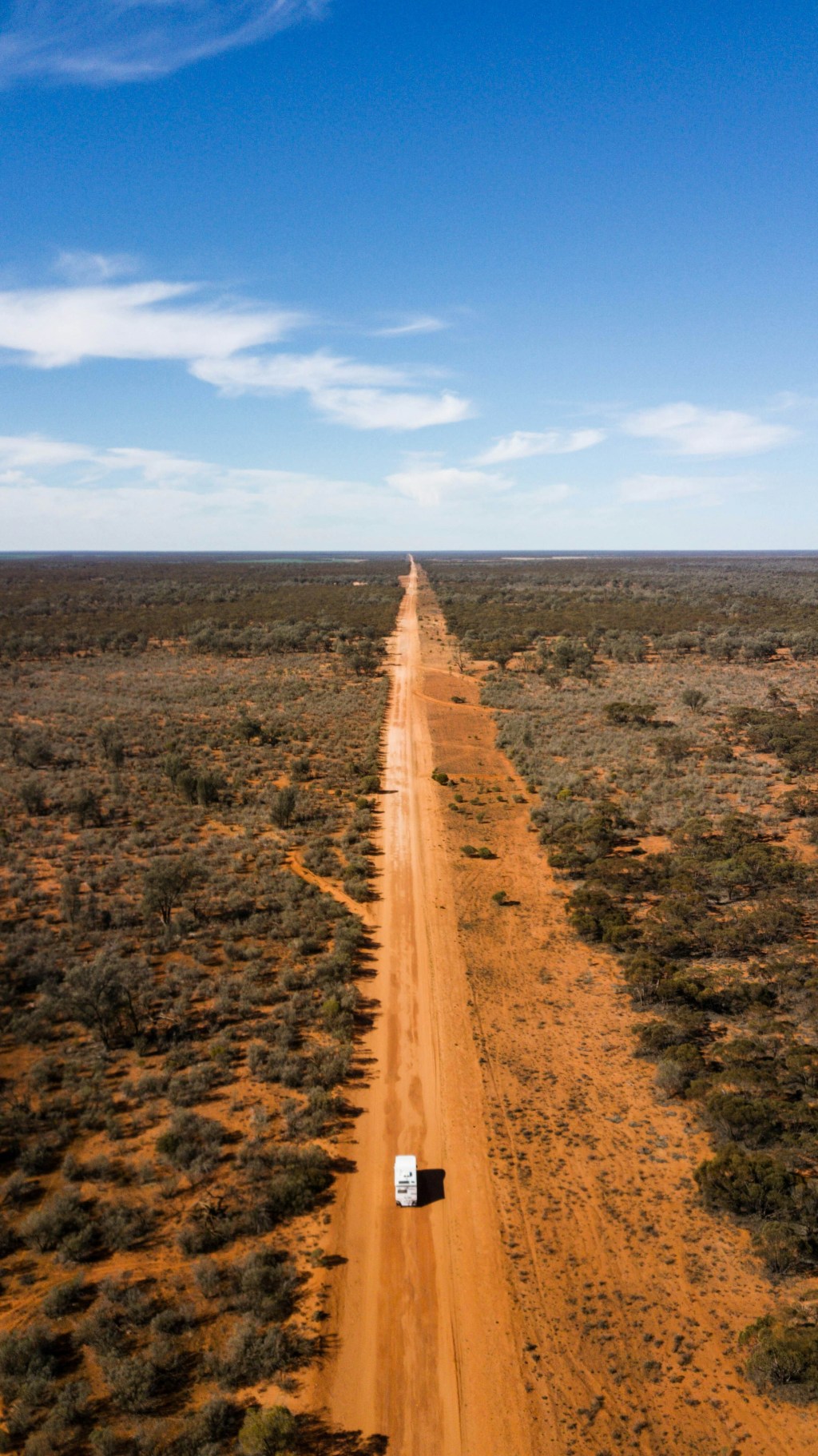
Systemic underfunding of health and wellbeing programs in the rural and remote regions of Australia is proving disastrous for the people who call those regions home. (Image: Dylan Shaw)
By Constance Siasios | @constance.siasios
“It is Third World conditions in a First World country.”
That’s how Inclusion Support Teacher Mark Kelly*, who lives and works in a remote town in the Northern Territory, describes the healthcare reality faced by thousands of Australians living outside urban areas.
Data from the Australian Institute of Health and Welfare shows that around 7 million Australians live in rural and remote areas.
It also shows they experience higher rates of hospitalisation and injury, higher death rates and poorer access to primary health care services.
The Australian Government Department of Health, Disability and Ageing acknowledges these disparities, noting that, despite decades of reform efforts, people in rural and remote Australia still face shorter life expectancy, a higher rate of premature death due to disease and injuries, and fewer healthcare options.
Kelly says “currently there are four doctors for about 8,000 to 10,000 people” where he works.
“A lot of older people do go up to Darwin, to see a doctor, so that’s [hundreds of] kilometres return trip,” he says.
Chief Executive Officer of the National Rural Health Alliance Susanne Tegan describes the current state of rural healthcare across Australia as, “incredibly stretched, stressed, underfunded, and under supported.”
“If you make a face-to-face appointment at 5pm and have to drive 500 kilometres to go home … you’ll have to pay for accommodation to stay the night … and the Patient Assistance Transport Scheme only covers half the cost.
“I can tell you, if an Adelaide person living in Unley had to drive up to the Barossa, they would be furious if they had to pay for the accommodation,” she says.
With a background in paramedicine, current general practitioner in Renmark Dr Adam Overweel offers a frontline view of the challenges.
“It’s really difficult when the structure you’re operating in is 15-minute appointments, someone’s driven an hour and a half for 15 minutes of your time. I always feel a lot of pressure in those situations to try and make it worth their time and expense,” he says.
Recently graduated nursing student Karlee Koutsoubis gained an early understanding of rural healthcare pressures during her university placement in Mount Gambier in south-eastern South Australia.
“Most life-threatening emergencies were immediately flown to urban hospitals,” Koutsoubis says.
“As a student, you see the patient a bit differently … you want to spend more time with them, so I really wanted to be an advocator for them.”
The lack of resources and time doesn’t just stretch staff — it can cost lives.
Overweel recalls a patient whose story shows how even small gaps in time and resources can ripple into repeated mistakes and expose cracks in the system.
“The patient had five presentations to our local emergency department with weight loss and upper abdominal pain … five different visits, five different doctors … costing the healthcare system around $2,000 each visit … roughly 10 grand of expenses to the healthcare system.”
The patient, who struggled to explain her symptoms clearly, was repeatedly misdiagnosed.
“She got branded with an eating disorder and told it was psychosomatic,” he says.
Overweel, the patient’s GP, consulted her for a routine three-month check-up and quickly suspected the cause.
“Within 15 minutes, I said ‘I think you’ve got … a bug that lives in the stomach and can cause reflux’, sent her off for a breath test and with the treatment … a week later she felt normal and, a month later, she’d put all the weight back on.”
“That’s purely from me knowing the patient, knowing their background, knowing how to sort of get information from them or how to relate to them,” he says.
Kelly agrees, saying “[patients] are sharing a whole lot of personal information … some doctors they connect with, and some of them they just don’t … you want that consistency in who you’re seeing.”
But Overweel says that the amount of effort he puts in to provide tailored treatments does not match what Medicare pays him.
“Medicare paid me for that a grand total of $80.”
The Australian Government Department of Health, Disability and Ageing states MyMedicare is a new voluntary patient registration model intended to formalise and strengthen the relationship between patients, their GP, and broader primary care teams.
But in rural and remote communities — where clinics struggle to retain doctors and many residents don’t have a regular GP — the model risks disadvantaging patients who can’t access the continuity of care MyMedicare relies on.
“The introduction of MyMedicare was ill advised and has proven itself to be ill fated, because it just is an astronomical administrative burden on practices to remain compliant,” Overweel says.
Tegan stresses Medicare funding isn’t keeping up with rising costs.
“In the last five years alone, we’ve had a Consumer Price Index (CPI) increase of close to 30 per cent,” she says.
“Medicare is indexed at less than 1 per cent every year.
“Bulk billing is never going to work out there, and they shouldn’t be punished if they can’t bulk bill.”
Tegan describes clinics as financially unstable under the current model and rather than proper government support, some communities “are having to raise $800,000 … have a ball and a wheelbarrow race to keep their local medical service.”
While adults are battling for consistent, affordable care, children in remote communities face their own invisible crisis, according to Kelly.
“I predominantly work with Aboriginal kids at the moment … that have got trauma from a whole lot of different stuff… we have Headspace in Darwin, but they don’t provide any service for kids under the age of 12.”
“We have a lot of our kids that from the age of six, with trauma informed issues … that definitely do need that support,” he says.
The shortage of qualified staff means even the best-intentioned programs can’t meet demand — an issue Flinders University health and social equity professor James Smith has spent over two decades addressing.
“Workforce attraction and retention is a really significant issue … that cuts across a range of health professions, whether that be doctors, nurses, allied health professionals, or indeed nonclinical public health roles as well.”
“There are so many challenges to addressing that attraction and retention issue … housing for staff… funding, competitiveness of salaries and living conditions.
“We can’t just throw new graduates into rural and remote workplaces unless they’re well supported … they must have the opportunity to understand contacts, learning place, and the cultural protocols of the community.
“The reality is that many people working in health roles within rural and remote contexts are often wearing multiple hats.
“[And] we know that the more opportunities that students get to experience working in rural and remote locations, the more likely we are to attract them there moving forward.”
Kelly adds, “the university students leave a bit of a legacy and it’s really important for us and those kids to get that support.”
But even the most dedicated workers can only do so much within a system built by and for urban dwellers— not the bush.
“I’ve worked in this sector for more than 30 years … and successive governments have ignored the regions because the votes aren’t there, and urban Australia has lost track and doesn’t even think about what rural Australians go through,” Tegan says.
“You can’t have a policy or funding model that suits people in the city when the context, the geography, the costs are completely different in different parts of the country.
“Through the NDIS and ageing care, we’re still not separating rural, remote, and regional, from urban programs, which means that the underfunding doesn’t show up, and it also means that the programs are not fit for purpose.
“The National Rural Health Alliance has to fight for funding … we have received the same amount of funding since 2017,” she says.
Smith echoes this concern.
“One of my greatest frustrations are policymakers in Canberra not understanding context … particularly those that have decision making capability and power for … it is critical that they get to visit sites firsthand preferably for extended stays to understand what they enter to be faced with those issues.”
“If they don’t understand the needs of … culturally and linguistically diverse communities within these rural and remote contexts, they’re not actually going to be able to develop health systems, environments, programs and funding structures that support those communities.
“It’s not about us telling them what’s required, it’s about making space for them to have a voice around what their needs are and how we can best support that.”
Yet the consequences of inaction are already visible across Australia
“Those that live in rural and remote Australia are dying six to 13 years earlier than their cousins, aunts and uncles in the city,” Tegan says.
“Thirty per cent of people who live in rural, remote and regional Australia bring in two thirds of Australia’s exporting income, produce 90 per cent of the food that all Australians eat and bring in 50 per cent of the tourism income.
“What people don’t realise is if we have less people in rural Australia, it’ll become harder and harder to produce the food, to have the tourism, and to have two thirds of Australia’s export income.
“So rural Australia is keeping Australia as a wealthy country,” she says.
“They are receiving $8.35 billion per year or an average of $1,090 per person less healthcare … those populations are not able to deliver what is needed on the ground.”
Overweel reflects, “it is a really good job, it’s really rewarding … but for myself, I just don’t see a bright future in it.”
As Tegan reminds us, “you shouldn’t set up communities to fail.”
For the millions of Australians living beyond the cities, access to healthcare remains not a privilege, but a promise still waiting to be fulfilled.
*name changed for anonymity.
 ontherecordunisa.com