
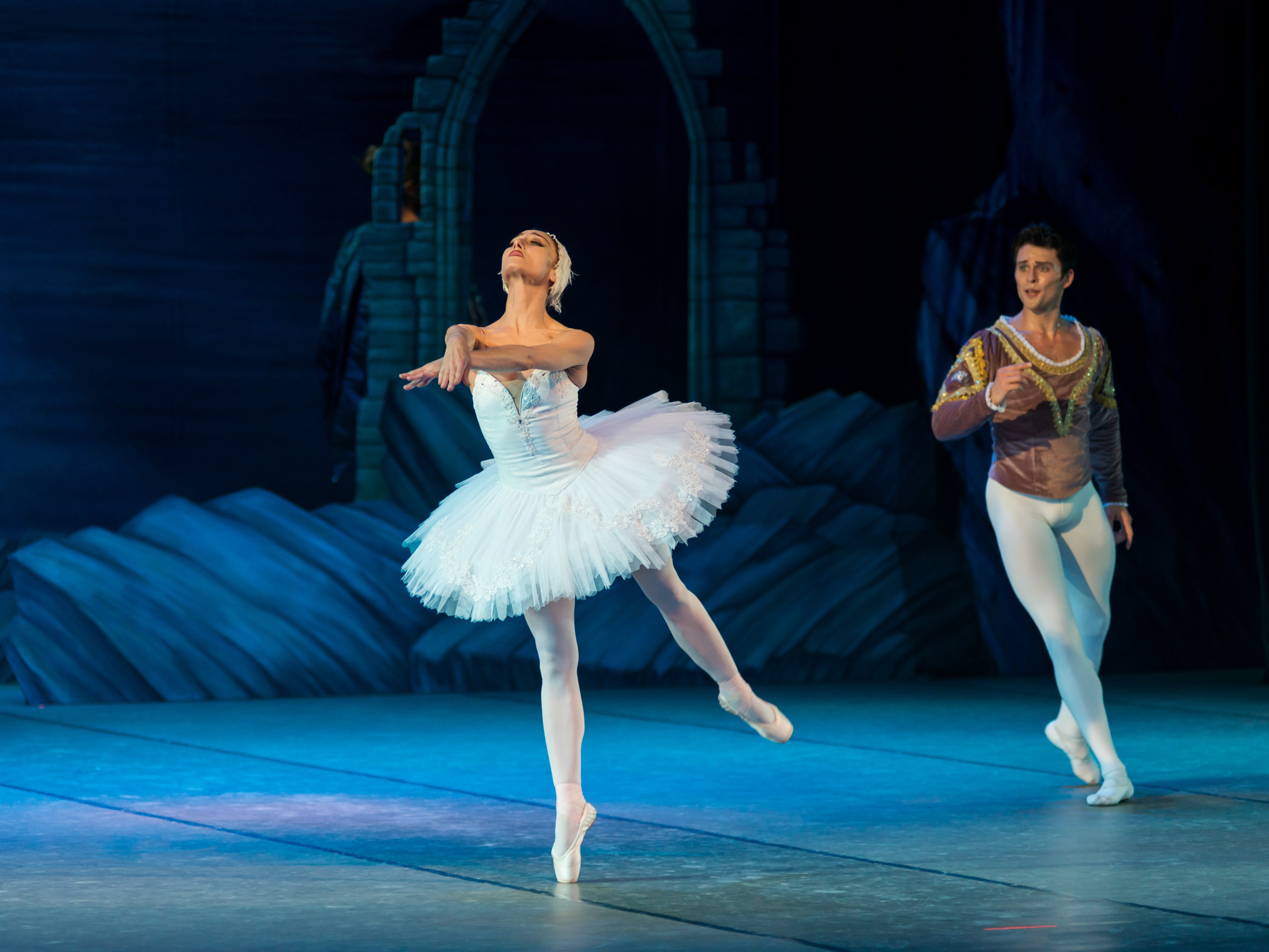
Timothée Chalamet’s comments about ballet and opera have sparked widespread discussions about the value and future of traditional performance. In South Australia, industry leaders and young people join the conversation to explore how these art forms are continuing to connect with new audiences. (Image: Niki Dinov).
By Dallas Reynolds | @dallasolivia_
Academy Award-nominated actor Timothée Chalamet has, in just a few short years, become one of Hollywood’s most closely watched young stars.
His openness about his craft has earned him accolades — and occasionally, controversy.
At a CNN and Variety town hall event in February, Chalamet ventured into unexpected territory.
Reflecting on the pressures facing the film industry, he compared his field to the performing arts.
“I don’t want to be working in ballet or opera where it’s like, ‘Hey! Keep this thing alive,’ even though no one cares about this anymore. All respect to the ballet and opera people out there… I just lost 14 cents in viewership. I’m taking shots for no reason,” Chalamet said.
Actors, critics and directors have weighed in, including Jamie Lee Curtis, questioning why artists should take aim at other art forms at all.
Ironically, the performing arts run deep in Chalamet’s own life.
Trained in theatre, he comes from a family with three generations connected to the New York City Ballet: his grandmother, mother and sister all studied or danced professionally.
He performed more than 40 songs live on camera in the Bob Dylan biopic A Complete Unknown, and his musical talents in Wonka earned him a Golden Globe nomination.
During his 2025 Screen Actors Guild Awards speech, he spoke of his desire to pursue greatness; a year earlier, he said in an interview, “What is this Earth without art? Just a rock.”
His recent comment taps into a familiar tension: how artists balance popularity with the lasting impact of their craft.
While Chalamet’s words may have raised eyebrows, ballet leaders in South Australia argue the art form is far from fading.
“Ballet is alive and growing in South Australia,” says Sarah Humeniuk, co-founder and artistic director of the Adelaide Ballet company.
In just two years, the company has sold out performances and created a professional training platform for young dancers.
“We’ve found through supporters, parents and the general public that Adelaide is begging for more,” Humeniuk says.
“People are thrilled we have finally filled the gap.”
Demand for classical arts extends beyond Adelaide Ballet.
When The Australian Ballet visits the city, the Adelaide Festival Theatre fills with eager audiences.
Adelaide Ballet now gives local audiences more opportunities to experience the art form closer to home, offering community workshops and professional training for aspiring dancers.
“Our class sizes are increasing as word spreads that there is a pathway to a career in dance,” Humeniuk notes.
Audience demographics are also shifting, with more young people attending its productions, from children as young as seven to audiences in their 30s.
Part of ballet’s resurgence, Humeniek says, lies in innovation.
Adelaide Ballet’s recent production, Murray Whispers, fused classical ballet technique with contemporary choreography and an original score by Adelaide composer Ashley Hiribar.
Large-scale projections of the Murray River created an immersive experience, blending tradition with modern spectacle.
“It was fresh, exciting, and emotive work,” Humeniuk says.
“If someone like Chalamet were to attend a performance, he might expect something stuffy and boring.
“But once caught up in the beauty of the movement and the music, he’d probably forget he thought he disliked ballet.”
For State Opera South Australia Executive Director Mark Taylor, Chalamet’s remarks are less about controversy and more about sparking discussion.
“I think we should note that as much as Timothée may feel he doesn’t want to work in opera or ballet, he actually can’t,” Taylor says.
“He’s not trained to be an opera singer.”
He points to the level of skill required, describing opera singers as “elite artists” who perform using “the incredible power of the human voice in an unamplified auditorium”.
“This takes years and years of training,” he says.
Taylor contrasts opera with film, noting the difference between recorded and live performance.
“There are months, if not years, of post-production in film. What we put on a stage is then and now. Each performance has its own idiosyncrasies as the artists bring themselves to that moment,” he says.
“What opera offers is human-to-human connection.
“You’ll hear the power and virtuosity of a symphony orchestra, the human voice, costumes, sets, lighting — sometimes dance as well. It’s a complete art form.
“That’s why opera is still relevant. And that’s why we continue to have great numbers.”
State Opera South Australia’s work also reaches beyond the state.
Its production of Roméo et Juliette was a co-production with West Australian Opera and Irish National Opera, while Hansel and Gretel is set to travel to Hong Kong next year.

Roméo et Juliette, presented by State Opera South Australia in 2025 (Image: Andrew Beveridge, ASBCreative & State Opera South Australia).
The company is also marking its Golden Jubilee 2026 Season — 50 years of opera in South Australia — alongside initiatives such as $35 tickets for under-30s to encourage younger audiences.
Rather than dismissing Chalamet’s remarks, Taylor says, “it has got us having this conversation, and that’s important”.
For newcomers to State Opera South Australia, Taylor’s advice is simple.
“I would respectfully ask that people come in with their eyes wide open, leave any preconceived ideas or provocations from the likes of Chalamet at the door, and experience why this art form is as relevant today as it was 400 years ago,” Taylor says.
So, now that the experts have weighed in, what do young people in Adelaide make of Chalamet’s controversial remarks?
For 21-year-old Nazia Fayazi, ballet and opera remain deeply relevant — even if she hasn’t yet experienced them firsthand.
“When I think of ballet, I think of grace, beauty and elegance,” she says.
“Opera is very intense in terms of connecting to and portraying emotions, and there’s a lot of passion involved in every performance.”
But when it comes to Chalamet’s claim that “no one cares about ballet or opera anymore,” Fayazi strongly disagrees.
“I think it’s quite disrespectful and arrogant to claim he’d be ‘keeping it alive,’” she says.
“Both opera and ballet require lifelong dedication from performers — the kind of passion that becomes one’s sole purpose. It’s a level of commitment that goes beyond trends and keeps the arts alive.”
Trinity O’Shea, also 21, who has attended performances, challenges Chalamet’s comments, describing ballet and opera as “a theatrical and classical experience” often associated with a sense of occasion.
“With trends like ‘balletcore’ [a fashion aesthetic inspired by the elegance of ballet attire] and a renewed interest in traditional values, there’s still clear engagement. There’s also been a resurgence of screen actors working on Broadway and in theatre.”
The debate sparked by Chalamet’s comments is less about one art form versus another and more about how each continues to define its place in a changing cultural landscape.
And as that landscape evolves, so too will the ways audiences connect with the stage — ensuring the conversation is far from over.