
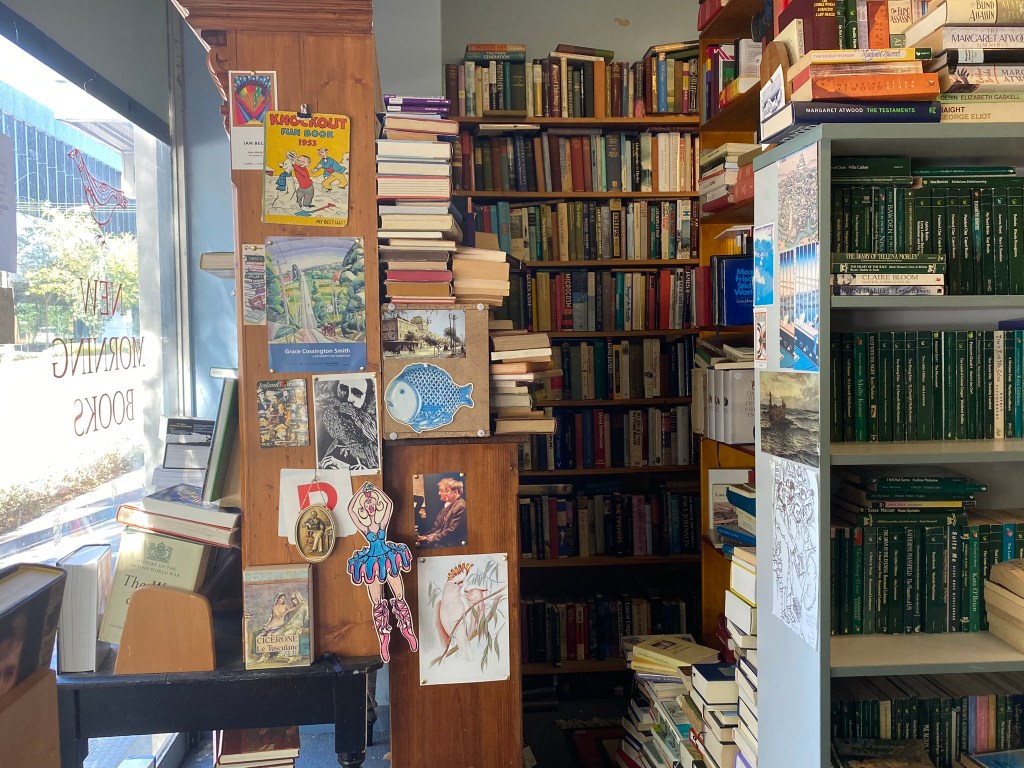
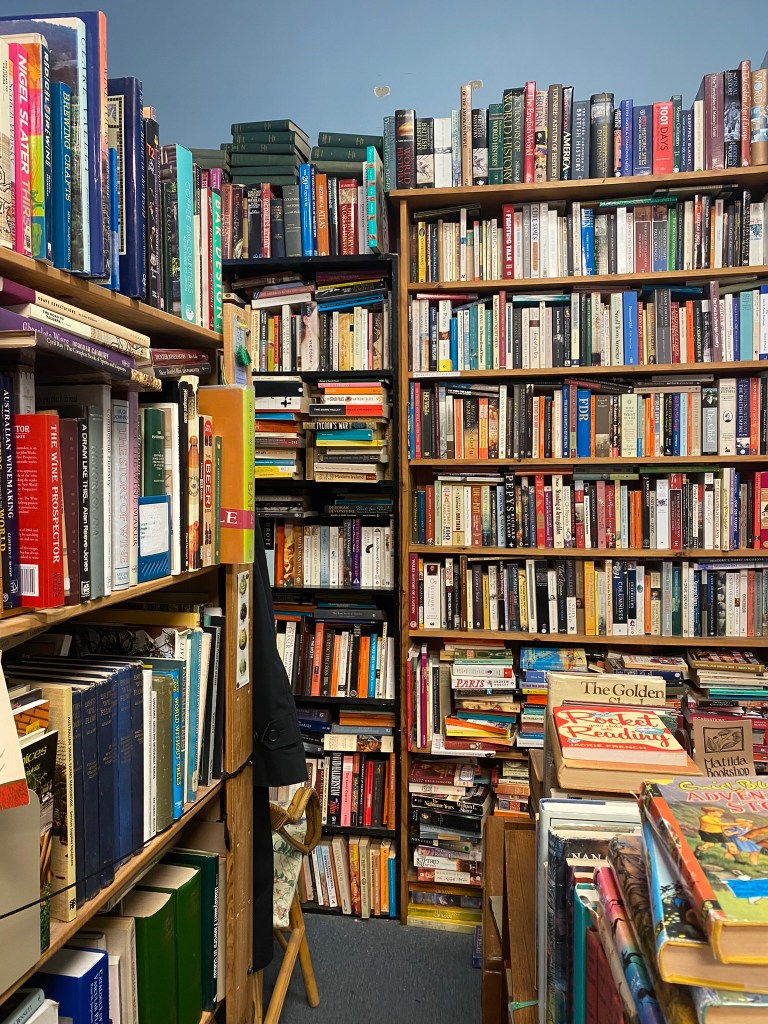
The magic of discovery and the warmth of human connection are alive and well in these Adelaide second-hand bookshops. (A corner at New Morning Books. Image: Bao Quynh Duong)
By Bao Quynh Duong | @sooimqyng
How long has it been since you last found yourself spending hours browsing the shelves of a bookshop?
It’s hard to deny that search engines and electronic books are such convenient ways to access the world’s knowledge.
But something is missing from digital experiences — perhaps the feel of paper, the discovery of a long-forgotten idea or the sense of fulfilment?
All these things exist, quietly and enchantingly, in these cherished second-hand bookshops of Adelaide.
New Morning Books: preserving culture and human connection
“It’s ‘New Morning’ in the sense that the book survived to live another day,” the owner of New Morning Books John Scott explains.
“I have saved thousands of books from being destroyed, and I hope that’s a cultural contribution.”
With a mind that “lends itself to literature and history”, Scott maintains a deep connection with books and their enduring value in this ever-evolving digital landscape.
Scott greets me from the counter covered with old magazines and postcards; behind him is a wall of books. The three-decade-old bookshop has twenty of those “walls” with very small gaps between shelves that only allow one person to pass through at a time.
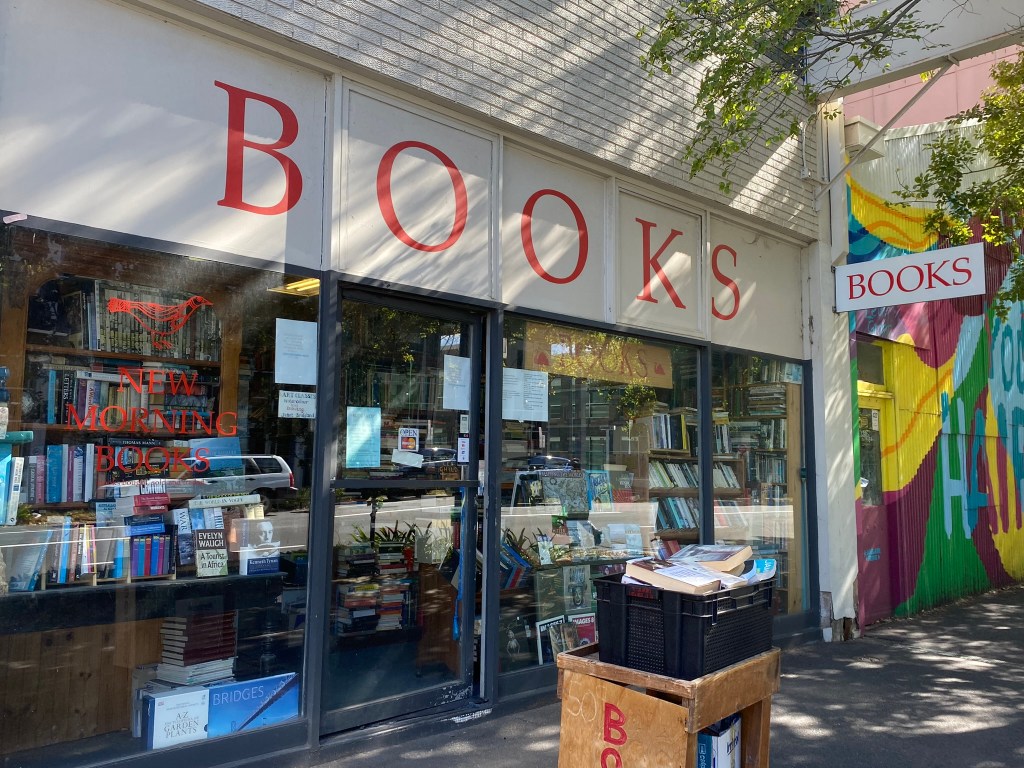
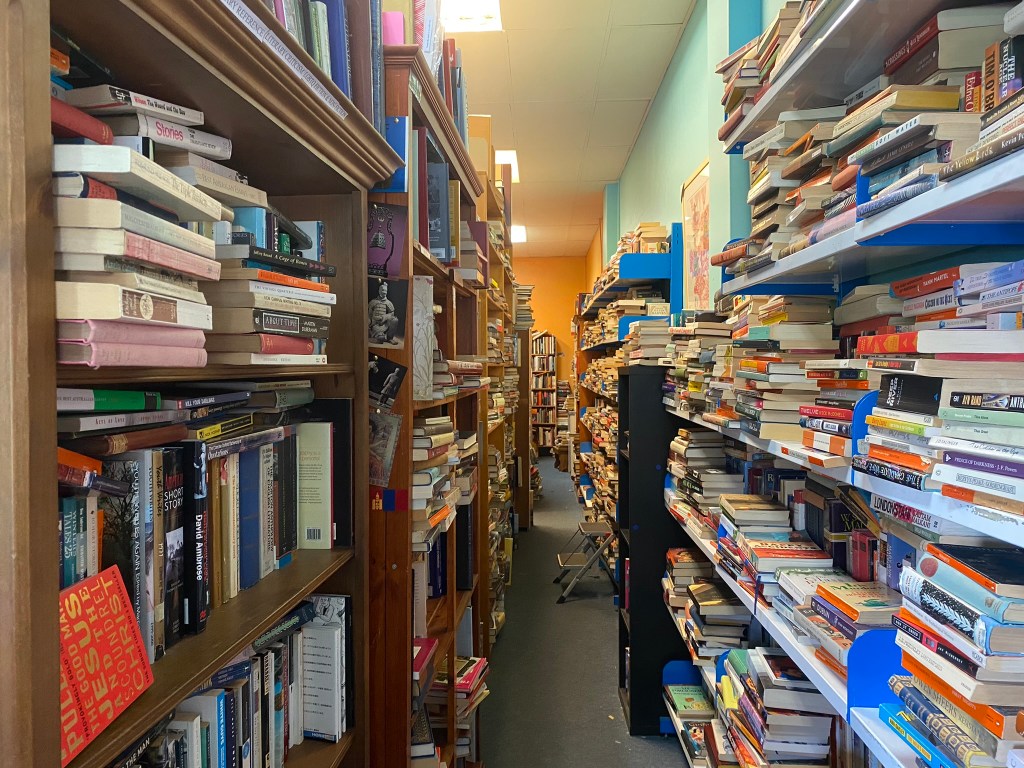
New Morning Books — 155 Frome Street, Adelaide 5000. (Image: Bao Quynh Duong)
Scott pulls out a small chair for me. It perfectly fits the narrow space between two bookshelves. As I wait for him to finish some paperwork, I find myself sitting among the massive collection of around 40,000 books.
In this cramped but comfortable space separated from the noises of car engines and people rushing on Frome Street, you might not notice that your casual book browsing has lasted for hours.
It is hard to come across a double of any title at New Morning Books. The much broader range of titles is one of many unique benefits second-hand books provide.
“My mission is to find books of merit from yesteryear that are no longer available in print and make them available for people,” Scott says.
Scott tells me he has customers who are researchers of a historical phenomenon or film students coming for old pop culture, and he enjoys helping them out.
“It’s quite unusual to find a younger person who knows much about the cinematic system of the 1930s or 40s, and that was what I grew up on,” Scott says.
“I’m happy that I’m able to pass it on because it is sad to see knowledge of popular culture dying.”
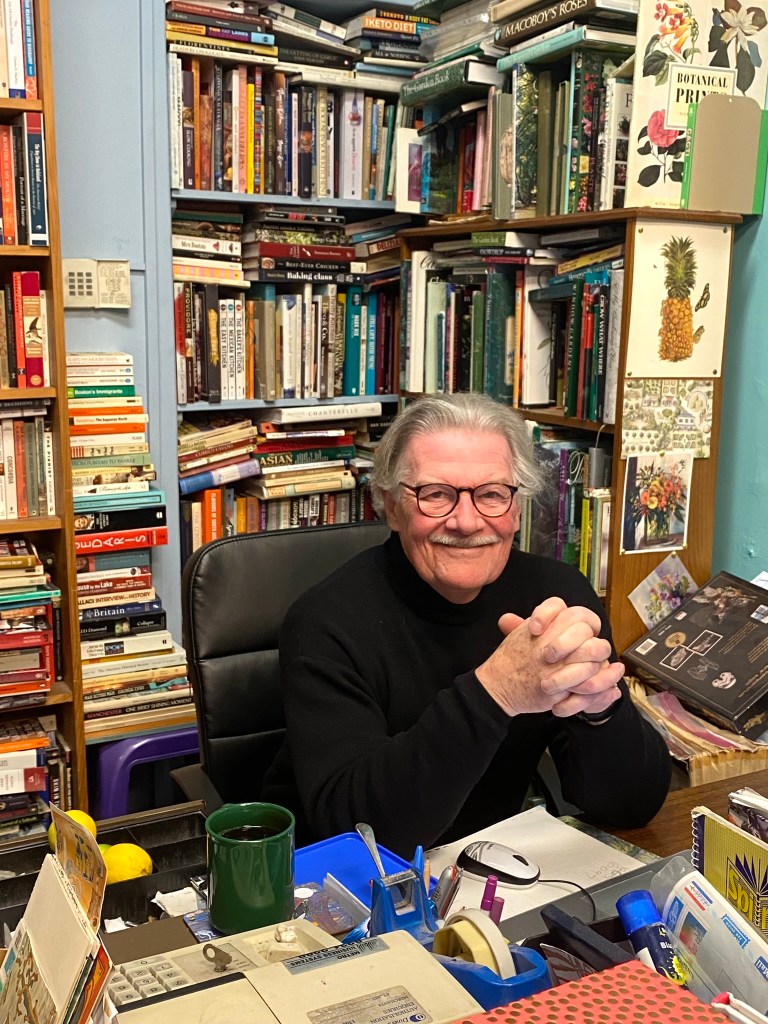
John Scott (left) and his corner (right). (Image: Bao Quynh Duong)
The internet is said to wipe out books and reading habits of young people. But at New Morning Books, the story is different. Scott is confident that books and reading will survive far into the future.
“You don’t have to abandon the modern world to become a serious reader of history and literature,” he says.
“Around 30 per cent of our readership are people under the age of thirty, and the ones who come in here are very interested in reading and building their own library.”
Throughout his 52 years of being involved in books, Scott has come to believe that human connection is one of the most valuable assets — an asset that wouldn’t exist if his bookshop went online.
“I can see that it [going online] would lessen the burn of rent,” Scott says.
“But I’m not one of those people. I like it hands-on. I like personal contact with my customer.”
For Scott, running a second-hand bookshop is a never-ending educational experience. Everyone has a tale to tell, and he values the stories and knowledge that come through his door every day from his beloved customers.
“I can’t bear to retire, like an actor who can’t leave his stage,” Scott pauses and looks around his bookshop.
“I know that I’m not going to be here forever, so I hope that someone will take it over after me to carry on all these cultural and social values of the pages.”
Page & Turner: nurturing the community and environment
From collecting and selling his books online as a hobby, Mark Gamtcheff now owns his pre-loved bookshop in the heart of Adelaide, which he proudly describes as a place “where good books live”.
“I have always loved second-hand books, and I thought it would be nice to help people get high-quality books at a more reasonable price,” Gamtcheff says.
Since 2020, Page & Turner has sold both pre-loved books and a small number of selected new titles.
For Gamtcheff, whether it’s an e-book, a new book or a second-hand one, each has its own advantages. However, he believes second-hand books give people a more rounded perspective rather than just accepting the newest ideas from the latest releases. The experience is also much more pleasant than using e-books because it engages all of our senses with the smell, the touch of paper, and the feeling of jotting down our thoughts in the margins.
“Sometimes you want to look for a classic title at a new bookshop, and they would say: ‘that’s old, we don’t have that.’. Then they send you to places like mine. That is something exclusive about selling second-hand books,” Gamtcheff says.
“I think people of all ages grow up with physical books. With second-hand books, they give you the same education or entertainment value at a more reasonable price.”
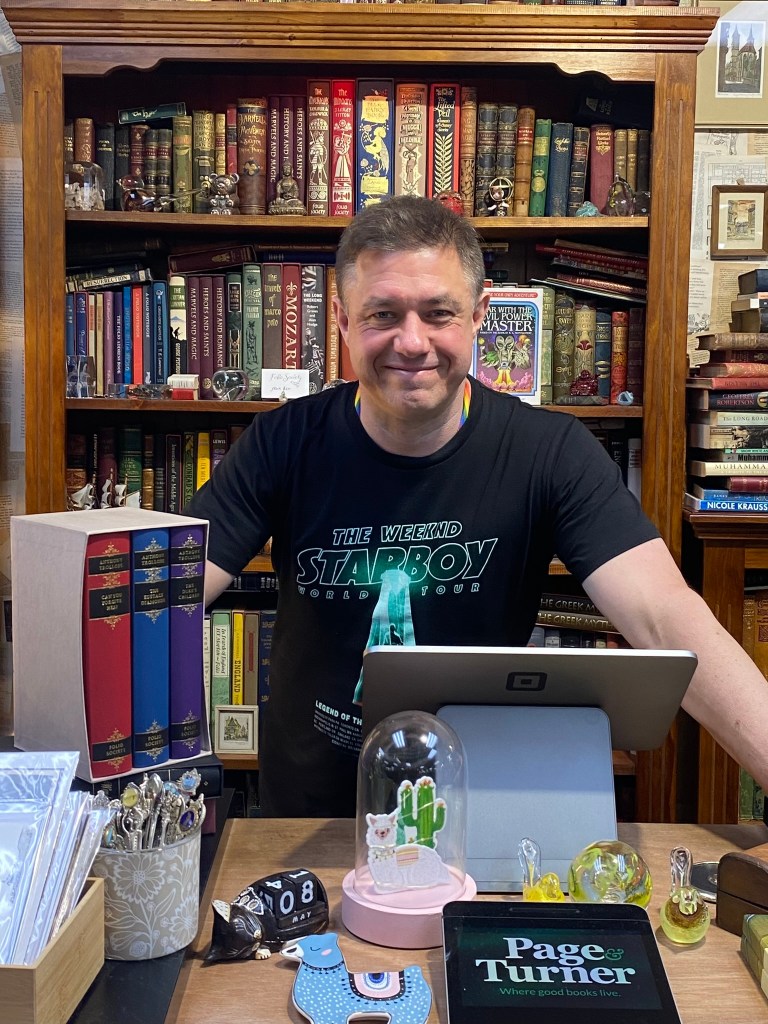
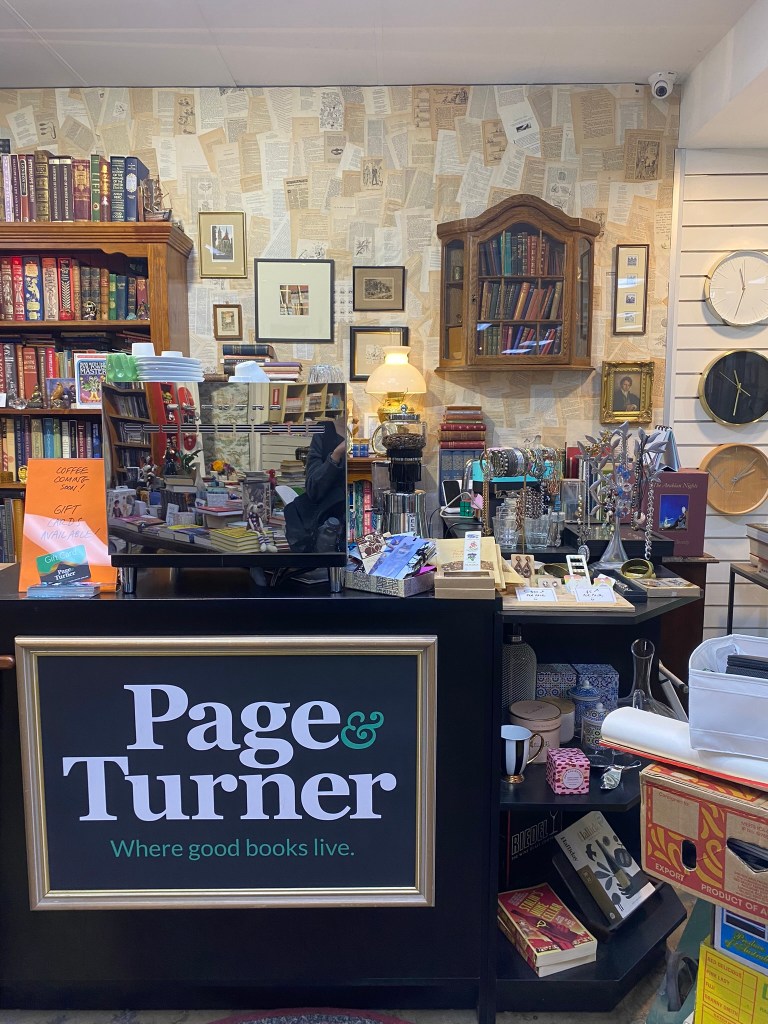
Mark Gamtcheff (left) and the counter of Page and Turner (right). (Image: Bao Quynh Duong)
Gamtcheff takes me around some corners set up nicely with tables, chairs and pre-loved decorations. They give me the feeling of sitting in my own room, with my own bookshelves and time to make discoveries.
Gamtcheff aims to encourage people to spend as much time as they need to explore the bookshop, whether they buy a book or not.
“I want to make it more homey and comfortable for everyone. You can sit here and read any book off the shelves,” he says.
“I don’t have a sign for each category. I love having people coming to me so I can help them look for what they want.”
Gamtcheff says his efforts have been a success; his customers love these reading corners, especially people in their 20s and 30s who are looking for a quiet space to relax.
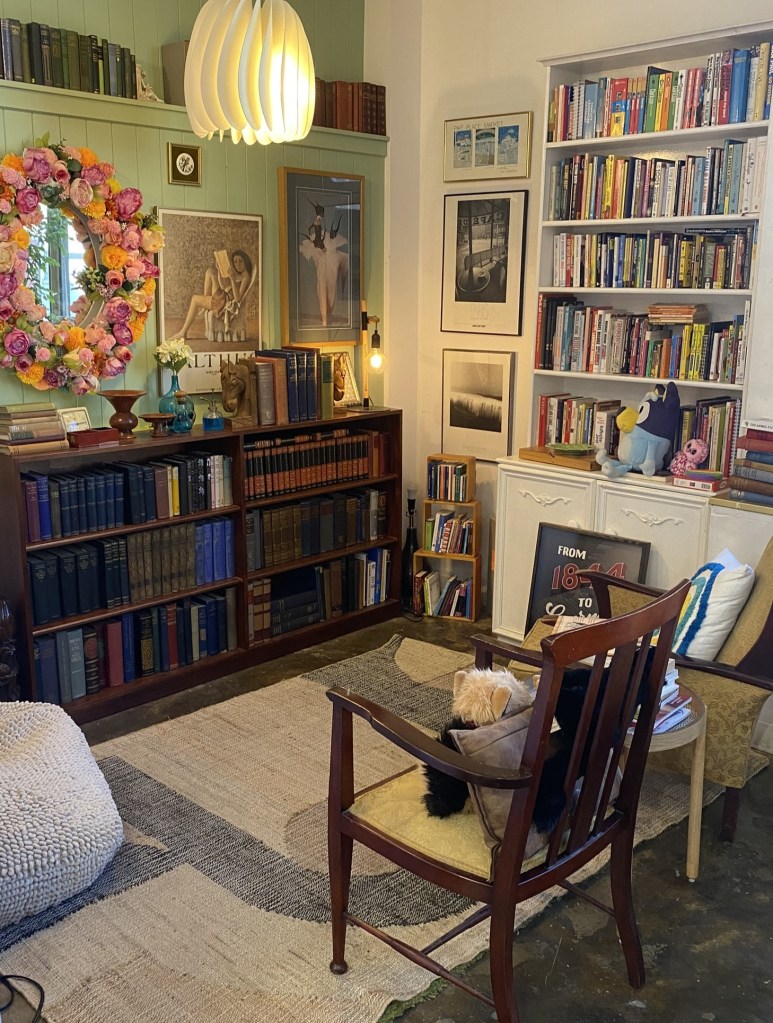
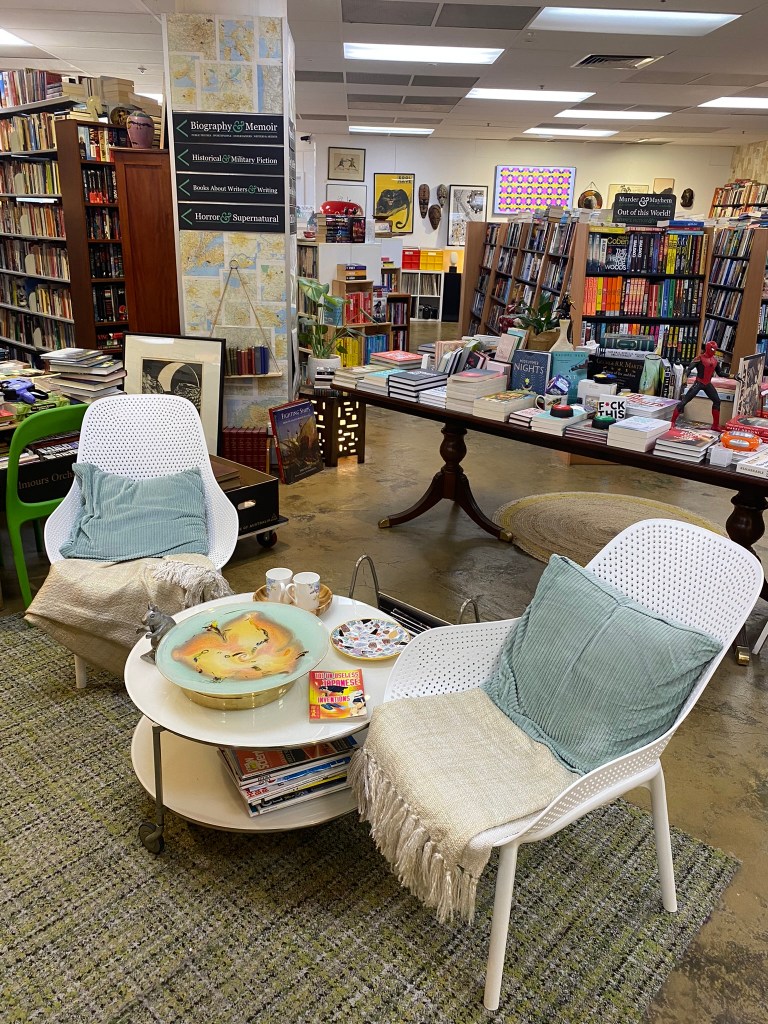
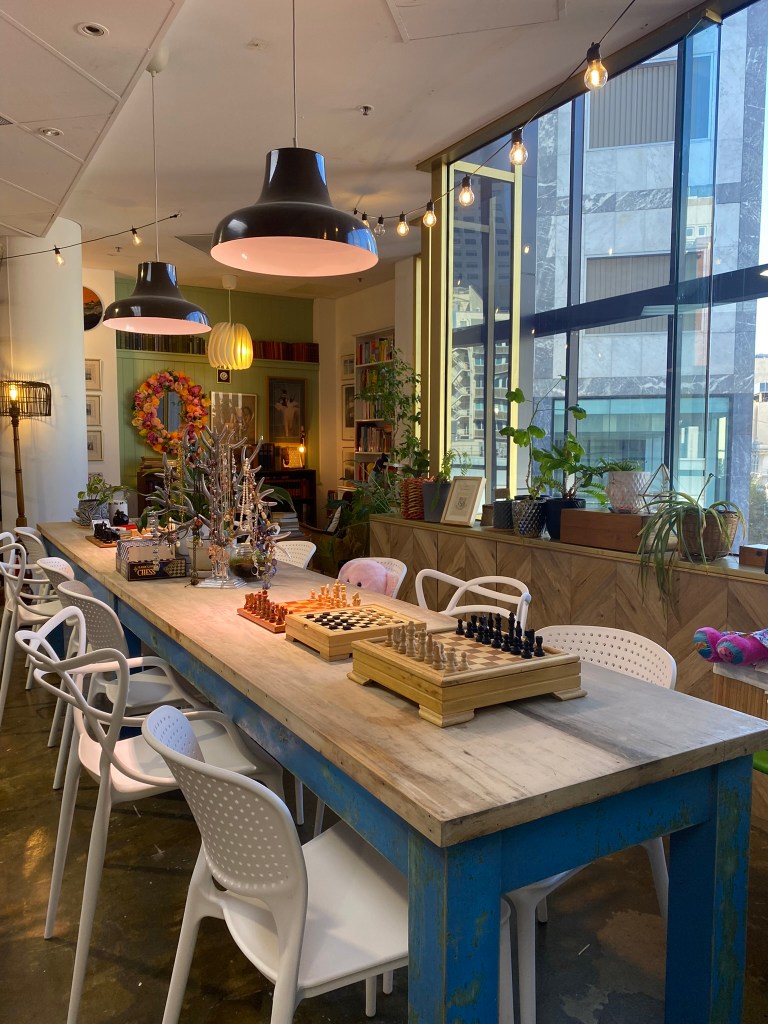
The reading corners at Page & Turner — Level 2, Myer Centre, Adelaide 5000. (Source: Bao Quynh Duong)
Gamtcheff also believes that second-hand books play an essential part in the circular economy, benefiting both the environment and society.
One time, seeing all the books coming in at an op shop, he decided to start the Adelaide Book Rescue service. The service allows people to donate their old, unwanted books and encourages a more sustainable reading practice.
“I would get calls on book donations almost every single day,” Gamtcheff says.
“It’s a nice way to not only reduce waste but also nurture the love for reading because we sell second-hand books at more affordable prices to the community.”
Orchard Bookshop: discovering happiness
I remember stopping at Orchard Bookshop a few times for a very simple reason — the pretty window display of intriguing titles and vibrant covers.
Unlike most second-hand bookshops, Orchard Bookshop doesn’t have that “library” feel with a massive number of books, but rather a small, curated collection that constantly changes to avoid overwhelming customers.
Kate Treloar grew up with her father’s second-hand bookstore — Michael Treloar Antiquarian Booksellers. Motivated since then, she decided to run her own business with her husband Nick. The modest and cosy space at the Adelaide Arcade started as a pop-up store 16 years ago in Adelaide Central Market.
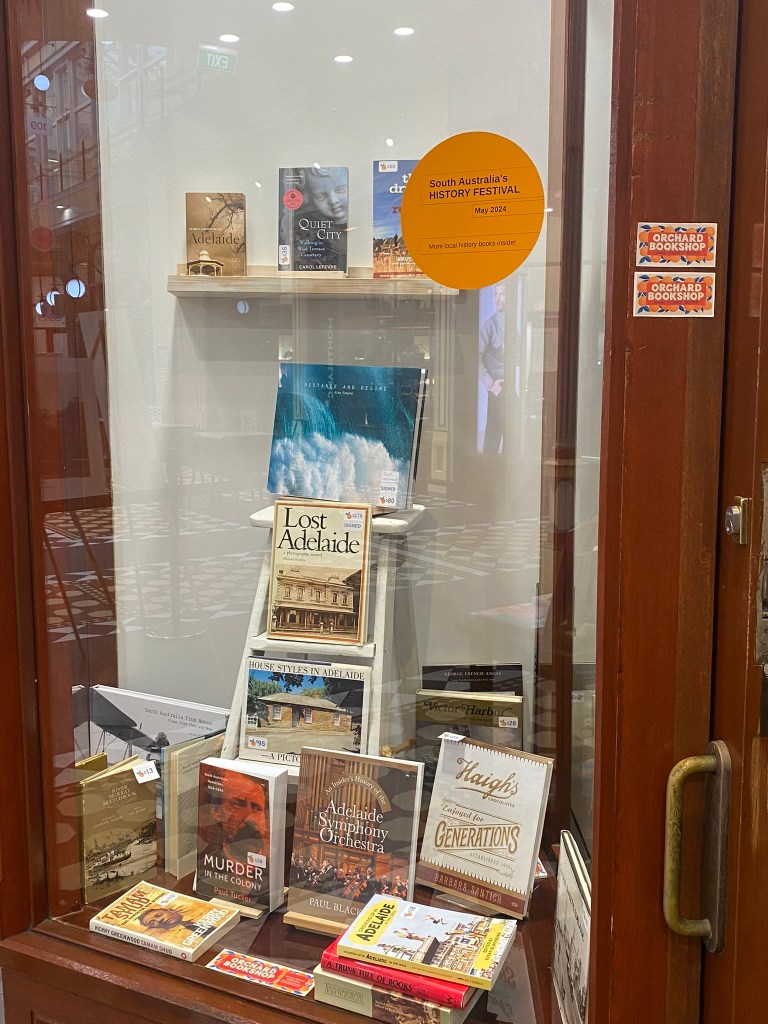
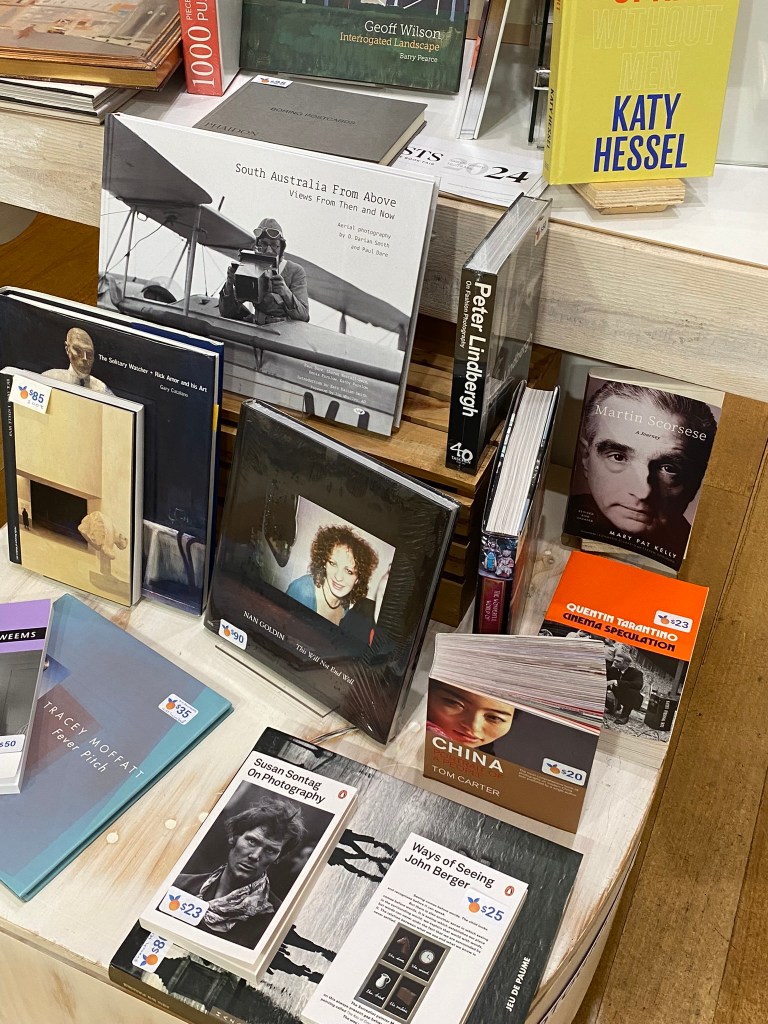
Orchard Bookshop — Shop 26, Adelaide Arcade, Adelaide 5000. (Image: Bao Quynh Duong)
“I love choosing books. Every day I will see something I’ve never seen before,” Treloar says.
“I love making window displays. Some people walked in because they were too connected with whatever happened to be in our place.
“I also love the number of toddlers walking past our window and going ‘Oh, I want that book!’” she laughs.
“It’s a nice way to spend the day. All day. Everyday.”
While acknowledging the growing digital trends in purchasing and reading, Treloar believes that the visual and textual joy of a nice cover, the feeling of turning pages, and the personal connection with a piece are what make second-hand books so special.
“Online is great when you want to search for a particular book or a piece of information. But I’m also concerned that we are often fed with agendas and hard selling online,” Treloar says.
“If you want a chance for new discoveries, for a conversation with someone who genuinely cares and is connected to your experience, those are what we offer.”
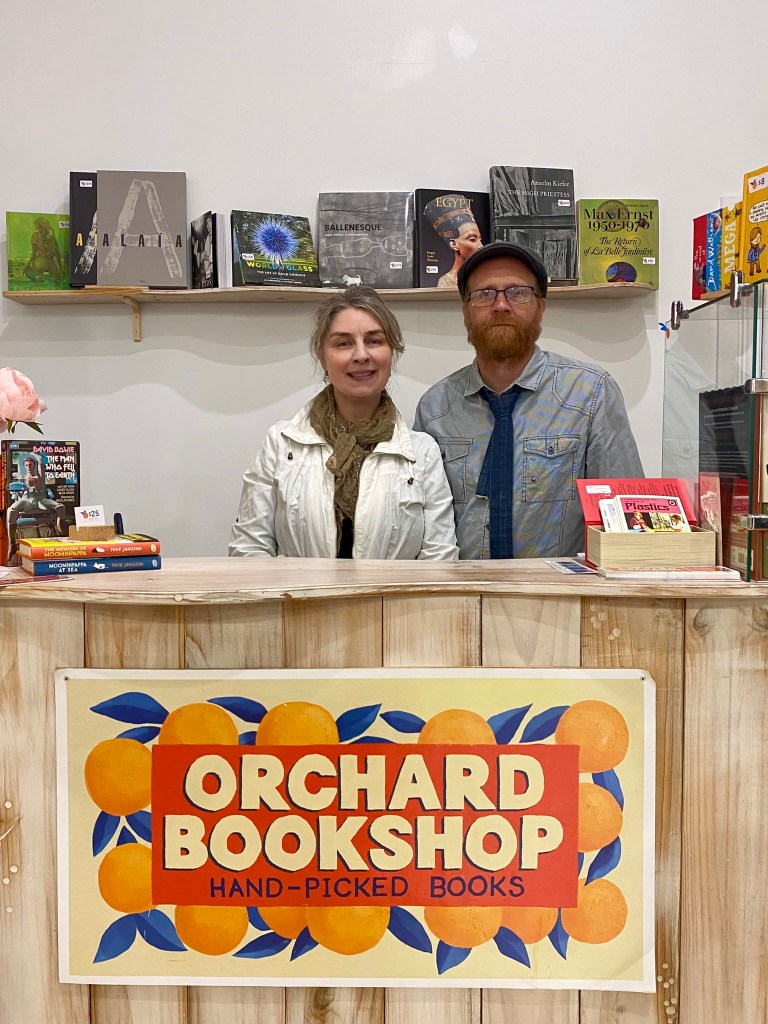
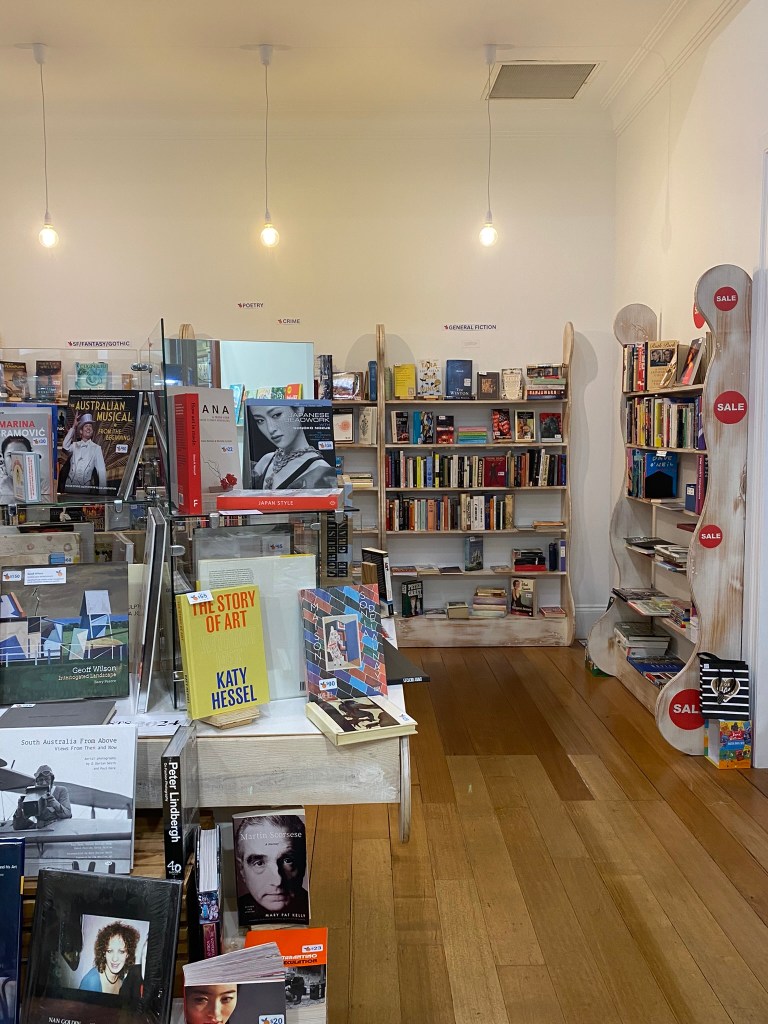
Kate Treloar and Nick Patrick (left) and a corner at Orchard Bookshop (right). (Image: Bao Quynh Duong)
Second-hand books also carry a sentimental value beyond the tangible experience and environmental benefits.
“The other day, there was a customer who spotted a book from her childhood that she had been looking for since forever,” Treloar smiles as she tells me how joyful her customer was.
“People might find themselves looking at the same new books. But with second-hand ones, it seems like the right thing will come to the right person at the right time.”
Treloar’s concern is the future of second-hand bookshops rather than second-hand books. She says Adelaide’s increasing rental prices and discount stores that sell underpriced books might put independent bookshops at risk.
“We make recommendations and let people have a look and make their own decision. We don’t have any bias on what we think is going to sell just to pay off the rent because that is where we start to lose quality.” Treloar says.
She hopes that her bookshop will continue to be a go-to place for those looking for a nurturing, relaxing space and authentic experiences with books.
“I hope people will leave feeling that they are in a better mental place than they had been when they walked in, whether they buy a book or not,” Treloar says.
“It’s my little bit of trying to make this world a better place.”
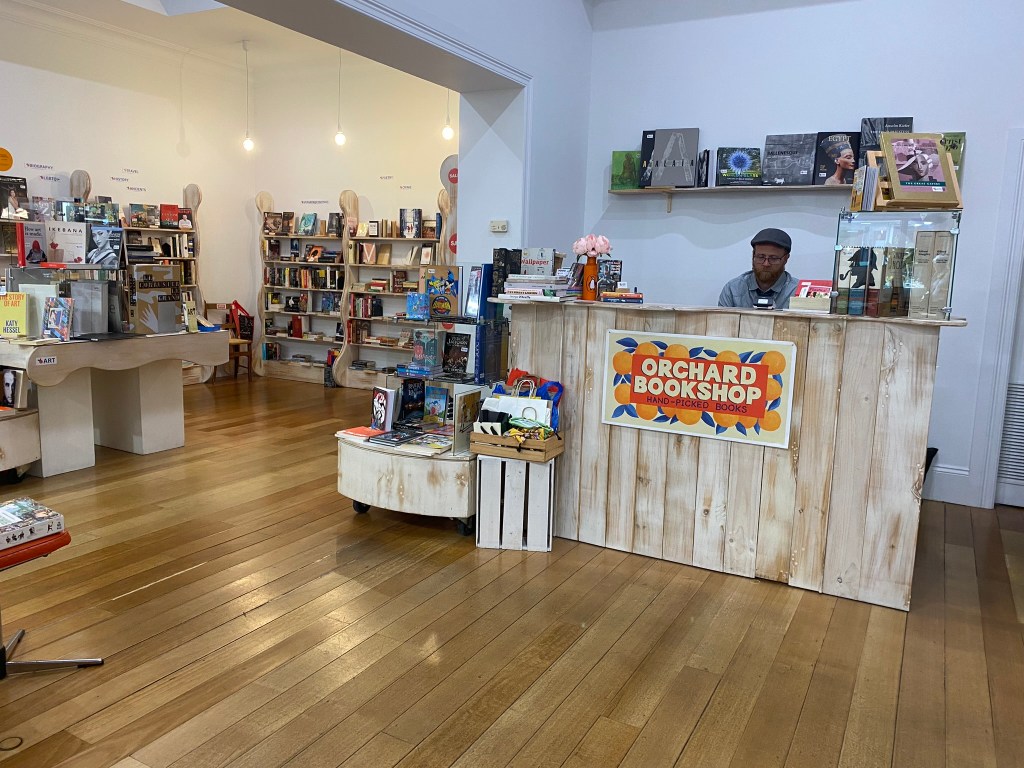
Nick Patrick tending to the bookshop. (Image: Bao Quynh Duong)
How long has it been since you last found yourself spending hours browsing the shelves?
Mine was yesterday morning when I came back for a design catalogue from 2001 at New Morning Books. As I left, I met a group of university students who are frequent customers of second-hand bookshops.
The girls told me they had been to almost every pre-loved bookshop they knew because they would find “the most unexpected and the most helpful answers or knowledge” at a price that would suit a student’s budget.
If you ever want a book that you have or have not been expected to find, you already know what your next stop should be. You might fall in love with the nostalgic vibe and heart-warming human connection. You might come across that childhood memory sitting quietly in a corner on one of those shelves.
Or you might find the joy of having a small chat and seeing books being given another life.
 ontherecordunisa.com
One response to “Paperbacks in a digital age: embracing the joy of Adelaide’s second-hand bookshops”
Wonderful article I have collected old books for decades one room of my house has been converted into a library am quite proud of it .
LikeLike